Related: Pitcher vs Under-Sink Filters: What the Certification Numbers Actually Mean
Most water filter pitcher comparison articles are written from the box. I would rather work from the lab sheet. I spent six years running contaminant analyses for a municipal water lab before I went independent, and I got into home filtration the way most people do: my Madison tap water tasted like a swimming pool, my kid refused to drink it, and a $30 TDS meter told me more in ten minutes than three pages of packaging ever did. That meter is not a health test. It is a filter performance test, and it is where I start.
Four pitchers are on the counter right now. The Brita Large 10 Cup Dispenser, the ZeroWater 32-Cup Dispenser, and two Waterdrop units, the 10-cup PT-07R and the 7-cup PT-05B-L. They are not interchangeable. One is a taste filter with a big reservoir, one is a dissolved-solids workhorse that will charge you for the privilege, and two are certified pitchers built for people who want a number on the label instead of a promise. Here is how I sort them, and how you should.
What a pitcher can and cannot do
A gravity pitcher is a low-pressure device. Water drips through carbon or a mixed media bed at whatever rate gravity gives it, and contact time is short. That design has real strengths: chlorine taste and odor, sediment, and the general flatness that makes tap water unpleasant to drink. It also has a ceiling. If you have a lead service line, a nitrate problem, or a private well with bacteria, a countertop pitcher is not the tool, and no amount of clever cartridge marketing changes that.
Two certification standards do most of the work here. NSF/ANSI 42 covers aesthetic claims: taste, odor, chlorine. NSF/ANSI 53 covers health contaminants, lead and volatile organic compounds among them. A listing with a certification number means an independent body verified the claim against a standard. "Tested to NSF standards" with no number attached means nothing at all, and I have watched that phrase sell a lot of pitchers.
The other two things I check are the ones nobody puts on the front of the box. Flow rate is the spec people ignore until they are standing at the counter waiting for a glass of water, and a pitcher that slows to a trickle in a month is a faucet decoration. Cost per gallon is the honest number. The pitcher is the bait. The replacement filter is the real price, and it is the number that decides whether you are still using the thing a year from now.
Best for dissolved solids: ZeroWater 32-Cup Water Filter Dispenser
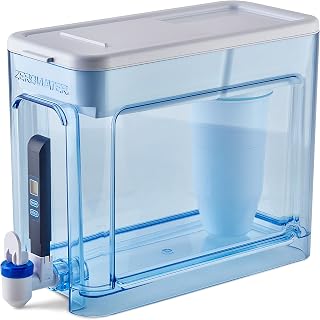
ZeroWater is the pitcher brand that actually goes after dissolved solids, and the name on this one says it removes PFOA and PFAS. That is the point of the machine. Where a carbon pitcher is mostly a taste device, this is a mixed-media system built to pull dissolved material out of the water, and it is the reason the TDS meter reading moves when you switch to it.
The 32-cup dispenser shape is the part I appreciate most. It lives on the counter or on a fridge shelf and pours from a spigot, so you are not lifting a full reservoir out every time somebody wants water. In a house with kids, that difference is the gap between a filter that gets used and a filter that gets abandoned.
The trade-off is the cartridge schedule, and it is not a small one. A filter that removes that much from the water has a shorter life than a carbon pitcher, and if your water is very hard or high in dissolved solids, you will be buying replacements regularly. That is not a defect, it is the mechanism working, but it belongs in your math before you buy. If you want a set-it-and-forget-it pitcher, this is not it. If you have a specific dissolved-solids or PFAS concern and you are willing to keep cartridges on hand, this is the one on the list built for you.
Best for taste and capacity: Brita Large 10 Cup Water Pitcher Dispenser
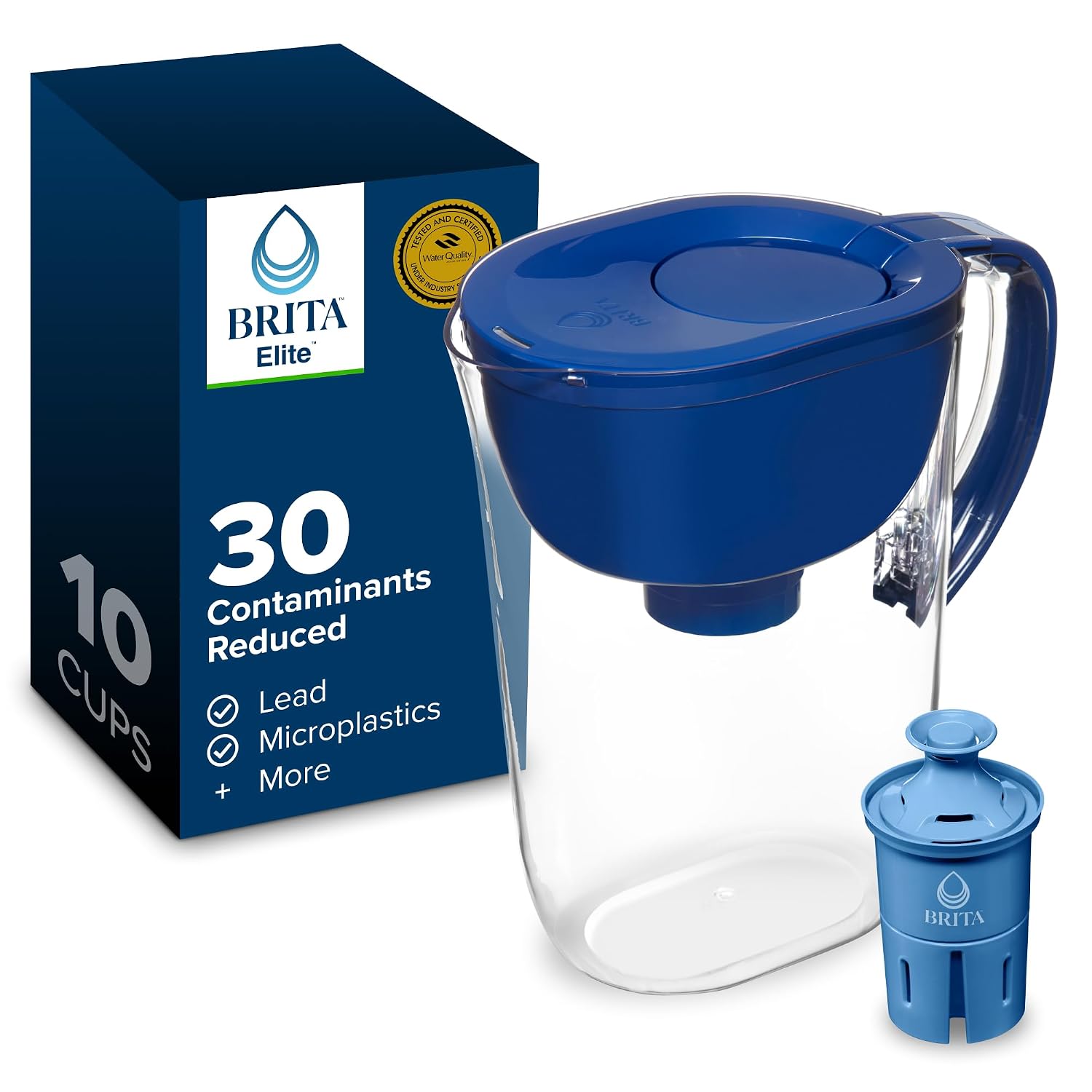
Brita is the default for a reason. It ships with one Elite filter, the 10-cup dispenser design pours from a spigot, and replacement cartridges are cheap and stocked in every grocery store in the country. Ten cups is enough that a family can get through breakfast without a refill, and the flow rate is quick enough that nobody stands there drumming their fingers.
Here is the honest read, and it is the same thing I have told readers for years. Brita is a taste and chlorine filter. It is fine at that job. My lab work has never shown a standard Brita cartridge doing meaningful lead reduction, and that is okay as long as you know it going in. Buy this pitcher because your water tastes like a swimming pool and your kid will drink more water out of a cold dispenser. Do not buy it because you got a lead notice in the mail.
The Elite filter is the better of Brita's cartridges, and the dispenser body is the reason I keep one around even when I have fancier hardware on the bench. It is the pitcher that gets used because it is easy, and a filter that gets used beats a filter that wins on paper.
Best certified mid-size: Waterdrop PT-07R
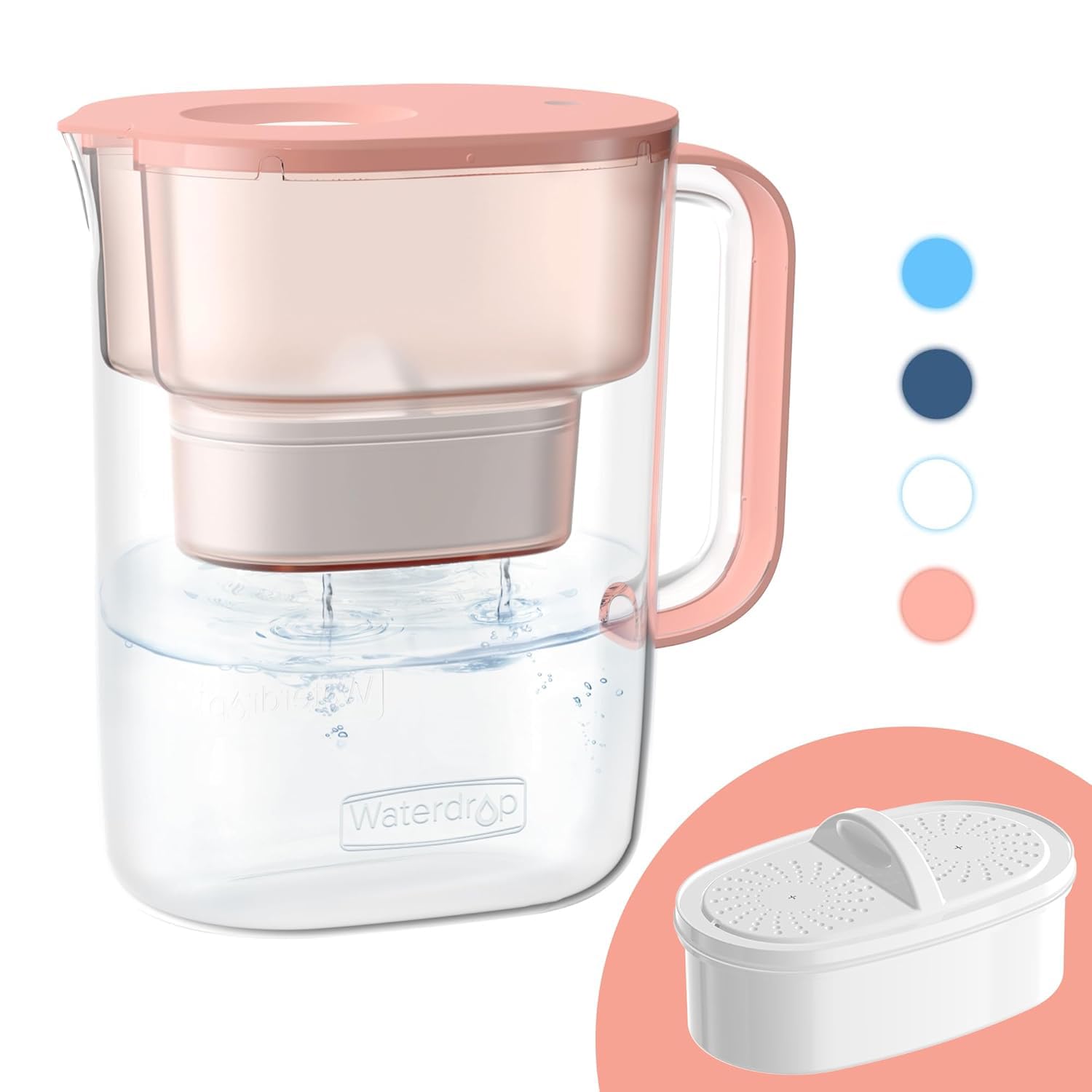
The Waterdrop PT-07R is a 10-cup pitcher with NSF certification and a pink finish that will either be the reason you buy it or the reason you scroll past. Set the color aside for a second. Certification is the reason this one belongs in the conversation, because it puts an independent standard behind the removal claims instead of a phrase like "tested to NSF standards."
Read the listing carefully when you get there and see which standard is named, NSF/ANSI 42 or NSF/ANSI 53. That tells you whether you are buying a taste filter with paperwork or a health-contaminant filter with paperwork, and it is the single most useful sentence on any pitcher page.
Ten cups puts it in the same size class as the Brita, and it lands between the Brita and the ZeroWater dispenser in the way it positions itself: certified filtration in a standard pitcher footprint. If you want certification, a full-size reservoir, and a body that fits on a fridge shelf without a fight, this is the middle of the list.
Best compact: Waterdrop PT-05B-L
The PT-05B-L is the small one: seven cups, NSF certified, blue. If your refrigerator is packed, your counter is small, or you live alone and do not want a gallon of water sitting in the door, seven cups is the right size. It is also the pitcher I would hand to somebody in an apartment who has never filtered water before.
The trade-off is obvious and worth saying out loud. Seven cups goes fast. Two people drinking water through a workday will empty this thing twice, and every refill is a wait while gravity does its job. That is fine if you keep it topped off. It is annoying if you treat it like a 32-cup dispenser and expect it to keep up.
Same advice as its bigger sibling: check which NSF standard is named on the listing, and treat the certification number as the claim you are actually paying for.
How I evaluate a pitcher
Every unit gets the same four questions, in this order.
First, what does the certification number say it removes, and against which standard? If there is no number, there is no claim worth repeating.
Second, what is the flow rate at 50 gallons, not at gallon one? Gravity pitchers slow as the media loads up, and the difference between a fresh cartridge and a tired one is the difference between a filter you use and a filter you resent.
Third, what does it cost per gallon including replacements? I put that number next to the purchase price every single time, because the pitcher is a one-time cost and the cartridges are a subscription you did not know you signed.
Fourth, would I drink from it every day and would I serve it to my kid? That is the test that outranks all the others.
TDS is the tool I lean on hardest for the second and third questions. It is not a health meter, and I will say that until I am blue in the face. It is a performance meter. If a filter claims dissolved-solids removal and the reading does not move, the claim is marketing. If the reading drops hard and the cartridge dies in weeks, that is not a broken filter, that is the media doing exactly what it was built to do and charging you for it.
Analysis: how the four stack up
The real split in this group is between taste filters and contaminant filters, and the packaging does its best to blur it.
The ZeroWater dispenser is the only one here whose entire identity is dissolved-solids removal, and the PFAS language in its name tells you what it is aiming at. It also has the most demanding cartridge schedule and the largest reservoir. That combination makes it a commitment, not a casual purchase.
The Brita is the opposite bet. It is cheap to run, easy to find cartridges for, and honest about being a taste device. If your water is municipally treated and the complaint is flavor, this is the pragmatic answer, and the 10-cup dispenser body is why it actually gets used.
The two Waterdrop pitchers occupy the certified middle. Both carry NSF certification, which is the thing I care about most on a label, and they split on size: 10 cups for a household, 7 cups for a small kitchen or a single drinker. If you want a number behind the claim without jumping to a dispenser, they are the obvious pair to compare against each other.
The water filter pitcher comparison table
| Pitcher | Capacity | What it targets | Best for | Price |
|---|---|---|---|---|
 Visit on Amazon → ZeroWater 32-Cup Dispenser |
32 cups | Dissolved solids, PFOA/PFAS | High-TDS water and PFAS concerns | $44.99 |
 Visit on Amazon → Brita Large 10 Cup Dispenser |
10 cups | Taste and chlorine | Fridge water a family will actually drink | Visit on Amazon → |
 Visit on Amazon → Waterdrop PT-07R |
10 cups | NSF certified filtration | Certification in a full-size pitcher | $16.99 |
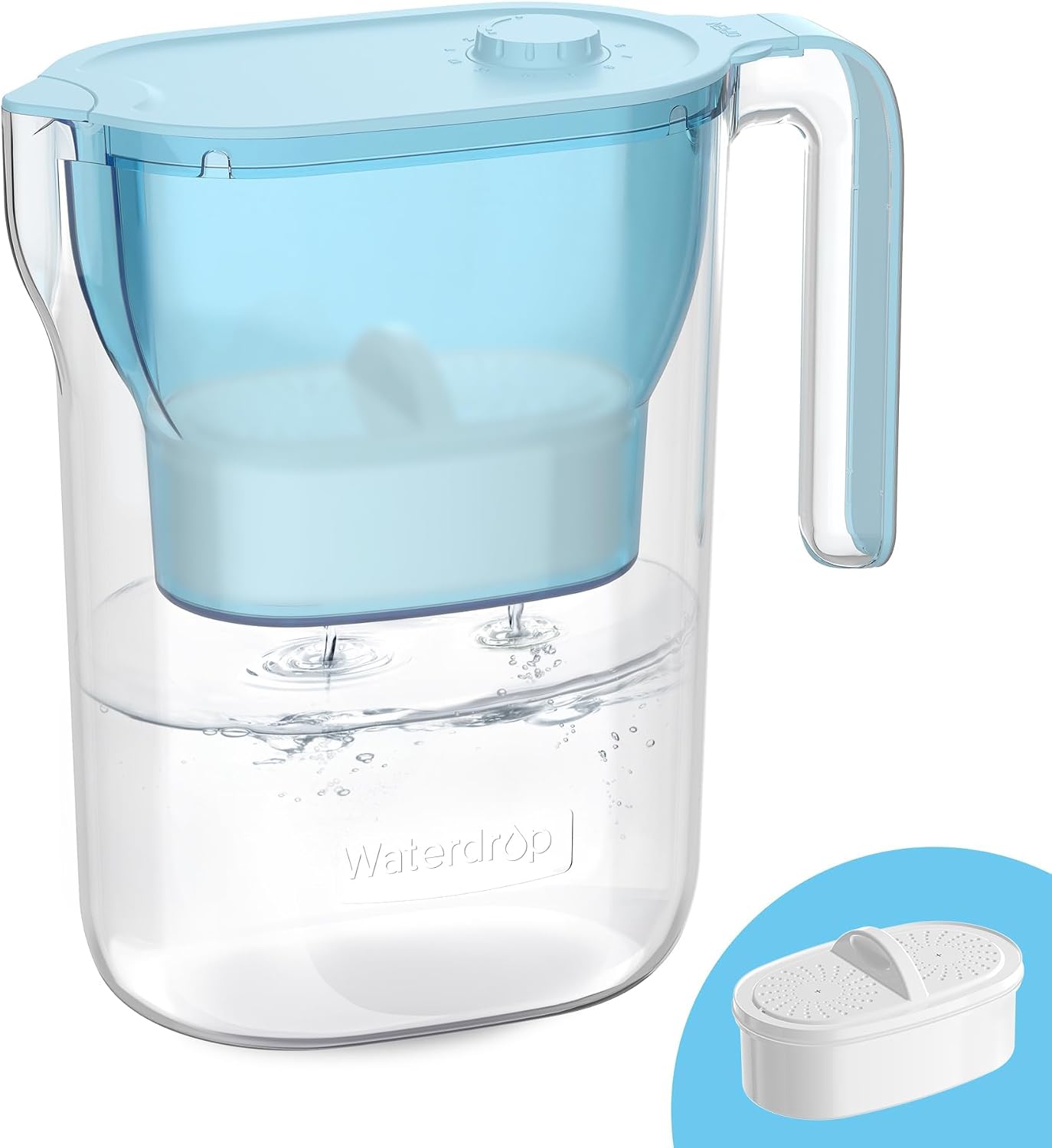 Visit on Amazon → Waterdrop PT-05B-L |
7 cups | NSF certified filtration | Small kitchens and one or two people | $13.99 |
Should you buy the ZeroWater 32-Cup Dispenser?
Yes, if dissolved solids or PFAS are the reason you are shopping. It is the only pitcher here built around pulling dissolved material out of the water, the 32-cup dispenser means you fill it once and pour from a spigot all day, and the PFAS language in the name is a specific claim rather than a vague one.
Go in with your eyes open about cartridges. A filter that removes that much has a shorter life than a carbon pitcher, and the replacement schedule is the real cost of ownership. Buy it because you want the removal, not because you want to fill it and forget it.
Should you buy the Brita Large 10 Cup Dispenser?
Yes, if the problem is taste. The Elite filter handles chlorine flavor and odor, the 10-cup dispenser is pleasant to live with, and cartridges are cheap and sold everywhere. It is the pitcher I would hand to almost anybody with ordinary municipal water and a kid who says the tap tastes weird.
It is not a lead filter and it never pretended to be one. If you have a health contaminant concern, this is the wrong tool, and the fix is a certified pitcher or an under-sink system, not a different Brita cartridge.
Should you buy the Waterdrop PT-07R or the PT-05B-L?
Yes to both, and the choice comes down to size. Take the 10-cup PT-07R if you are filtering for a household, and take the 7-cup PT-05B-L if you have a packed fridge, a small counter, or one or two people drinking. Both carry NSF certification, which is the part of the label I trust, and both are priced as entry points rather than commitments.
Check the listing for the standard number before you buy either one. The number is the claim, and it tells you whether you are getting a taste filter or a health-contaminant filter. That single detail decides which pitcher belongs in your kitchen, and it is the thing this entire comparison comes down to.