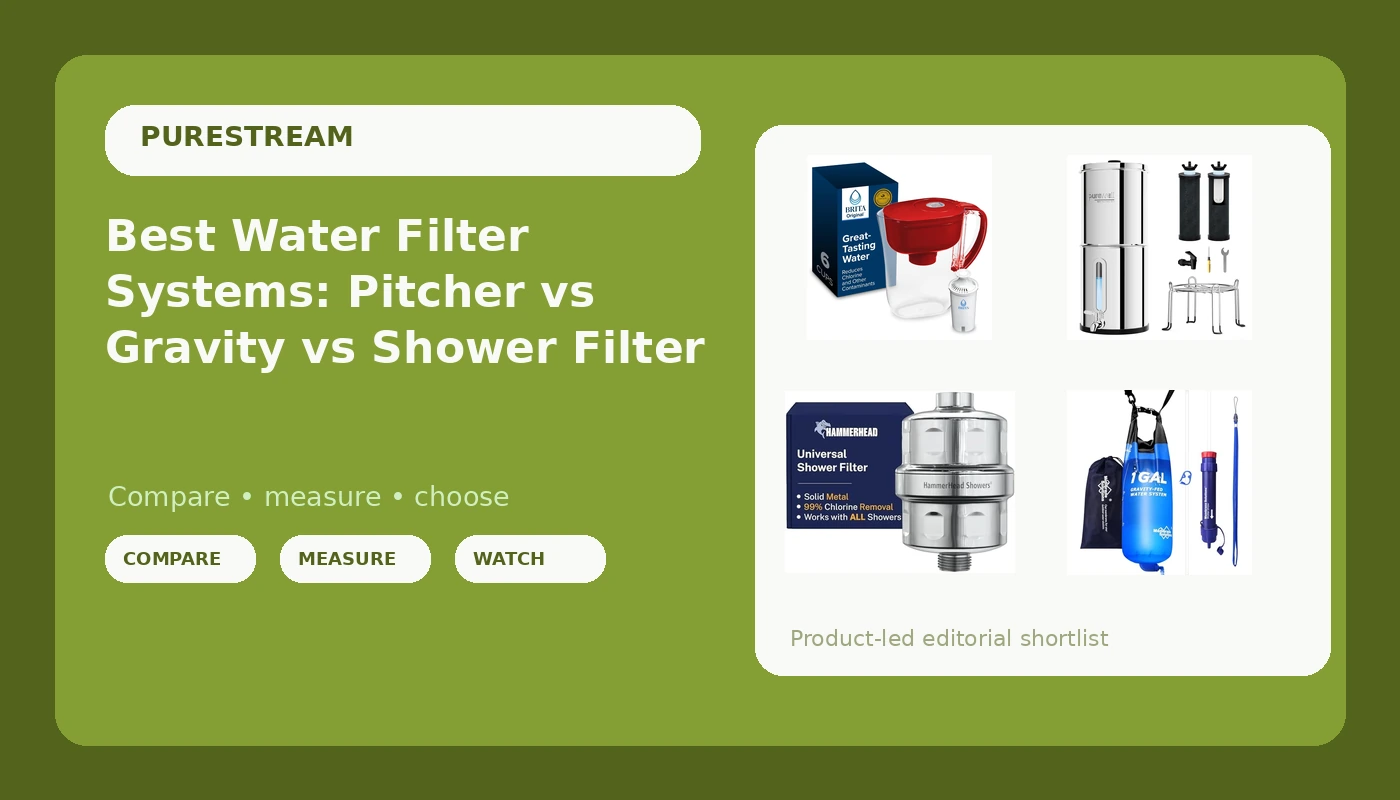
I have spent six years running contaminant analyses for a municipal water lab, and the years since bench-testing home filters in my basement in Madison, Wisconsin. My tap water used to taste like a swimming pool and my kid refused to drink it, which is how most people end up reading about filtration at 11 p.m. So when someone asks me to name the best water filter systems, I ask a question first: what are you actually trying to filter? Drinking water, cooking water, and the water hitting your skin in the shower are three different jobs, and the four units below do not do the same job.
Two of them are gravity purifiers, one is a countertop pitcher, and one does not filter drinking water at all. That is not a flaw in the lineup. It is the reason a comparison like this is useful, because the most common mistake I see is someone buying the wrong category and then blaming the brand.
If you want better tasting drinking water with zero installation, the Brita Metro pitcher is the cheapest sane starting point. If you want a countertop system that reduces chlorine without plumbing, the Purewell 2.25G gravity system is the one I would put on my own counter. The Membrane Solutions 1-gallon unit is the travel and emergency pick, and the HammerHead shower filter is the only product here that addresses water you never drink.
Here is the full comparison, with the trade-offs spelled out instead of buried.
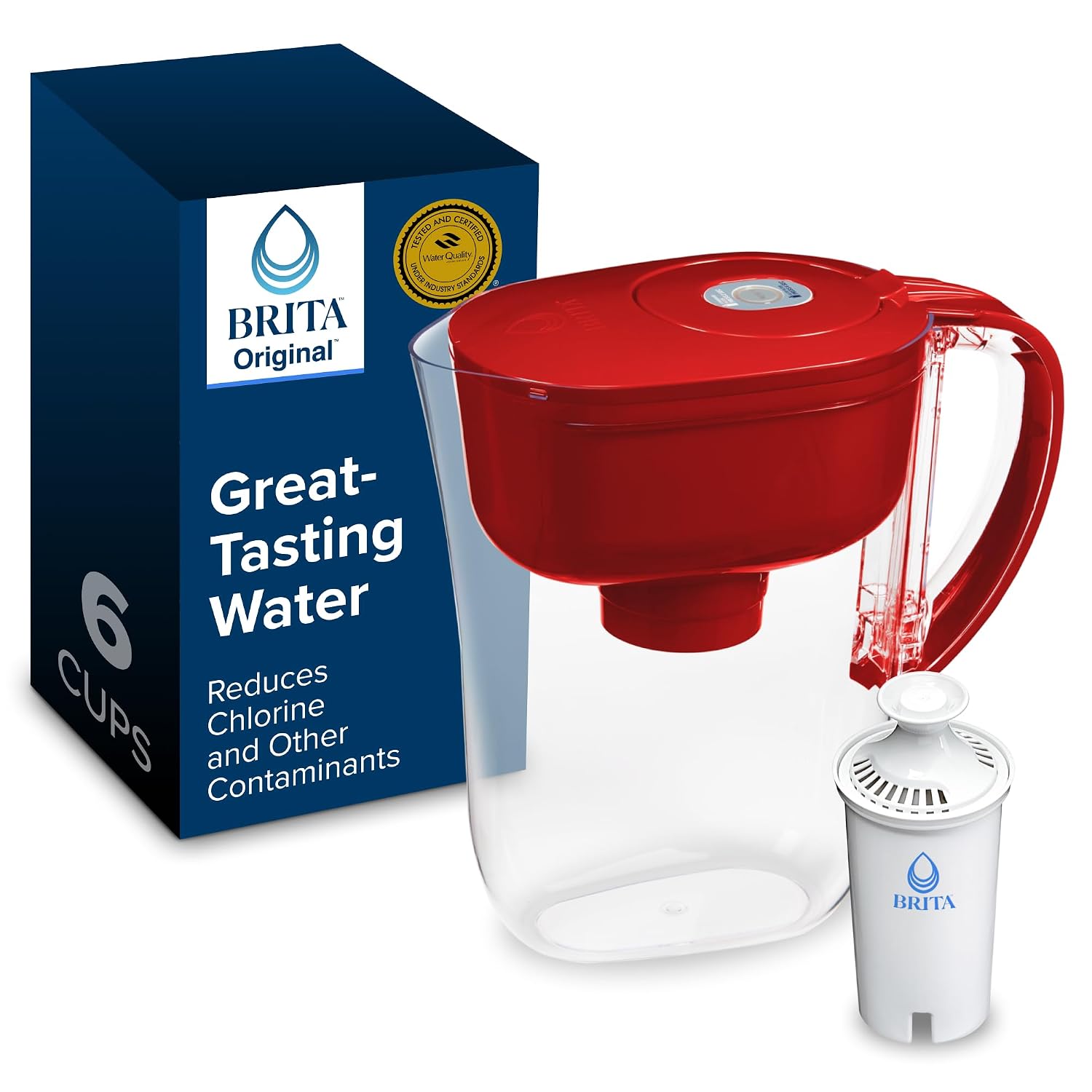
Brita Metro Water Filter Pitcher
Lowest cost of entry, no plumbing, 6-cup body fits a small fridge door, SmartLight indicator removes the guesswork
Taste and chlorine only, no lead reduction, no meaningful TDS change, two-month filter life
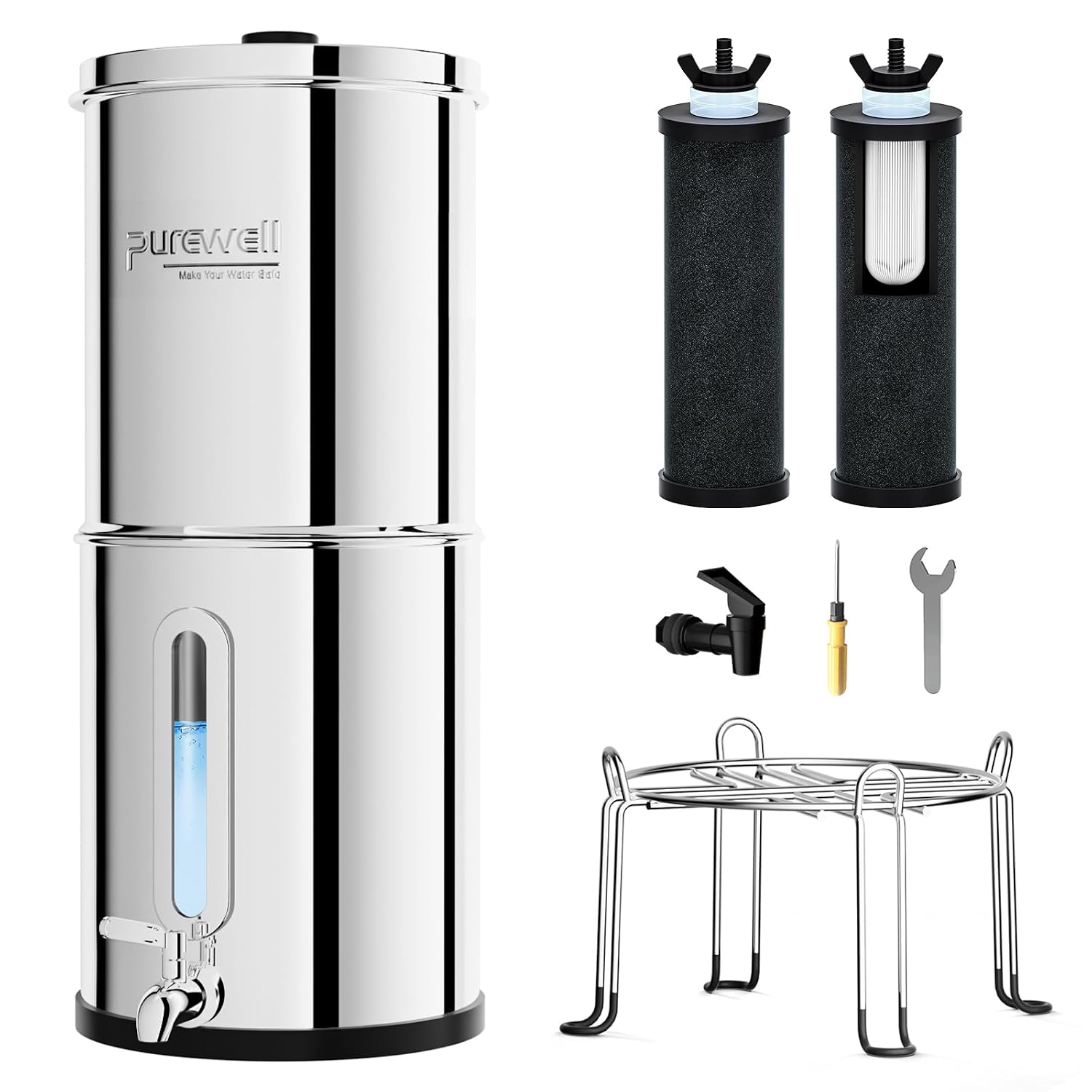
Purewell 2.25G Gravity Water Filter System
2.25-gallon capacity, stainless body, water level window, two filters and a stand included, works in a power outage
Gravity flow means waiting, and the 0.01 micron claim needs a certification number to mean anything
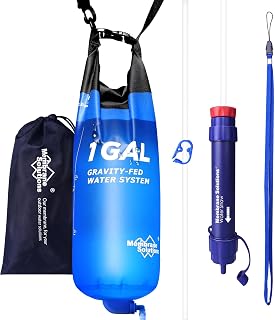
Membrane Solutions 1 Gal Gravity Water Filter
Lightweight, portable, one-hand carry, ideal for camping, RV, and emergency kits
One gallon is a constant refill chore in a family kitchen
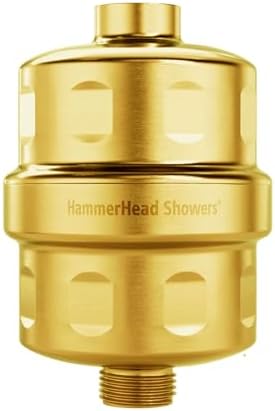
HammerHead Showers Solid Metal Shower Head Filter
KDF 55 media, solid metal body, universal high-pressure fit, targets the water you stand in
Does nothing for drinking water, no TDS reduction, will not soften hard water or remove iron
Prices and availability were captured from Amazon Creators API and may change.
How I evaluate a filter
Every unit that comes through my bench gets the same treatment: 100 gallons of Madison tap water, a TDS reading logged weekly, a flow timer at the first gallon and again at the hundredth, and a cost-per-gallon calculation that counts every replacement filter I will need in a year. Three numbers matter more than any slogan on the box. What does the media actually remove, how fast does it still flow once the media is half spent, and what does a gallon cost after replacements are counted.
I will not hand you a lab sheet I do not have, so treat the sections below as the framework I apply and the claims each maker puts on the label. Where a claim needs a certification number to mean anything, I say so. Where a design has a flow problem baked into it, I say that too, because a filter that slows to a trickle in a month is a faucet decoration.
The countertop pitcher: Brita Metro
The Brita Metro is a 6-cup pitcher with a SmartLight change indicator on the lid, a BPA-free body, and one filter in the box. Brita rates the filter for about two months of typical use and claims the pitcher replaces up to 1,800 plastic water bottles a year. The Fiery Red finish is a color choice rather than a spec, but the 6-cup capacity is a real one: it fits in a small fridge door, which is more than most 10-cup pitchers can say.
What it wins on is simplicity and cost of entry. No plumbing, no counter footprint worth measuring, no learning curve. The SmartLight takes the calendar out of the equation, and that matters more than people think, because the number one reason a pitcher stops working is that the owner keeps using it long after the carbon is spent. Breakthrough is real, and an indicator that reads volume passing through beats a sticker that says "replace in June."
What it loses on is scope. Carbon pitchers are built for taste and chlorine reduction, which is NSF/ANSI 42 territory. That is a genuine benefit if your water smells like a pool. It is not lead reduction, it is not dissolved solids removal, and it will not move a TDS reading much at all. Brita is fine for taste and nothing else, and that is acceptable as long as you know it. If you have a lead service line or old plumbing, a pitcher is the wrong tool, and you should be looking at a certified lead-reducing filter or a reverse osmosis system.
The replacement filter is the real price. The pitcher is cheap, the cartridges are the subscription. Work out the cost per gallon before you commit, and check that the filter you need is in stock, because a pitcher with a dead cartridge in it is a plastic jug.
Gravity systems: Purewell 2.25G and Membrane Solutions 1 Gal
Gravity filters are the category I recommend to anyone who wants better water without touching a supply line. You fill the top chamber, water seeps down through the media, and you draw from the bottom. No electricity, no plumbing, no installation. They also work when the power is out, which is the argument that gets most people to finally buy one.
The Purewell 2.25G is the kitchen countertop version. It is a stainless steel unit with a water level window, a 3-stage media stack rated to 0.01 micron, two filters in the box, and a stand to lift the spigot above a glass. The maker claims 99% chlorine reduction. The window is the detail I like most, because you can see what you have left instead of guessing, and a stainless body will outlast any plastic housing I have ever put on a bench.
The honest trade-off is flow rate. Gravity systems are slow by design, and the larger the reservoir, the more you notice it. That is not a defect, it is physics, but it decides whether the thing lives on your counter or in a closet. The other caveat is the filtration claim. A 0.01 micron rating sounds impressive until you ask which standard certified it, because "tested to NSF standards" without an NSF/ANSI number attached is a sentence, not a certification. Ask for the number. If the listing does not carry one, assume the claim covers taste and chlorine and nothing else.
The Membrane Solutions 1 Gal unit is the same idea at a third of the size. It is a lightweight gravity purifier built for camping, travel, RVs, and emergency kits. It holds a gallon, it needs no plumbing, and you can carry it with one hand. For a kitchen serving four people, a gallon is a constant refill chore. For a tent, a cabin, or a storm kit, it is exactly right. This is the one I would pack, and it is not the one I would park next to the sink.
Buying advice: Purewell if you want a daily countertop system with capacity and a stainless body, Membrane Solutions if you want portable and light. In both cases, check what a replacement filter costs before you buy the housing, because the housing is a one-time purchase and the filters are forever.
The shower filter: HammerHead KDF 55
This one is not a drinking water product and should not be judged as one. The HammerHead is a solid metal shower head filter with KDF 55 media in a chrome body, a universal fit, and a design meant to keep pressure up rather than choke it. KDF 55 is a copper-zinc media commonly used to reduce chlorine and some heavy metals from water, and the maker claims exactly that.
The reason shower filters exist is that a hot shower is a different exposure path than a glass of water. Chlorine volatilizes in hot water, and you are standing in the spray for ten minutes. I do not make health claims about any filter and I am not starting here. What I can tell you is that a shower filter targets the water before it reaches your skin and hair, it does nothing for the water you drink, and it will not soften hard water or remove iron. If your problem is scale on the glass door, this is the wrong product. If your problem is the chlorine smell in a steamy bathroom, it is the right one.
Two things to check before buying. First, the cartridge schedule, because KDF media is exhausted by volume rather than by time, and a household of four will burn through it faster than a household of one. Second, the body material. Solid metal is worth paying for in a shower, because plastic housings crack at the threads, and a leak behind a wall costs far more than a filter.
What the labels actually mean
NSF/ANSI 42 and 53 are the two numbers worth memorizing. 42 covers aesthetics: taste, odor, and chlorine reduction. 53 covers health contaminants: lead, VOCs, cysts, and a list of others. A filter can carry one, both, or neither. If a box says "tested to NSF standards" and no certification number is printed next to that claim, you have learned nothing about what the filter removes.
Micron ratings are the second thing people misread. Smaller pores catch smaller particles, but they also clog faster, which means flow drops and replacements arrive sooner. A 0.01 micron claim on a gravity system is a media specification, not a performance guarantee. What matters is whether the unit was certified against a standard, and whether flow holds up at gallon 100 rather than gallon one.
TDS is the third. Total dissolved solids is not a health meter. It is a filter performance meter, and it is very good at telling you whether a membrane is doing anything at all. A carbon pitcher will barely move a TDS reading. A gravity system with carbon and ceramic media will move it a little. Reverse osmosis will take it to near zero, along with minerals you may or may not want back. If a filter advertises that it removes "everything" and does not list contaminants, it is either overstating or stripping things you never asked it to strip.
None of the four units here is an RO system. That is not a flaw, it is a category boundary. If your lab report shows lead, nitrates, or arsenic above a limit, you are shopping in a different aisle.
Cost per gallon is the only honest metric
The pitcher is the bait and the filter is the price, and that is true of every product on this list. A shower cartridge, a gravity candle, a pitcher cartridge: all consumables, and the sticker price on the housing tells you almost nothing about what the next three years will cost.
Here is the arithmetic I run. Take the rated capacity of one replacement filter in gallons, divide the filter price by that number, and add nothing else. That number is your real cost per gallon, and it is the only figure that makes two filters comparable across categories. Run it for the Brita cartridge, the Purewell candles, the Membrane Solutions element, and the HammerHead cartridge. You will probably be surprised by which one is cheapest per gallon and which one is not.
Then check availability. I once ran a pitcher filter two months past its replacement date because the cartridge was backordered, and I did not enjoy the water or the decision. A filter with no replacement in stock is a countdown timer.
How to choose between them
Match the product to the job. Drinking water for a small household with a taste problem and no known contaminants: the Brita Metro, knowing it handles taste and chlorine and stops there. Countertop drinking water with more capacity, no plumbing, and outage insurance: the Purewell 2.25G, provided you can live with gravity speed and you verify the certification number. Camping, RV, or emergency water: the Membrane Solutions 1-gallon unit. Chlorine in the shower: the HammerHead.
If you have a known contaminant problem, lead, nitrates, arsenic, or anything above a health limit on a lab report, none of these four is the answer. Get the lab sheet first, then buy the filter that carries the certification number for that specific contaminant. That is the order I would want anyone to follow, and it is the order the packaging is designed to make you skip.
What is on the bench now
I am currently running a batch of gravity systems through 100 gallons each, charting TDS and flow decline week by week, with a parallel lab batch checking lead, chlorine, and hardness claims that manufacturers do not publish. The Purewell is the unit I am watching most closely, because a 0.01 micron claim on a stainless countertop system is the kind of claim that either holds up under a lab sheet or does not.
When I have the numbers I will publish them, including the ones that make a product look worse than its listing. Until then: buy the filter that matches the job, check the certification number, and run the cost-per-gallon math before you fall for the housing price.