I bought my first TDS meter for thirty dollars because my tap water in Madison smelled like a swimming pool and my kid had quietly stopped drinking it. That meter told me less than I hoped and more than the packaging on most filters, so I started sending samples to a certified lab for pH, hardness, chlorine, lead, copper, and total organic carbon. Before all of that I spent six years in a municipal water lab running contaminant analyses. Since then I have bench tested more than 200 filter systems, running each one through 100 gallons while logging TDS and flow decline week by week. This home water filter comparison covers three products that do three completely different jobs, and the honest headline is that only one of them belongs on your kitchen counter.
For most households, the gravity system is the one worth buying. The shower filter is the sleeper pick, because almost nobody connects chlorine in hot water to the air in a small bathroom. The straws are emergency gear. Buy them for the trunk of the car, not for the counter.
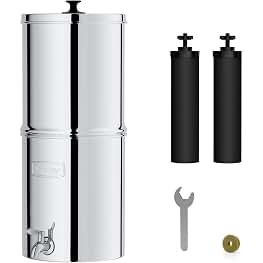
Waterdrop TK-A Gravity Water Filter System, NSF/ANSI 42&372 Certified
Certified to NSF/ANSI 42 and 372, which is a real number on a real listing rather than a vague claim, and it needs no plumbing, no power, and no drain
Gravity is slow by design, and the replacement cartridges are where the real money goes over three years
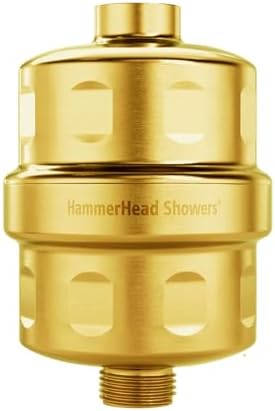
HammerHead Showers Solid Metal Shower Head Filter, KDF 55 Shower Filter, High Pressure Universal Shower Filter, Chrome
Solid metal housing instead of the usual plastic, KDF 55 media that targets chlorine and some heavy metals, and a universal fit on a standard shower arm
It only treats shower water, so it does nothing for what you drink, and the marketing copy leans harder on adjectives than on certification numbers
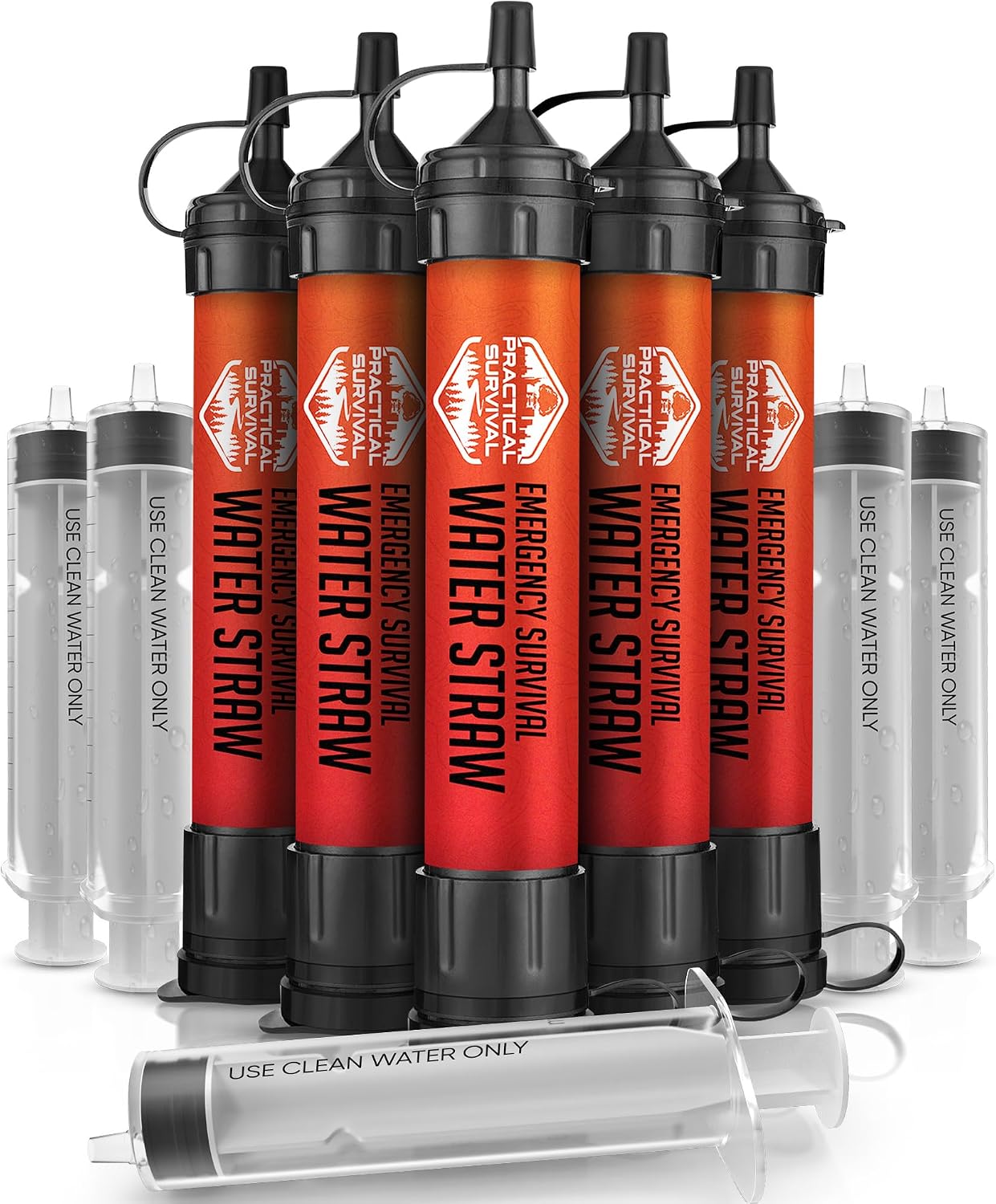
Practical Survival Reusable Emergency Water Filter Straws, 5-Pack
Five units in one purchase, no power or plumbing, small enough for a go-bag or a glovebox, and reusable if you maintain them
One straw serves one person drinking straight from a source, so it will never fill a pitcher, and a straw stored wet in a hot car is a science experiment
Prices and availability were captured from Amazon Creators API and may change.
How I judge a filter
I did not run these three side by side, and honestly that would be a pointless test. A drinking water filter, a shower head filter, and a pocket straw are not competing for the same job. What I did was hold each one to the same four questions I use on everything that comes into the basement lab.
First, what does it remove, and against what standard? A certification number means something. NSF/ANSI 42 covers taste and chlorine reduction. NSF/ANSI 53 covers health contaminants like lead. NSF/ANSI 372 is about lead-free wetted materials, which is a materials safety standard, not a removal standard. Those are three different things, and a listing that says "tested to NSF standards" without a number is telling you nothing at all. The Waterdrop unit names 42 and 372 right in the product title, which is at least a starting point you can verify on the NSF listing.
Second, what is the flow rate at 50 gallons, not at gallon one? Every filter looks great on day one. The one that matters is the one still delivering a usable stream after a month of real use. A filter that chokes to a trickle is a faucet decoration, no matter what its media does on paper.
Third, what is the cost per gallon including replacements? The pitcher is the bait and the cartridge is the price. A cheap housing with a proprietary cartridge that costs more than the machine after a year is not a bargain, it is a subscription you did not read the terms of.
Fourth, would I drink from it every day, and would I serve it to my kid? That is the test that actually decides things in my house.
The gravity system: what a countertop filter can and cannot do
The Waterdrop TK-A is the only one of these three that can serve a family at dinner without somebody standing there holding a straw. You fill the upper reservoir, gravity does the work, and the treated water waits for you in the lower chamber. No plumbing, no electricity, no drain line, no drilling into a rental countertop. During a boil-water advisory or a power outage, that independence is the entire point.
Gravity is also the honest limitation. Water moving through carbon media under nothing but its own weight is slow, and no amount of clever design changes that. You fill it and walk away. If you want a glass of water in four seconds, you want a different product, and you should admit that to yourself before you buy.
One thing I want to be clear about, because the marketing around gravity filters gets sloppy: a carbon-based gravity system is not reverse osmosis. It will not drive your TDS to zero, and it is not the tool for nitrate, or for serious hardness, or for a dissolved metals problem. What it does well is chlorine, taste, odor, and a lot of the organic compounds that make municipal water smell like a chemistry set. Those are the complaints most people actually have. It also leaves your minerals in the water, which I consider a feature, not a failure.
The shower filter: the one people forget
The HammerHead unit is the product in this comparison that most readers have never considered buying, and it is the one I get the most questions about after people try it. KDF 55 is a copper-zinc alloy that works by an oxidation-reduction reaction, and it is a well-established media for reducing free chlorine. Heavy metal reduction with KDF varies by metal and by contact time, so treat that part of any claim with appropriate skepticism and look for what the manufacturer actually tested against.
Why a shower filter at all? Because hot water volatilizes chlorine, and a shower is a small, warm, enclosed room. You are not just drinking the water, you are breathing the air in it. I am not going to tell you a shower filter cures anything, because my rule is simple: I test what filters remove, not what water cures.
Two practical notes. The listing uses phrases like "removes toxic chemicals," and that is exactly the kind of language I want a certification number attached to before I repeat it. And "high pressure" in a shower filter title is a flow claim, not a chemistry claim. A filter housing that restricts flow will make you hate the product long before the cartridge wears out, so the solid metal body here is a point in its favor. Just know that shower cartridges live a harder life than drinking water cartridges, because hot water and high volume both accelerate media exhaustion.
The straws: emergency gear, and nothing else
The five-pack of filter straws is not a kitchen appliance and I would push back hard on anyone treating it as one. A straw treats water at the moment of sipping, for one person. You cannot fill a pitcher with it. You cannot serve a family dinner with it. If four people are sharing one source, you have a hygiene question that no filter media solves.
What it is genuinely good for: a go-bag, a glovebox, a hiking pack, and the afternoon the water main breaks and the advisory goes out. Five units means you can put one in the car, one in the basement kit, one in the camping bin, and still have spares. That is a reasonable thing to own and a silly thing to rely on daily.
On the "reusable" claim, maintenance decides everything. Backflush it, dry it thoroughly, and store it dry. A damp straw sealed in a hot car is not a filter anymore, it is a petri dish. And on removal: if a straw in this class uses a hollow-fiber membrane, that membrane is a physical barrier sized for bacteria and protozoa. It is not removing dissolved lead, nitrate, or most chemicals. Some straws include a carbon stage, and carbon helps with taste and some organics, but contact time in a straw is short by definition. Check what the manufacturer certifies rather than what the product photo implies.
What each one actually removes
Here is the chemistry in plain terms, because this is where most buying guides go vague.
Carbon handles chlorine, taste, odor, and many volatile organic compounds. It does not remove lead, nitrate, or dissolved minerals. KDF handles chlorine and some heavy metals through redox chemistry, and it also inhibits bacterial growth inside the media bed. Hollow fiber membranes physically block particles and microorganisms but pass dissolved contaminants straight through. Ion exchange, which is not the primary mechanism in any of these three, is what handles hardness and certain metals. Reverse osmosis is what drives dissolved solids toward zero.
Now the TDS point. None of these three products will move your TDS number much, and that is expected, not a defect. TDS is not a health meter. It is a performance meter, and a great way to check whether a filter is doing anything at all. If you measure before and after and the number barely budges, you are probably looking at carbon or fiber media, which is exactly what you bought. If you need dissolved solids gone, you need a membrane system, and you should budget for the cartridge schedule that comes with it.
The cost question nobody asks
Every filter has two prices: the one on the listing and the one you pay every time you change the media. Do the math before you buy. Take the replacement cartridge price and divide it by the rated gallon capacity, then compare that number across the three options here. The straws are essentially a one-time purchase with a long shelf life if you store them dry. The gravity system and the shower filter both carry ongoing cartridge costs, and those costs, not the sticker, decide whether the product is a good deal in year three.
Two warnings. Proprietary cartridges that are out of stock in eighteen months turn a working filter into landfill. And rated capacity assumes a certain incoming water quality. Hard water and heavy sediment shorten every media life, including these.
Which one to buy
If your tap water tastes like a swimming pool and your household has quietly switched to bottled water, buy the gravity system. It solves the complaint you actually have, it works when the power does not, and the certification numbers are printed on the listing.
If your bathroom smells like a pool the second you turn the shower on, buy the shower head filter. It is the cheapest quality-of-life upgrade in this article and the one nobody thinks to look for.
If you want something in the trunk for the day the advisory hits, buy the straws. Keep them dry, keep them accessible, and do not pretend they are a kitchen filter.
And if your problem is dissolved solids, lead, or nitrate specifically, none of these three is the answer. Look for an NSF/ANSI 53 certified system or a reverse osmosis unit, and read the cartridge schedule before you read the feature list.
What I am testing next
Nine units are on the bench right now, each running toward the 100 gallon mark with TDS and flow logged weekly, plus a parallel lab batch checking lead, chlorine, and hardness claims that manufacturers do not publish. When that data lands, the recommendations here get sharper. Until then, the framework holds: check the certification number, check the flow at 50 gallons, check the cost per gallon, and then ask whether you would serve it to your kid.