My first pitcher filter was a wedding gift, and it lived in the fridge for two years before I ever read the side of the box. That was before the municipal water lab job, before the TDS meter, before the notebook where I log every filter change and every cost-per-gallon calculation. A pitcher is the cheapest way into home filtration and the easiest place to waste money, because the box tells you about taste and almost nothing about flow rate, certification numbers, or what replacement cartridges cost over a year of real use. This water filter pitcher comparison covers four very different answers to the same problem: a gravity filter built for group camping, a glass countertop pitcher, a broad-claim 10-cup model, and a 27-cup unit that will outlast a family reunion.
Related: TDS Meters: What They Measure and What They Ignore
The best water filter pitcher for most kitchens in this group is the Waterdrop PT-72W, because a glass body does not hold onto flavors the way plastic does, and 7 cups covers a family breakfast without a refill per glass. If lead or fluoride is the actual worry in your house, the Epic Water Filters pitcher is the one to examine first, with the caveat that its removal list needs a certification number behind it before I would call anything settled. If you are filtering for a crowd or for an outage, the Membrane Solutions gravity unit does a job no countertop pitcher can. And if you only care about chlorine and cold water for kids, the Brita XL is honest about what it is.
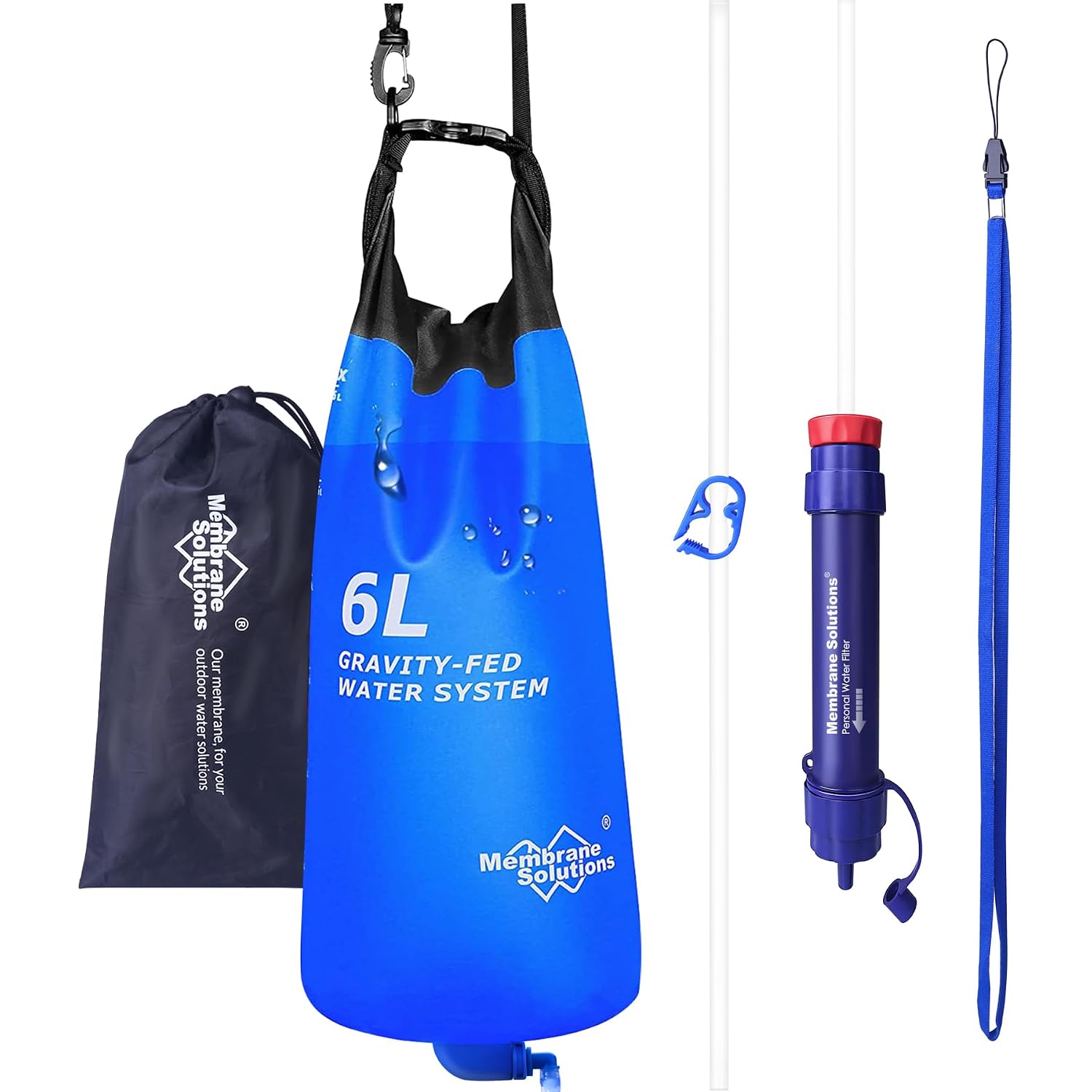
Membrane Solutions 6L Gravity Water Filter Pro for Group Camping
No plumbing, no power, 6 liters per batch, the only pick here that scales to a group or an outage
Slow gravity feed, big counter footprint, and you wait for a batch instead of pouring a glass
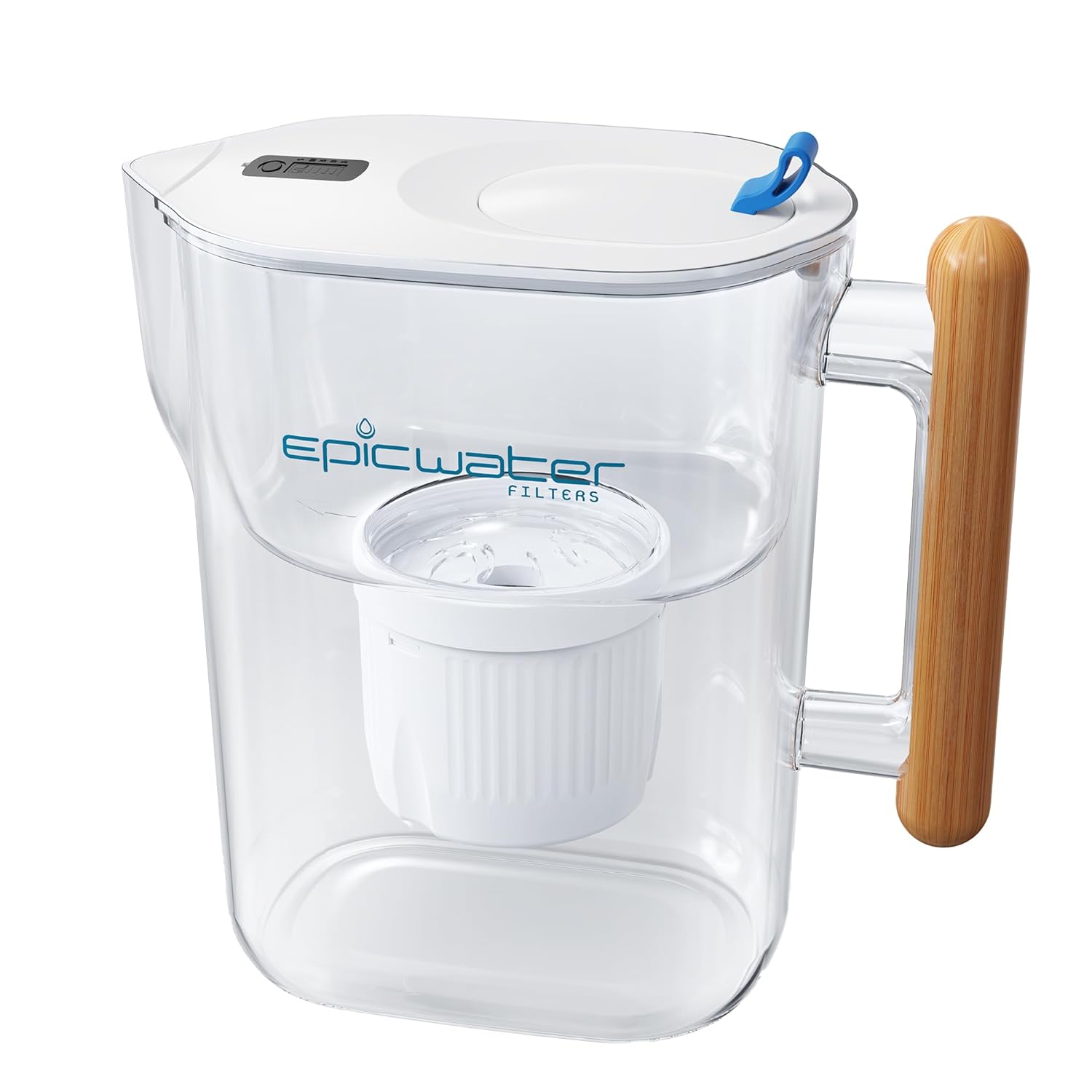
Epic Water Filters Pure Filter Pitchers for Drinking Water, 10 Cup 150 Gallon Filter (White & Bamboo)
The broadest stated removal list in the group, plus a long 150 gallon filter rating and a 10 cup body
Highest upfront cost, plastic body, and the removal claims need a certification number before I trust them
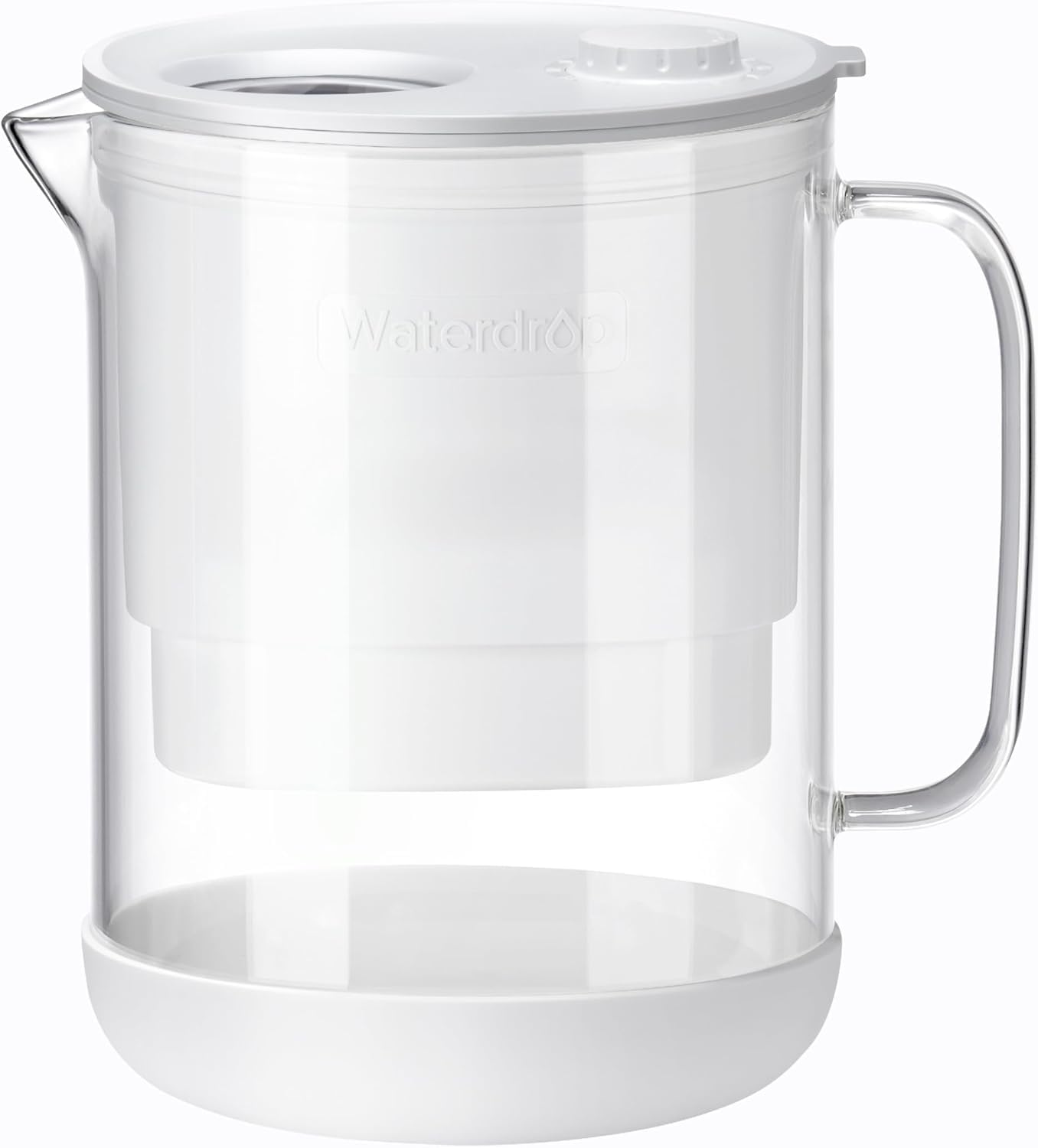
Waterdrop PT-72W Glass Water Filter Pitcher, 7-Cup, Eco-Friendly, White
Glass does not carry flavor, the cleanest-tasting option of the four, and 7 cups is a sensible daily size
Glass is heavy and breakable, capacity trails the XL badly, and the lid and housing are still plastic
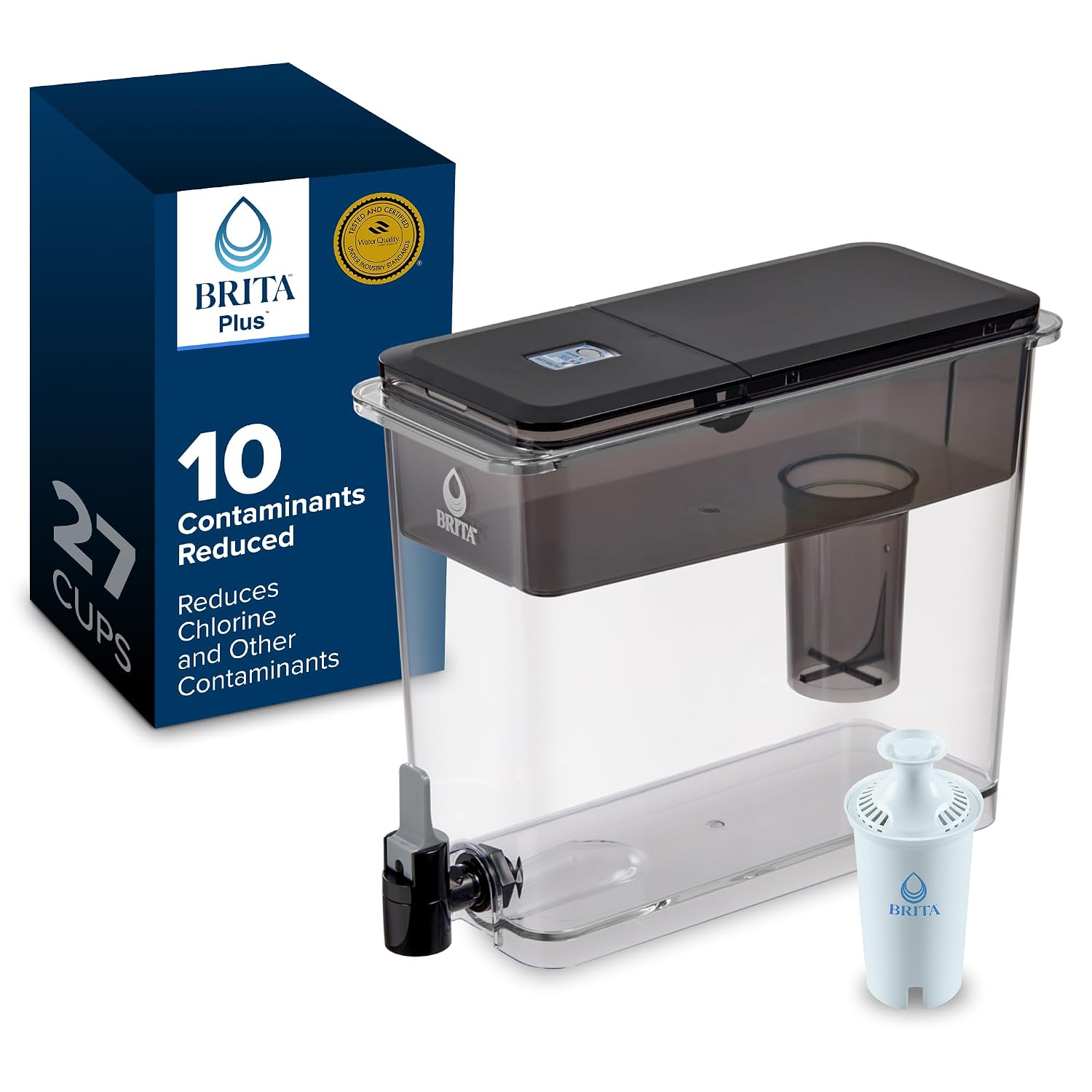
Brita XL 27 Cup Water Filter Pitcher, 1 Brita Plus Filter, Ultramax, Black
27 cups means you refill it once a day instead of five times, and the Plus filter is widely stocked
Taste and chlorine reduction only, not a lead solution, and the black plastic body is the least elegant thing here
Prices and availability were captured from Amazon Creators API and may change.
How I judge a pitcher before it earns counter space
I run four questions against every pitcher that shows up in my life. First, what does it actually remove, and against which standard? Second, what is the flow rate at gallon 50, not gallon one? Third, what does it cost per gallon once you include replacements? Fourth, would I pour a glass and hand it to my kid?
I will be straight with you about scope: these four units have not been through my basement bench, so nothing below is lab data. This is a specs-and-listings read, judged on published capacities, stated certifications, and the design decisions the listings reveal. Where a manufacturer makes a removal claim, I tell you it is a claim and I tell you what I would want to see before repeating it as fact.
Gravity filtration: the Membrane Solutions 6L
The Membrane Solutions 6L Gravity Water Filter Pro is the odd one out here, and not in a bad way. Gravity units use no plumbing and no electricity. You fill the upper chamber, water percolates through the media, and it collects below. Six liters per batch makes this a camping and group filter, and it is also the only pick in this comparison that keeps working when the power is out, which is a genuine capability rather than a marketing line.
The trade-offs are physical. Gravity is slow by design, so you wait for a batch rather than filling a glass on demand, and it occupies counter or table space that a 7-cup pitcher does not. For daily kitchen use by one or two people, that is more appliance than you need. For a cabin, a scout trip, a tailgate, or a week where the boil-water notice lands on your street, it is the right tool. As always with gravity media, the replacement filter schedule is what keeps it honest, because exhausted media is how breakthrough happens.
Glass bodies: the Waterdrop PT-72W
Glass is the reason the Waterdrop PT-72W sits at the top of my recommendation for a normal kitchen. Plastic pitchers pick up and hold flavors, especially when the water sits overnight, and glass simply does not. The 7-cup capacity is a real breakfast size, the white body is easy to keep clean, and the eco-friendly framing here is not just decoration, because a glass vessel should outlast several plastic ones.
The honest downsides: glass is heavy when full, it breaks if you knock it off the counter, and the lid and filter housing are still plastic, so this is a reduced-plastic pitcher rather than a plastic-free one. Capacity also trails the 27-cup Brita by a wide margin, which matters if you are filling water bottles for four people every morning. If your house is two or three people who drink from glasses, the size is right and the material is the upgrade.
High capacity: the Brita XL 27 Cup
The Brita XL 27 Cup exists to solve one problem: refill frequency. At 27 cups with the included Brita Plus filter in the Ultramax body, you fill it once and forget it, which is why it ends up in so many big households and office kitchens. That is a legitimate convenience win, and the filter is stocked in every grocery store in the country, so you will never be stranded waiting on a shipment.
Now the part that matters more than capacity. Standard Brita filtration is a taste and chlorine story, certified under NSF/ANSI 42 for the aesthetic stuff, not a health-contaminant story under NSF/ANSI 53. If lead is your concern, this is not the fix, and no amount of capacity changes that. Check the certification on whichever Brita filter you buy, because the Plus and standard cartridges are not identical. If your kid just wants cold water that does not taste like a swimming pool, the XL does that job all day with very little fuss.
Broad contaminant claims: the Epic Water Filters pitcher
The Epic Water Filters Pure Filter Pitcher is the most ambitious listing in this group. The 10-cup body is Tritan and BPA free, the filter is rated for 150 gallons, and the listing claims removal of fluoride, chlorine, lead, and forever chemicals. The white and bamboo finish is the nicest-looking thing here, and a 150 gallon rating is a long service interval that changes the cost-per-gallon math in your favor.
Here is my condition on all of it. Fluoride and PFAS removal require specific media, not general carbon block, and a removal list that broad should come with a certification number you can look up in the NSF listing database. Until I see that number, I treat the list as a claim, not a result. That is not a knock on the pitcher, which is well designed and generously sized. It is the standard I apply to every broad claim, and it is the reason I would tell you to verify before you buy if lead or fluoride is why you are shopping.
What the certification numbers actually mean
NSF/ANSI 42 covers aesthetics: chlorine taste and odor, particulates, and similar. NSF/ANSI 53 covers health effects, including lead, volatile organic compounds, and cysts. NSF/ANSI 401 covers a set of emerging contaminants, which is where some PFAS and pharmaceutical claims live. The number on the box is the whole point. "Tested to NSF standards" with no listing number means nothing, because anyone can pay a lab to run a test and then describe the result however they like.
When you compare these four, read the filter cartridge, not the pitcher. The vessel is a container. The media is the product, and the media is where the certification lives.
Flow rate is the spec nobody reads until they are standing there
Flow rate decides whether you actually use a filter. A pitcher that takes four minutes to pass a liter at gallon one will take longer at gallon 100, because loaded media restricts flow. Gravity units are the extreme case of this by design, and that is fine when you planned for it and infuriating when you did not. My rule is simple: if the pitcher is slow enough that you reach for the tap instead, you bought a decoration.
Cost per gallon, not sticker price
The pitcher is the bait. The replacement filter is the real price. A 150 gallon rating and a 40 gallon rating are not the same product even if the pitchers look identical on a shelf, because one of them has you buying cartridges four times as often. Divide the replacement cost by the rated gallons and compare that number, not the shelf price. Every product above links to its current listing so you can run that math yourself against today's numbers.
Which one fits which kitchen
- Small household worried about lead or fluoride: the Epic Water Filters pitcher, after you confirm the certification behind the removal claims.
- Two or three people who want the cleanest-tasting glass of water: the Waterdrop PT-72W.
- A crowd, a cabin, or outage prep: the Membrane Solutions 6L gravity filter.
- Kids who want cold water and a parent who wants fewer refills: the Brita XL 27 Cup.
What I am watching next
I want to see more pitchers publish flow data at end of filter life rather than at gallon one, and I want to see PFAS and fluoride claims arrive with listing numbers attached instead of a bullet list. Glass bodies are spreading, which is a good trend, and I expect at least one major brand to publish a proper cost-per-gallon figure on the box within the year. When that happens, this comparison gets shorter and better. Until then, buy the filter schedule you can live with, because that is the part you will actually keep paying for.