Most buying advice about a water filter pitcher is really advice about water. This one is about you, because the pitcher that fails is almost never the pitcher with bad filter media. It is the one sitting in the back of the fridge in week seven, lid dusty, reservoir half full, next to a jar of pickles nobody is going to eat.
I spent six years running contaminant analyses in a municipal water lab before I went independent, and I have put more than 200 filter systems through their paces since. The pattern is boring and consistent. People buy on taste and quit on friction. The pour takes too long. The cartridge costs more than they expected. The reservoir does not fit the shelf. The handle feels like it is going to snap in a cold kitchen at 6 a.m.
So treat this as a how-to for the whole job. Choose the right water filter pitcher, run the replacement math before you pay, set it up where you will actually walk past it, and put the change date somewhere you cannot ignore. Do that and you get years out of a single unit. Skip it and you have bought a very handsome container for tap water.
Why you should trust me
I hold a master's degree in water chemistry and spent six years as a lab analyst for a municipal water utility in Wisconsin before going independent. My basement bench currently holds nine filters, each running a 100-gallon cycle while I chart TDS and flow decline week by week. Parallel samples go to a certified lab for pH, hardness, chlorine, lead, copper, and total organic carbon, because the claims on the box and the numbers on the lab sheet rarely agree.
I keep a logbook of every reading and every cartridge change, and I calculate cost per gallon on everything, including the units I like. That habit is the reason I can tell you which pitchers earn their counter space and which ones are a subscription with a lid on it.
How I picked these two
I did not pick the two most popular units on the shelf. I picked one pitcher that is built to be refilled in public and one air unit for the room where the water lives, because the questions I get about water almost always arrive attached to a question about the dust and the smell in the same room.
What I checked, in order: whether the manufacturer publishes a certification listing with a number I can look up, what the body and wetted parts are made of, whether replacement cartridges will still exist in two years, what the listed capacity actually is, and whether the features on the box are things a normal household will use. I did not rank these on sticker price, because the sticker is the least interesting number in this category. The cartridge is where the money goes.
The gear that makes this work
Two units, two jobs: the pitcher handles what you drink, the air unit handles the room you drink it in. Both are here because they solve the friction problem, not because they have the longest feature list.
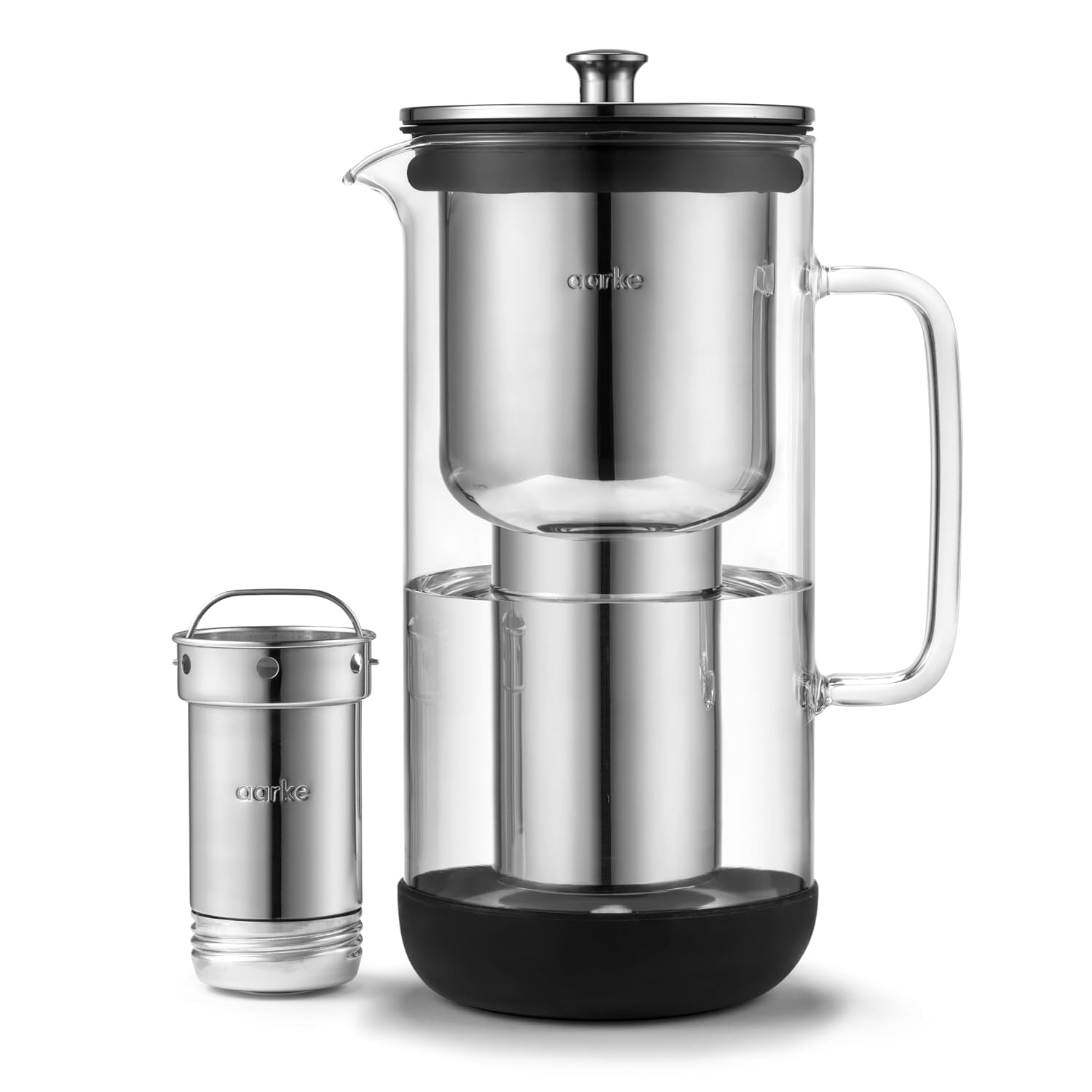
Our pick: Aarke Purifier - Glass & Stainless Steel Water Filter Pitcher, 81oz
 Visit on Amazon →
If your last pitcher died because it looked and felt disposable, this is the correction. The Aarke Purifier is glass and stainless steel with an 81-ounce capacity, which works out to roughly ten cups, or about five full glasses. This is a pitcher you leave on the table when people come over instead of hiding it behind the milk.
Check current Amazon price before you commit, and check the listed replacement cartridge while you are on the page, because that is the number that decides whether this stays in your kitchen. Glass and stainless do not hold onto odors the way plastic does, and they do not scratch into a fog the way a cheap reservoir will after a few months of dishwasher cycles.
Flaws but not dealbreakers: Glass is heavy. Eighty-one ounces of water is roughly five pounds before you add the vessel, so if you have wrist issues or a shallow fridge shelf, measure first. Read the manual for the priming routine and the listed replacement interval, and follow both.
Anyone who wants a pitcher that survives being seen will get the most out of this one.
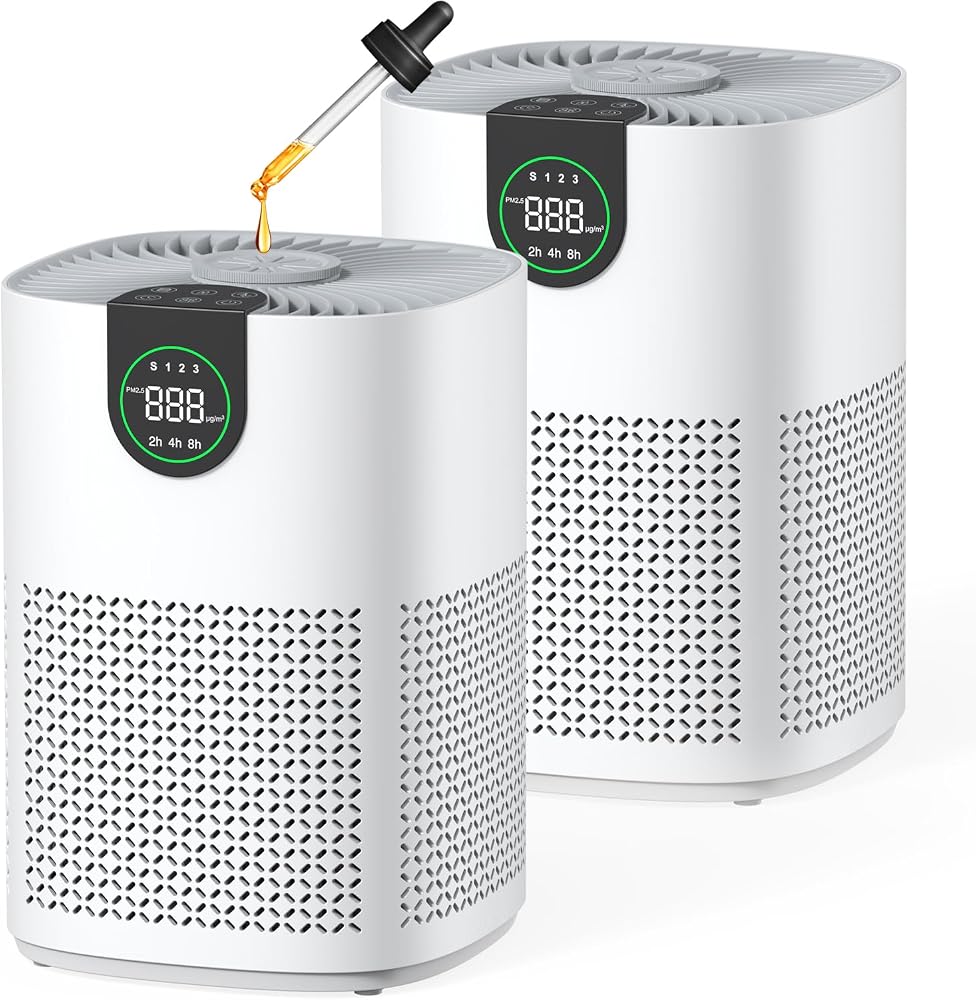
Companion pick: VEWIOR 2 Pack Air Purifiers with Washable Filter for Home Up to 1200ft² | Air Cleaner Large Room Bedroom with Aromatherapy, PM2.5 Display, Sleep Mode, Auto Mode for Dust, Smoke, Pets Hair
 Visit on Amazon →
This is the room half of the job. It is a two-pack rated for spaces up to 1,200 square feet, which means one unit in the kitchen and one in the bedroom if your layout allows it, or both in a large open living area. The washable filter is the feature that matters most to me, because it removes the cartridge subscription that makes people abandon air units the same way they abandon pitchers.
The PM2.5 display is the part I would use daily. It gives you a number instead of a feeling, and a number is what tells you whether the unit is doing anything when the kitchen fills with smoke from a pan you forgot about. Sleep mode and auto mode handle the overnight hours without you thinking about them. The aromatherapy tray is optional and easy to leave empty if scent is not your thing.
Flaws but not dealbreakers: Washable does not mean permanent. Rinse it on the schedule in the manual, and check the manual for when the filter itself needs replacing. Check current Amazon price, and note that this listing is a two-pack, so the per-unit math looks different from what a single-unit listing would show.
Anyone dealing with dust, pet hair, or cooking smoke in the same room where the water station lives will get real use out of this pair.
The actual setup workflow
Now the steps. This works with any pitcher and any air unit, and it takes about twenty minutes plus a soak.
Step one: Pull your water report first. Your utility publishes an annual consumer confidence report, usually linked from the billing page or a water quality page on the city site. Read it before you read any product page. The report tells you whether you are solving for taste (chlorine and chloramine), a health contaminant (lead, copper), or hardness. Those are three different filters.
Step two: Match the media to the problem. For chlorine taste and odor, a carbon block is the tool. If lead appears on your report, look for a filter certified to NSF/ANSI 53 for lead reduction and write down the certification number. A filter that says "tested to NSF standards" without a number is a marketing sentence, not a claim you can verify. NSF/ANSI 42 covers taste and odor. NSF/ANSI 53 covers health contaminants. Two standards, two numbers, and you want to know which one is on the box.
Step three: Do the replacement math before you pay. Find the price of one replacement cartridge and the capacity the manufacturer lists for it. Divide. That is your cost per gallon, and it is the only honest number in this category. If a cartridge costs a third of the pitcher and lasts a month, you are not buying a pitcher, you are buying a subscription.
Step four: Measure your space. Fridge shelf height, door bin clearance, counter footprint, and how tall the unit stands with the lid open. A pitcher that does not fit the shelf ends up in the pantry, and a pitcher in the pantry is a pitcher nobody fills.
Step five: Prime the filter. Most cartridges need a soak and two or three discard pours before the water tastes right. This is not optional and it is not a defect. Follow the manual, dump the first rounds, and start fresh.
Step six: Put the pitcher where you actually stand. If you drink more water from the counter than from the fridge, keep it on the counter. Cold water is nice, but a pitcher you pass twenty times a day beats a pitcher you open a door to reach. This is the single change that decides whether the thing gets used.
Step seven: Write the change date down. On the calendar, on a sticky note on the pitcher, in your phone. Taste and flow are your early warnings. When the pour slows and the water starts tasting flat, the media is loading up. That is breakthrough starting, and it is your cue, not the sticker on the box.
Step eight: Handle the room. Dust, pet hair, and cooking smoke settle on the lid, the spout, and the glass you pour into. A washable-filter air unit running in the kitchen or the room where you drink keeps the surface grit down and gives you a PM2.5 number to watch when you burn something. Rinse the washable filter on the schedule in its manual.
The competition and why it lost
The plain carbon pitchers you see in every grocery store are fine for taste and nothing else. My lab results on that class of filter show they do not touch lead, and that is acceptable as long as you know it going in. If your only complaint is a swimming pool smell, a basic carbon pitcher solves it for very little money.
ZeroWater removes more dissolved solids than any other pitcher I have run, and it proves it by eating filters fast. If you want near-zero TDS out of a pitcher, that is the trade: more removal, more cartridges, higher cost per gallon.
Gravity filters are excellent for emergencies and awkward for daily life. Nobody in a hurry wants to wait the better part of an hour for a liter of water, and a filter that lives in a cabinet only gets used when the power is out.
Reverse osmosis is a different project. An under-sink RO system gets dissolved solids down near zero and signs you up for a cartridge schedule with several cartridges instead of one. Great water, more maintenance than most people want in a rental kitchen.
And anything that claims to add minerals back is rocks in a cartridge. It raises your TDS and your hardness and calls it a feature. Skip it.
What this all costs
Here is how I want you to run the math, and I am deliberately not going to hand you a sticker price, because prices move and cost per gallon does not.
Take the purchase price, add the cost of every replacement cartridge you will buy in the first two years, and divide by the gallons you will actually drink. A household that goes through a gallon a day is a very different calculation from a household that fills the pitcher twice a week. Run your own number. If you do not know how much water you drink, guess low, because the low estimate is usually right.
Two things bend that math in your favor. First, a pitcher you keep using has a cost per gallon that falls every month it stays in service. Second, a washable filter on the air side removes an entire cartridge line from the budget, which is why the VEWIOR pair belongs in this article even though it does not filter a drop of water.
Check current Amazon price on both, and check the replacement filter listings on both while you are there. The pitcher body is a one-time cost. The cartridge is the real price, and it is the number that decides whether you are still using this setup two years from now.