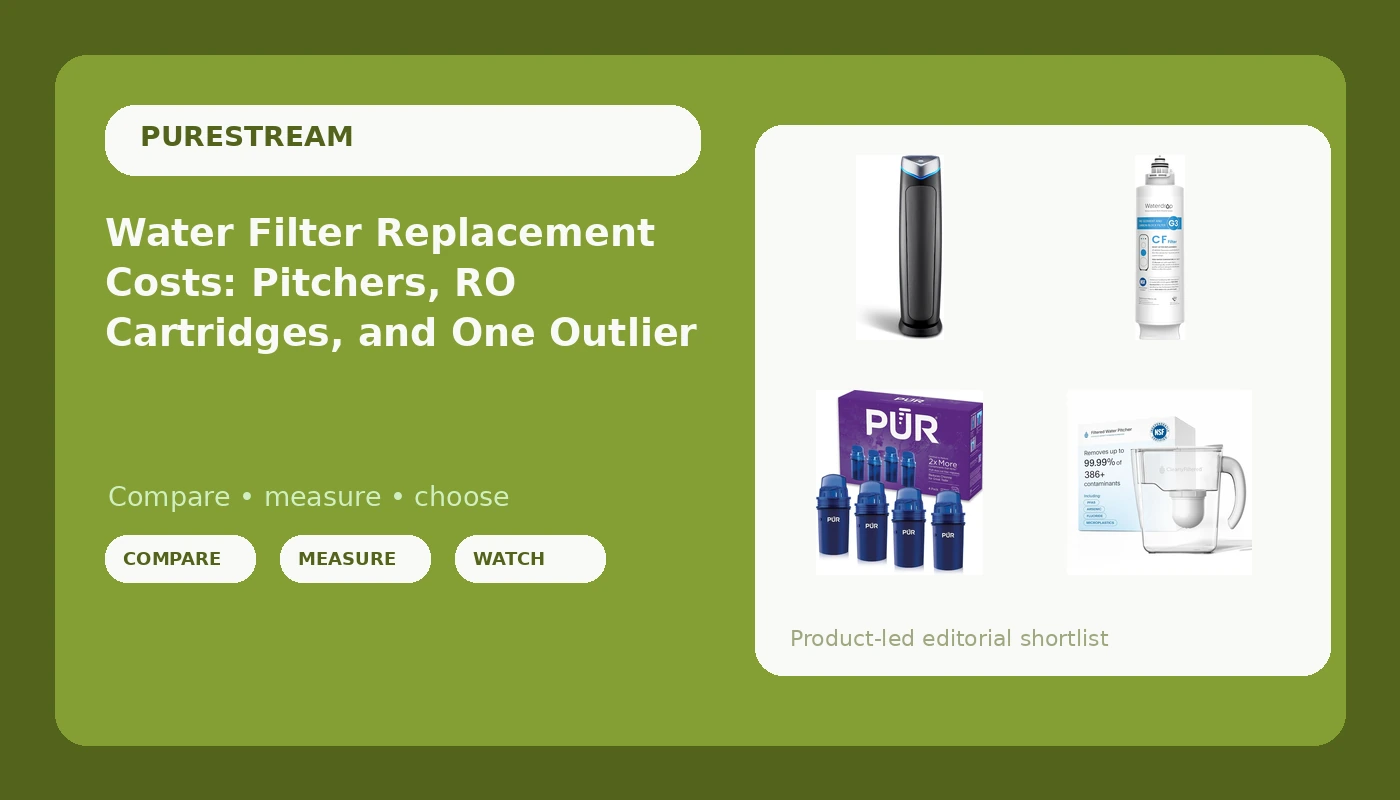
The first thing I do with any new filter is not open the box. It is open a spreadsheet and write down what the replacements cost, because home water filtration replacement costs are where the real money lives. The unit is the bait. The cartridge is the subscription. I have watched people spend an afternoon comparing two pitchers on purchase price and then spend three years paying for the difference, one proprietary refill at a time, without ever noticing the trade they made.
This comparison puts four very different products on one page: a 10-cup pitcher that arrives with its filter, a four-pack of refills for the pitchers and dispensers people already own, a single RO cartridge that only makes sense if you already own the system underneath it, and one unit that filters air instead of water. Three of them belong in a water budget. One of them does not, and I am including it anyway because pretending it fits would be dishonest and because it is genuinely good at the job it actually does.
The best pick for most kitchens is the Clearly Filtered pitcher if you want one purchase to cover pitcher and cartridge, and the PUR 4-pack if you already own a PUR pitcher and want the cheapest per-glass path to better-tasting water. Neither is a substitute for reverse osmosis if dissolved solids are your problem. That is the short version. The long version is about certifications, flow rates, and the fact that a filter which slows to a trickle in six weeks is a faucet decoration with a nice lid.
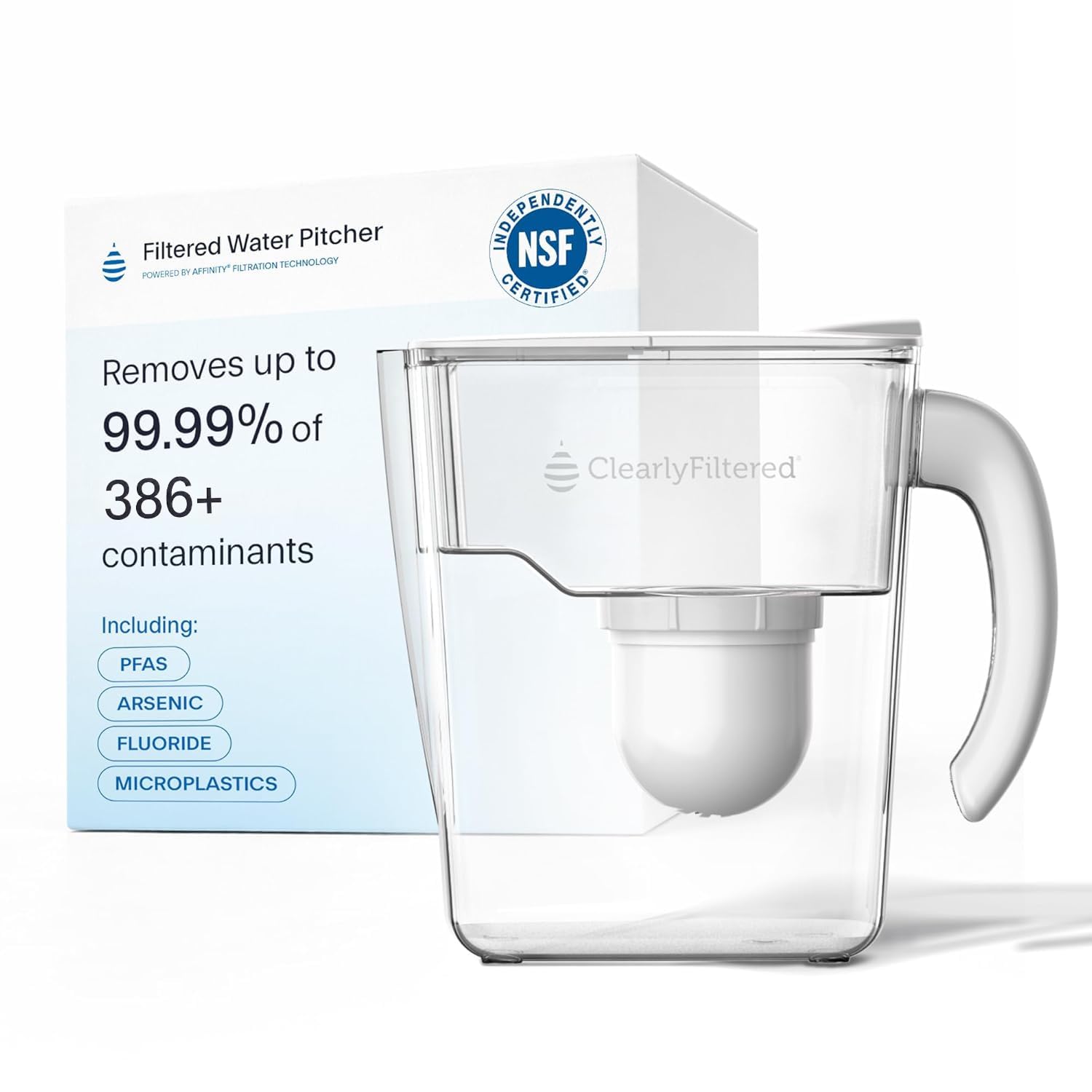
Clearly Filtered Water Filter Pitcher, 10 Cup BPA Free Water Filtration
A complete system in one box: 10-cup capacity, BPA-free body, filter included, so your first glass and your hundredth come from the same purchase
Proprietary cartridge, which means the long-term cost depends entirely on what that one replacement costs when you need it
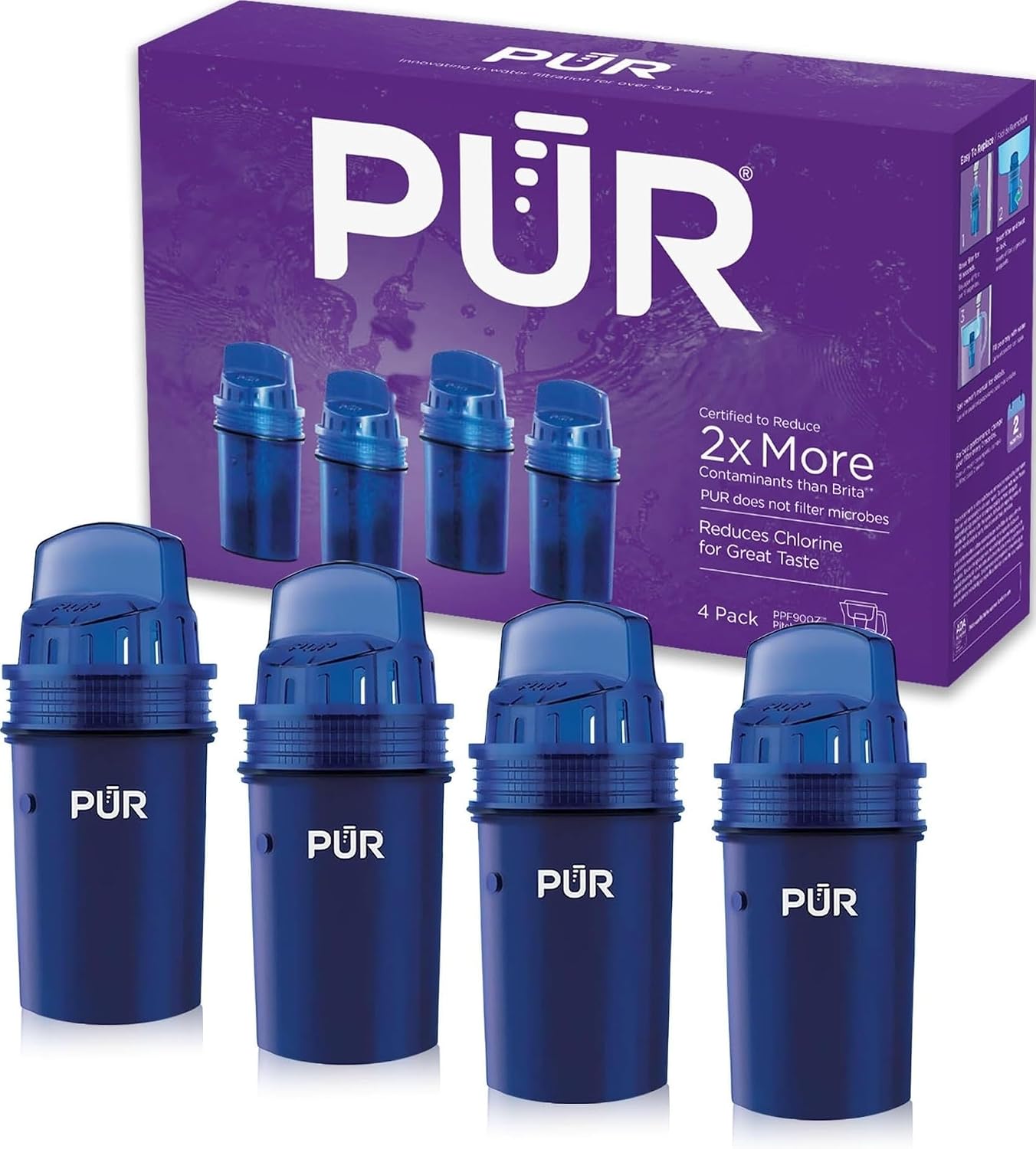
PUR Water Pitcher & Dispenser Replacement Filter 4-Pack
Sold as a four-pack, so you are buying a season of water rather than a single cartridge, and it fits the pitchers and dispensers you may already own
It is a refill, not a system, and it is built for the taste and chlorine end of the market rather than the dissolved-solids end
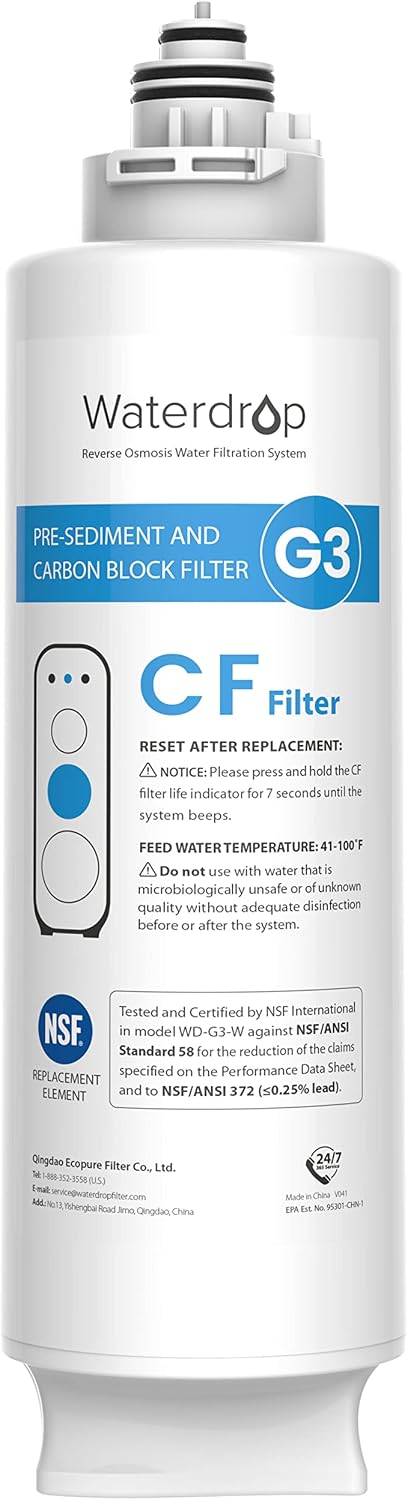
Waterdrop G3-N1CF Filter, Replacement for G3-W & G3P600 & G3P800 RO System
One part number that serves three popular Waterdrop RO platforms, which means one cartridge to track instead of a shelf full of near-identical boxes
Completely useless without the RO system under your sink, and RO water is stripped down to near-zero dissolved solids, including minerals some people want back
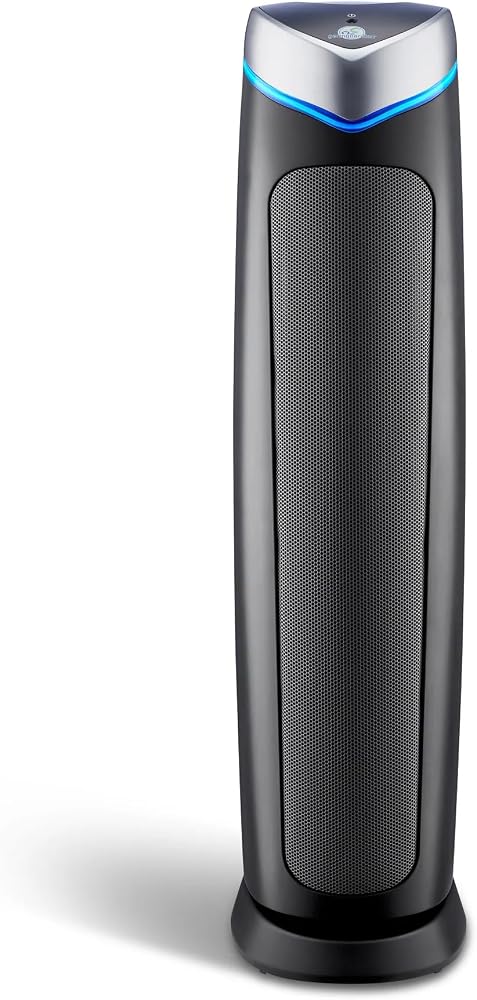
GermGuardian 5-In-1 HEPA Air Purifier for Home, Large Rooms Up To 915 Sq. Ft. with HEPA Pet Air Filter, UV-C Light & Odor Reduction, AC5250PT, 28" Tower, Gray
The only unit here that treats air rather than water, with a HEPA pet filter, UV-C light, and odor reduction in a 28-inch tower rated for large rooms up to 915 square feet
It is not a water filter, so it does not belong in a water budget, and a five-stage design usually means more than one consumable to replace on its own schedule
Prices and availability were captured from Amazon Creators API and may change.
How I compare filters
My method is boring on purpose. First, what does the filter actually remove, and can I find the certification number that proves it? Second, what is the flow rate at fifty gallons rather than at gallon one, because the second number is the one you live with? Third, what does it cost per gallon once you have bought replacements for a year? And fourth, would I drink from it every day and serve that water to my kid?
That fourth question is the one that ends most debates in my house. A filter can win on paper and lose at the kitchen counter.
Notice what is not on that list: purchase price alone. A pitcher that costs twice as much and takes a cartridge that lasts three times as long is cheaper over any meaningful timeline. The reverse is also true, and it is how a bargain pitcher becomes an expensive habit.
The pitchers: one system, one refill pack
These two products are not really competitors. They are two different decisions.
The Clearly Filtered pitcher is a system purchase. You get the 10-cup BPA-free body and the filter together, which means you are not guessing about compatibility on day one. That matters more than it sounds, because the single most common email I get is from someone holding a cartridge that almost fits. Ten cups is a real family capacity, enough that you are not refilling the reservoir every time someone wants a glass before bed. The catch is the same catch every proprietary pitcher carries: once you are in, your future cost is set by one company's cartridge pricing, and your only lever is buying replacements in the size that saves you the most per cartridge.
The PUR 4-pack is the opposite decision. It assumes you already own a PUR pitcher or dispenser and simply want to keep it running. Buying four at a time does two useful things: it drops your cost per cartridge relative to singles, and it means you are far less likely to run a cartridge two months past its rating because the replacement was backordered. I say that as someone who has absolutely done exactly that. Running a filter past its rated life is how breakthrough happens, and breakthrough is the reason replacement schedules exist in the first place.
If you want the whole picture on what these pitchers can and cannot do, start with the certification number on the packaging and look it up. A number from a recognized certification body tells you which contaminant classes were tested. The phrase "tested to standards" without a number tells you nothing, and I will die on that hill.
The RO cartridge: Waterdrop G3-N1CF
The Waterdrop G3-N1CF is a replacement filter for the G3-W, G3P600, and G3P800 reverse osmosis systems. Read that sentence again, because it is the entire story. This is not a product you buy to start filtering water. It is a product you buy because you already committed to a reverse osmosis platform and the cartridge is due.
That is not a knock. Reverse osmosis is the only mainstream home technology that pulls dissolved solids down toward zero, and if you are dealing with water where total dissolved solids are genuinely high, no pitcher on this page will match it. What RO does not do is discriminate. It removes the minerals along with everything else, which is why remineralization is a real conversation and not just marketing. If you go the RO route, budget for a filter schedule rather than a filter, because multi-stage systems generally have more than one consumable with its own replacement interval. The G3-N1CF is one line item on that schedule, and the fact that it serves three different Waterdrop platforms is a genuine convenience: one part number, one reminder on your calendar.
The outlier: GermGuardian 5-in-1
I am including the GermGuardian AC5250PT because it arrived in the same batch and because leaving it out would be sneaky. It is an air purifier, not a water filter. It is a 28-inch tower rated for large rooms up to 915 square feet, with a HEPA pet filter, UV-C light, and odor reduction.
Judged as what it is, the spec sheet is straightforward: HEPA for particulates, UV-C as an additional stage, and an odor stage that usually means carbon. Judged against the other three products on this page, it is a category error, and I want to be blunt about why that matters to your budget. Five-stage air purifiers typically mean more than one thing to replace, and those consumables run on their own clocks. If you are comparing water filtration replacement costs, this unit should not be in the math at all. If your problem is a house that smells like a dog and a kitchen that smells like last night's fish, it belongs in a completely different spreadsheet, and a good one.
Cost per gallon, done honestly
Here is the arithmetic I use, and it works regardless of what you are buying. Take the cost of a replacement pack, divide it by the number of gallons the manufacturer rates that pack for, and write the result down. Do the same for the unit itself, spread across the gallons you expect to run through it before you replace the whole thing. Add the two numbers. That is your cost per gallon, and it is the only number that lets you compare a pitcher to a reverse osmosis system without fooling yourself.
Two cautions. First, rated gallons are a manufacturer's claim, not a lab result, so treat them as the optimistic end of the range. Second, if you ignore flow rate, you will not run the rated gallons, because you will stop using the thing. A pitcher that takes four minutes to trickle through a full reservoir gets used for a month and then lives in the back of the fridge. That is a real cost, just not one that shows up on a receipt.
This is also where the refill pack earns its place. Buying four PUR cartridges at once lowers your per-cartridge cost and raises the odds you actually change them on time. The cheapest filter in the world is expensive if you run it to exhaustion.
What the labels will not tell you
Nobody prints the number that matters most. Replacement interval is buried in fine print. Flow rate is quoted at its best moment. Certification is often described in prose rather than cited by number. And "removes up to 99.9 percent of contaminants" is a sentence that means nothing until someone tells you which contaminants, at what concentration, in what water.
My rule is simple: if a claim cannot be traced to a certification listing or a lab report, it is advertising, not information. That applies to the pitcher on your counter, the cartridge under your sink, and anything with a UV-C bulb inside it.
One more thing worth saying plainly. A filter that claims to remove everything is either lying or stripping minerals you would rather keep. Real systems have trade-offs, and the honest ones publish them.
The trade-offs, side by side
Pitchers win on simplicity and lose on dissolved solids. They are the right answer for taste, chlorine, and the specific contaminants their certification covers, and the wrong answer for anyone expecting near-zero total dissolved solids.
Reverse osmosis wins on dissolved solids and loses on simplicity and mineral content. It is a system with a schedule, and the Waterdrop cartridge here is one line on that schedule.
Refill packs win on cost per cartridge and lose on capability. The PUR 4-pack keeps a pitcher you already own running at the lowest per-glass cost on this page, and it does not turn that pitcher into something it is not.
Air purifiers win on air and lose on relevance to this conversation. The GermGuardian is a solid large-room unit with a pet-focused HEPA stage and UV-C, and it will not improve a single glass of water.
The bottom line
If you are starting from nothing and want one purchase that covers the pitcher and the cartridge, the Clearly Filtered 10-cup pitcher is the cleanest starting point on this page. If you already own a PUR pitcher or dispenser and just want to keep it fed, the four-pack is the value play and the one I would hand to a friend without a second thought. If dissolved solids are your actual problem, skip both and look at a reverse osmosis platform, then plan for the cartridge schedule the Waterdrop G3-N1CF is part of. And if your house smells like a wet dog, buy the GermGuardian, but please do not put it in your water budget.
Whatever you choose, write the replacement cost next to the purchase price before you click. That single habit has saved me more money than any filter I have ever reviewed.