Chlorine taste, a faint metallic edge, or a chalky film on the kettle is usually the moment people start shopping for the best water filter systems. The awkward part is that the category spans a countertop pitcher you refill at the sink, a countertop reverse osmosis unit that plugs into a wall outlet, and a three-stage whole-house system that treats every tap in the building. Those are not competing products so much as answers to three different problems, and buying the wrong tier is how a filter ends up at the back of a cabinet.
This guide covers six options across those tiers: two 10-cup Brita pitchers, two countertop reverse osmosis units, one whole-house system aimed at well water, and a hardness test kit that tells you whether scale is even part of your problem. What separates them is not the marketing copy but three practical questions. What is the filter actually built to reduce? How much water does your household drink in a day? And what do the replacement filters cost over a year of normal use? Answer those and the shortlist gets short fast.
Related: How to Read Your Water Quality Report
Quick answer
The DREO Reverse Osmosis Water Filter System Countertop, RO Water Filter 112 3L is the strongest fit for households that want dissolved solids pulled out of drinking water without hiring a plumber, because it is a countertop reverse osmosis unit that runs off a wall outlet and a refillable reservoir instead of a supply line. Choose the Brita Large 10 Cup Water Pitcher Dispenser instead when taste and chlorine are the whole complaint and you want the lowest-commitment option on the counter.
Water filter systems worth comparing
Four categories do the real work in this roundup, and they are worth separating before you look at any single product.
Pitcher filters are the entry tier. They run water through a carbon cartridge, they sit in the fridge door or on a shelf, and they are built around taste and chlorine reduction rather than dissolved solids. The trade-off is frequency: a 10-cup pitcher in a household of three or four gets refilled several times a day, and the cartridge is the part you keep paying for.
Countertop reverse osmosis units are the middle tier. They push water through a membrane, which is the mechanism that reduces dissolved solids rather than just improving flavor, and they do it without cutting into a supply line. The costs are counter space, manual reservoir refills, and a concentrate stream that goes down the drain.
Whole-house systems are the point-of-entry tier. They treat water before it reaches any fixture, which is why they show up in well-water households dealing with sediment, iron, or hardness across showers and appliances, not just the drinking glass.
Diagnostics are the tier people skip. A hardness test kit costs less than a single replacement cartridge and tells you whether you are solving a real problem or buying a softener you did not need.
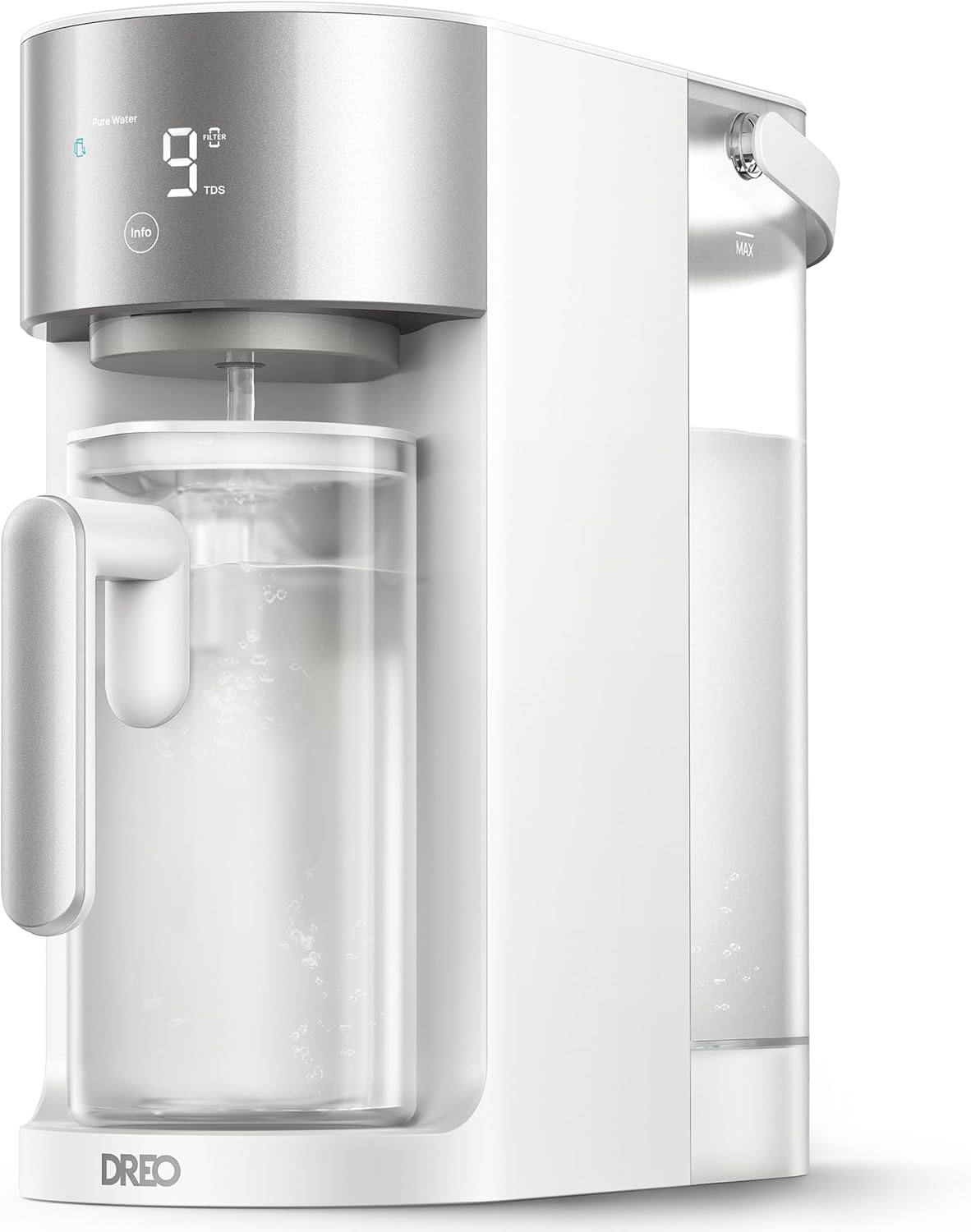
DREO Reverse Osmosis Water Filter System Countertop, RO Water Filter 112 3L
A countertop reverse osmosis unit with a 3L reservoir that needs no plumbing work. RO membranes target dissolved solids, so it suits households chasing lower TDS rather than chlorine taste alone.
Visit on Amazon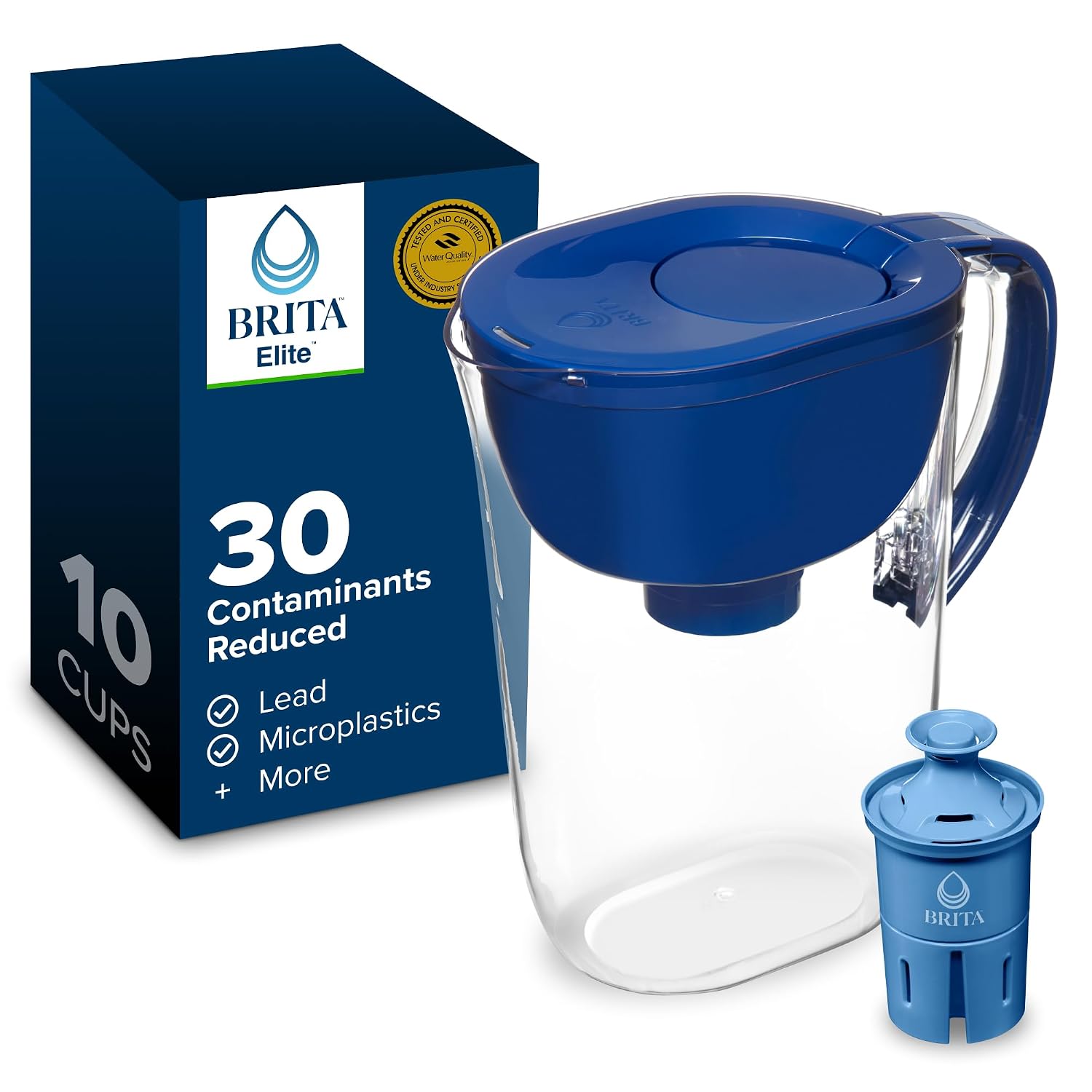
Brita Large 10 Cup Water Pitcher Dispenser, Includes 1 Elite Filter, Blue
Check current Amazon price
A 10-cup dispenser pitcher with a spigot and one Elite filter in the box. The dispenser design pours without lifting the reservoir, which matters when the pitcher lives in the fridge.
Visit on Amazon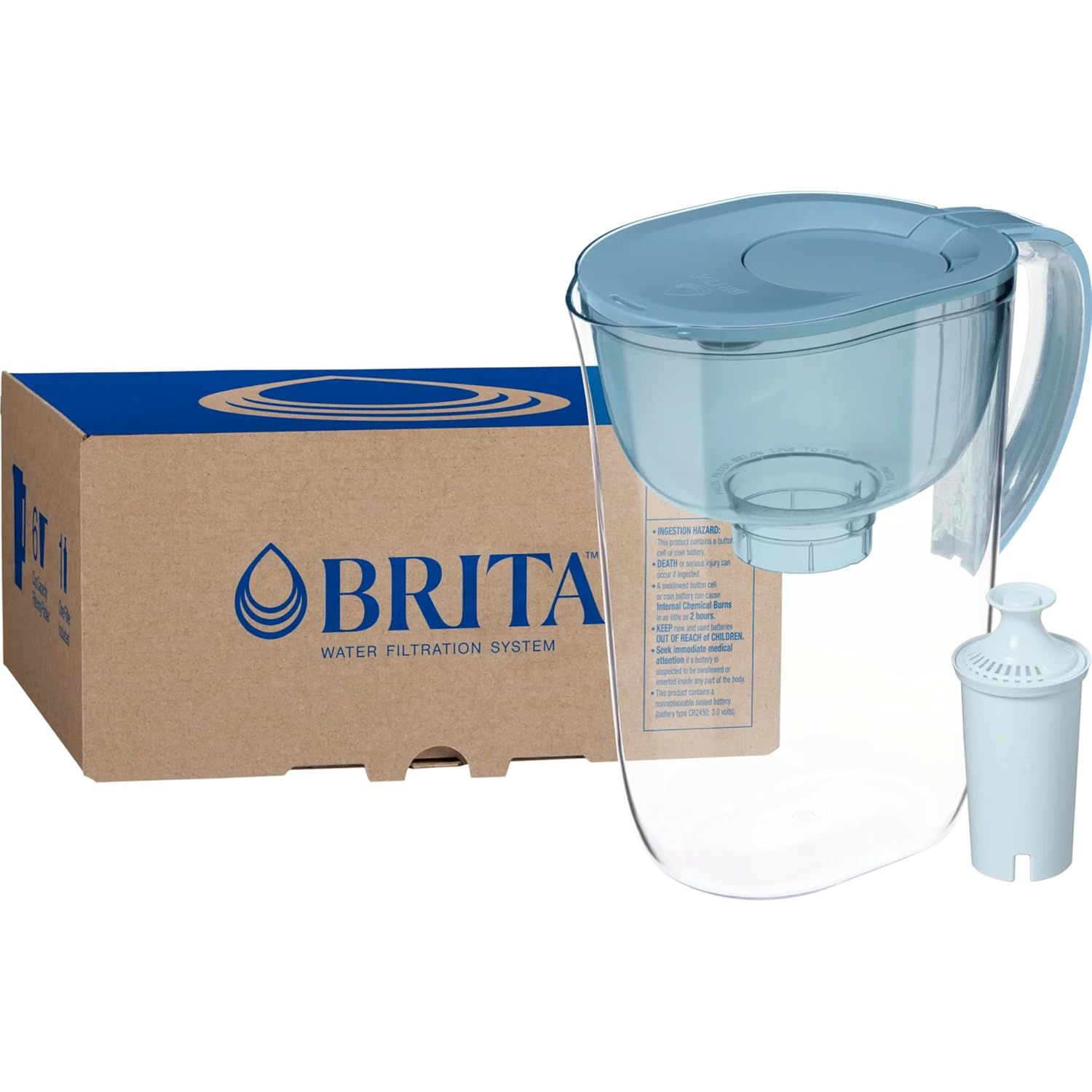
Brita Large 10-Cup Water Filter Pitcher with BritaPlus Filter, Stone Blue
The familiar 10-cup Brita body paired with a BritaPlus filter in a stone blue finish. Same fill, wait, pour routine, aimed at taste and chlorine rather than dissolved solids.
Visit on Amazon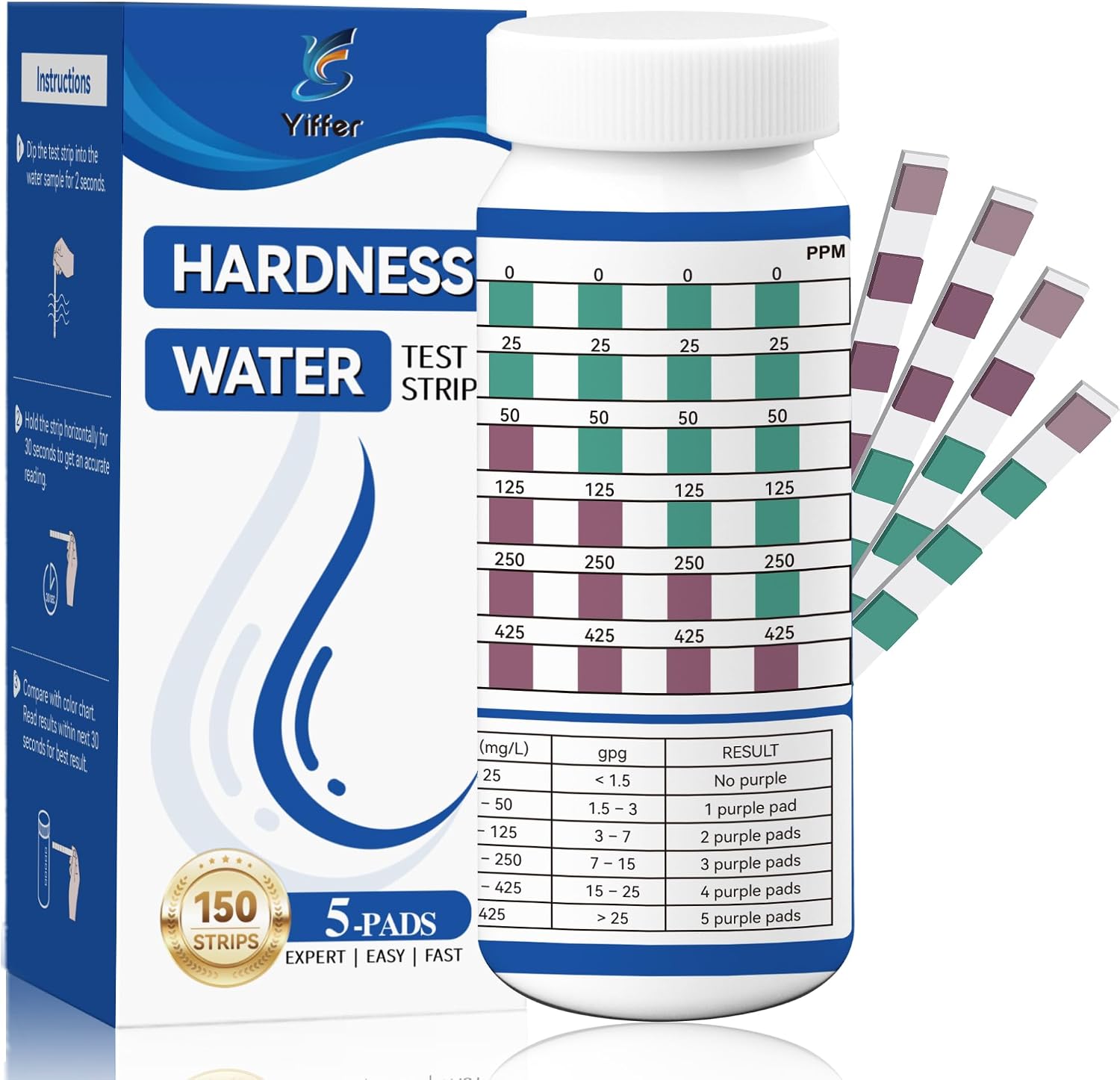
Water Hardness Test Kit with 5-Pads(150strips)
A strip-based hardness test kit with 150 strips across five pads. Worth running before you buy any softening or whole-house equipment, since hardness is what drives scale and soap scum.
Visit on Amazon
Whole House Water Filter System for Well Water,3-Stage,2-Year Filter Supply
A three-stage whole-house system aimed at well water, supplied with a two-year filter supply. It filters at the point of entry, so showers, laundry, and the kitchen tap all see treated water.
Visit on Amazon
Leysern Cold Countertop Reverse Osmosis Water Filter, No Installation
A countertop reverse osmosis unit that needs no installation and dispenses cold water. Built for readers who want membrane-level dissolved solids reduction without touching a supply line.
Visit on AmazonPrices and availability may change. Check the retailer for current details.
How these products were compared
This guide compares filtration type and the contaminants each type is designed to address, installation and plumbing requirements, capacity and daily output, replacement filter schedule and the ongoing filter cost, and footprint in a normal kitchen.
Product names, images, and retailer links are matched by ASIN so that every card points to the product shown. Nothing here is presented as a bench test. The comparisons rest on the product information each manufacturer publishes, the certification categories that apply to each filtration type, and the practical differences between pitchers, countertop reverse osmosis, and point-of-entry systems. Because pricing and stock move constantly, no prices are quoted in this article. Use the link on any card to confirm the current price and availability.
How to choose the right water filter
Start with the complaint, not the product. If the water tastes like a swimming pool or smells flat, you are dealing with chlorine and its byproducts, and a carbon pitcher or carbon block filter is the right tool. If the water leaves spots, crusts the kettle, or needs a lot of soap to lather, you have a hardness question, and no drinking-water pitcher solves it. If you want the dissolved solids themselves reduced, the reading on a TDS meter dropped to near zero, you need a membrane, which means reverse osmosis. And if the problem shows up in the shower and the washing machine as much as the glass, you need treatment at the point of entry.
Certification is the next filter on your shortlist. Look for the specific standard printed with a certification body name, because the standard tells you what the product was actually tested against. Taste and chlorine reduction and health-related contaminant reduction are different claims, and a pitcher that carries only the first one should not be bought for the second. If a package claims it removes everything, treat that as a marketing sentence until you find the certification listing behind it.
Then run the math on water volume. Count how many glasses and how many pitchers or reservoirs your household empties in a day, then check the rated capacity of the cartridge against that number. A filter sized for two people will be exhausted in half the advertised time in a family of five, and the replacement interval is where the real cost lives. If you want the longer version of that arithmetic, our guide to filter cost per gallon walks through it step by step.
DREO Reverse Osmosis Water Filter System Countertop, RO Water Filter 112 3L
The top pick here is a countertop reverse osmosis unit with a 3L reservoir, and it earns that spot for one structural reason: it delivers membrane filtration without any plumbing work. No shutoff valve, no drilling a hole in the counter for a dedicated faucet, no under-sink installation. You fill the reservoir, the unit runs the water through the RO stage, and the treated water is what you pour. For renters, apartment kitchens, and anyone who is not ready to commit to permanent modifications, that is the difference between owning an RO system and thinking about owning one.
The trade-offs are real and worth stating plainly. A countertop unit occupies counter space, and the reservoir has to be refilled by hand, which is a daily chore in a household that drinks a lot of water. Reverse osmosis also produces a concentrate stream that carries the rejected solids to the drain, so you are using more input water than you get out. And RO water is near-mineral-free by design, which some people like and others find flat; if you are in the second group, that is a taste preference to solve, not a defect to fix with a cartridge full of rocks.
Alternatives to consider
The Brita Large 10 Cup Water Pitcher Dispenser is better suited to a household whose only complaint is flavor, since it is a carbon pitcher with a pour spigot and one Elite filter included, while the Brita Large 10-Cup Water Filter Pitcher with BritaPlus Filter is a stronger fit when you want the same 10-cup capacity and routine in a different finish and filter pairing. Both sit in the taste and chlorine lane, and neither is the tool for dissolved solids.
The Water Hardness Test Kit with 5-Pads(150strips), the Whole House Water Filter System for Well Water,3-Stage,2-Year Filter Supply, and the Leysern Cold Countertop Reverse Osmosis Water Filter, No Installation cover the other three jobs. The test kit is the diagnostic step that tells you whether hardness is a factor at all. The whole-house system is the point-of-entry answer for well water, with three stages and a two-year filter supply included. The Leysern unit is the second countertop RO option, and it is the one to look at when you want cold dispensing and no installation but prefer a different unit than the top pick.
Day-to-day use and maintenance
Every product in this roundup has one recurring cost and one recurring chore, and knowing both up front is what keeps a filter in service instead of in a closet. For the pitchers, that means replacing the cartridge on the schedule the manufacturer specifies, rinsing the reservoir, and keeping the lid and spigot clean, since a pitcher that sits in a warm kitchen grows things a filter cannot remove. For countertop reverse osmosis, it means refilling the reservoir, replacing the sediment and membrane stages per the manual, and occasionally checking that the concentrate line is not kinked.
For the whole-house system, maintenance is a filter schedule rather than a daily task, but it is a bigger schedule: three stages, and the supplied two-year filter supply is the timeline you are planning against. Treat the replacement interval as a hard date, because a loaded sediment stage starves the stages behind it and pushes the whole system toward breakthrough, where exhausted media stops holding what it was capturing. If you are on well water, test hardness before and after installation so you know whether the system is doing what you bought it for.
The hardness strips are the simplest item on the list and the easiest to misuse. Read the strip at the time the instructions specify, in consistent light, and write the number down with the date. A single reading tells you little; a series of readings across seasons tells you whether your source water is stable or shifting.
Buying checklist
- Confirm whether you are solving taste, dissolved solids, or hardness, and buy for that one problem first.
- Measure the counter, cabinet, or utility space the unit needs, including clearance for refilling a reservoir.
- Check the certification standard printed on the exact model, not the brand family.
- Price the replacement filters on an annual basis before you buy the hardware.
- Verify the current retailer price, availability, and return terms through the product link.
Final recommendation
Choose the DREO Reverse Osmosis Water Filter System Countertop, RO Water Filter 112 3L when you want dissolved solids reduced and you are not willing to modify your plumbing to get there. Choose the Brita Large 10 Cup Water Pitcher Dispenser when taste and chlorine are the entire problem and you want the simplest possible routine with the smallest upfront commitment. Choose the Whole House Water Filter System for Well Water,3-Stage,2-Year Filter Supply when the water problem is building-wide rather than glass-wide, and run the Water Hardness Test Kit with 5-Pads(150strips) first so that decision is based on a number instead of a guess. The Leysern Cold Countertop Reverse Osmosis Water Filter, No Installation is the alternative to weigh against the top pick if cold dispensing matters more to you than the DREO layout.