Related: How to Read Your Water Quality Report Without a Chemistry Degree
Madison tap water came out of my kitchen faucet tasting like a swimming pool. My kid noticed before I did, which is how a water chemist ends up spending her weekends in a basement with a TDS meter and a rack of sample bottles.
That was the start of the logbook. I have run more than 200 home water filter systems through 100 gallons each since then, charting TDS and flow decline week by week and sending samples to a certified lab for pH, hardness, chlorine, lead, copper, and total organic carbon. The meter is not the whole story, but it is a damn good start, and it tells you fast which units are working and which ones are countertop decoration.
So when someone asks me which home water filter systems to buy, I do not answer with a brand. I answer with a question: what is in your water, and how much patience do you have? The four products below cover the three ways a kitchen actually solves this problem, plus one accessory that has nothing to do with the water itself and everything to do with why your ice tastes like last week's leftovers.
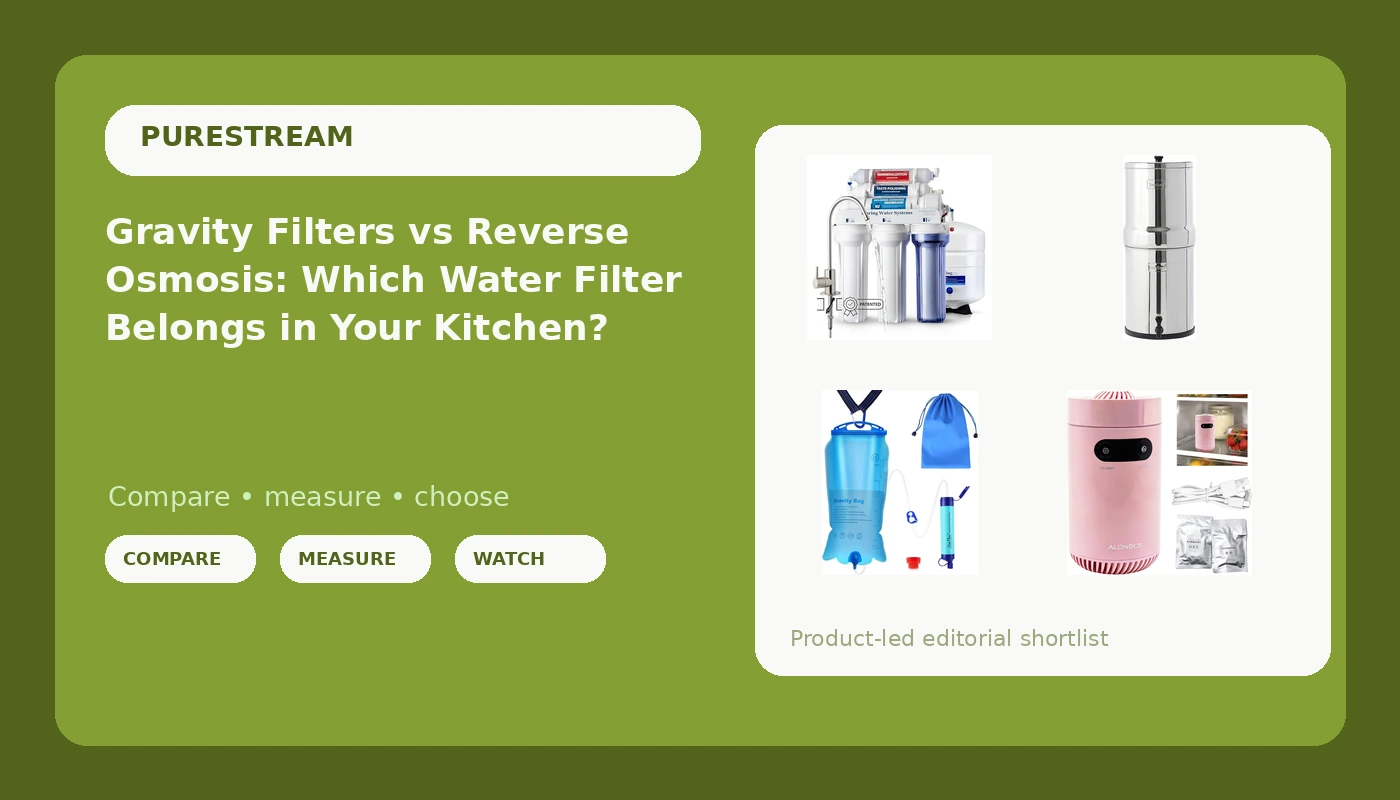
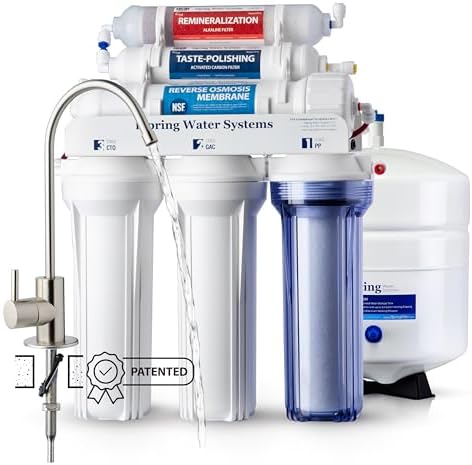
Best Overall: iSpring RCC7AK-BN 6-Stage Reverse Osmosis System
If your water has a real dissolved solids problem, a real lead problem, or the kind of hardness that coats a kettle white in a month, reverse osmosis is the only category here that removes dissolved solids instead of just polishing them. This iSpring is the RO system I point people toward, and it is NSF certified, which is the part most of the category skips. A certification number means something. "Tested to NSF standards" without a number means nothing at all.
The layout is six stages: sediment, carbon, the 75 GPD membrane, post-carbon, and then the alkaline remineralization stage that gives the model its AK suffix. Reverse osmosis strips water down to near-zero TDS, including the calcium and magnesium your tongue notices. The remineralization cartridge puts a small amount back, which mostly fixes flavor and takes the edge off water that would otherwise be mildly aggressive on metal plumbing.
I want to be precise about that stage, because it is the most oversold part of this unit. The pH bump is small, the mineral content is small, and nobody should buy this thinking they are drinking a supplement. It is a taste feature. The people who market alkaline water as a health category are selling you rocks in a cartridge. Buy this for the membrane, not the rocks.
The 75 gallon per day rating describes the membrane, not your faucet. RO fills a storage tank slowly and the tank feeds your glass, which is why an RO system can feel normal at the tap even though the membrane itself is a slow, patient process. It also means a tank sitting under a sink takes up real cabinet space, and it means you are now the owner of a six-cartridge replacement schedule. That schedule is the real price of any RO system. Check current Amazon price, then write the cartridge intervals on a piece of tape and stick it inside the cabinet door.
Best for Outages and Off-Grid: Big Berkey 2.25 Gallon Gravity Filter
The Berkey is the system I recommend to people on wells, people with cabins, and people who have lived through one boil-water notice too many. It is stainless steel, it holds 2.25 gallons, it runs on gravity, and it needs no plumbing and no electricity. When the power is out and the municipal plant is issuing notices, that combination stops being a lifestyle preference and starts being infrastructure.
The BB9-2 elements sit in the upper chamber and water works its way down. That is the whole machine. Setup means priming the elements, filling the top, and waiting, and the waiting is the honest cost of the design. Gravity does not push water through media. It persuades it. A liter takes a while, and if you are used to a faucet that delivers a glass in two seconds, the first week with a gravity filter is an exercise in patience. I keep one in the emergency rotation. I do not keep one as my daily drinking water source, because I have things to do.
Two habits matter with any gravity unit. Clean the upper chamber on a schedule, since that is where water sits before it is filtered and where a biofilm will happily move in. And treat the elements as consumables with a lifespan, not as permanent hardware. A gravity filter that has been sitting dry in a garage for three years is not a filter anymore. It is a very heavy kettle.
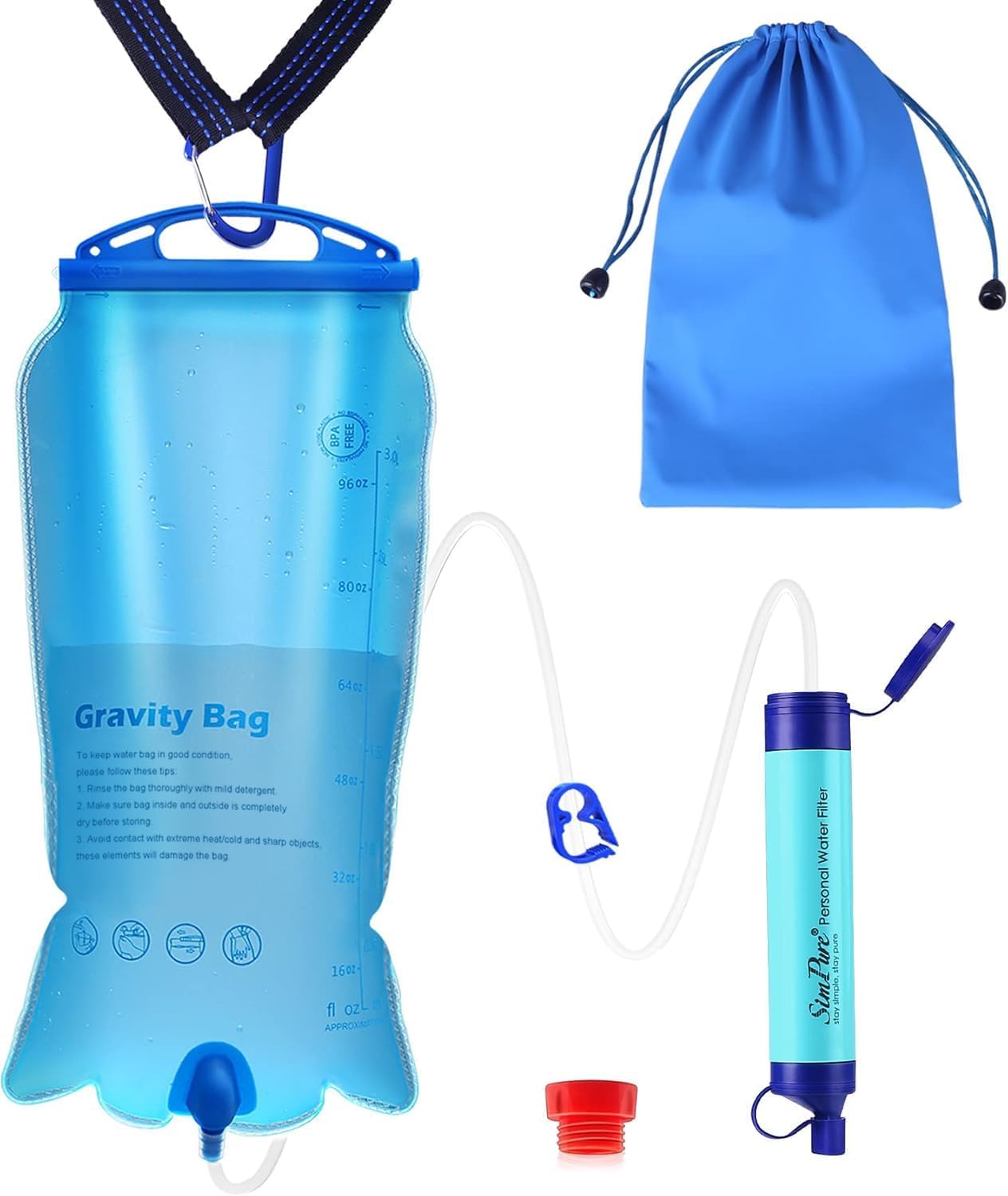
Best Portable: SimPure Portable Gravity-Fed Water Filter with 3L Bag
This is the one that lives in a backpack or a car trunk, not on a counter. Three liters of capacity, gravity fed, no power, no plumbing, and a footprint small enough to disappear into a duffel bag. For camping, a cabin weekend, a road trip, or a second layer of backup behind a Berkey, it does the job it was designed for.
Set expectations correctly, though. This is a travel and emergency tool, not a whole-kitchen solution. Three liters is a morning's worth of drinking water for two people, the cartridge is a consumable you will need to replace, and the unit is not the answer if your actual problem is lead service lines or 300 ppm of hardness at the kitchen tap. If you want one piece of gear that turns questionable water into drinkable water when you are nowhere near a kitchen, this is the cheapest honest way to get there. If you want your family's everyday water fixed, go back to the RO section.
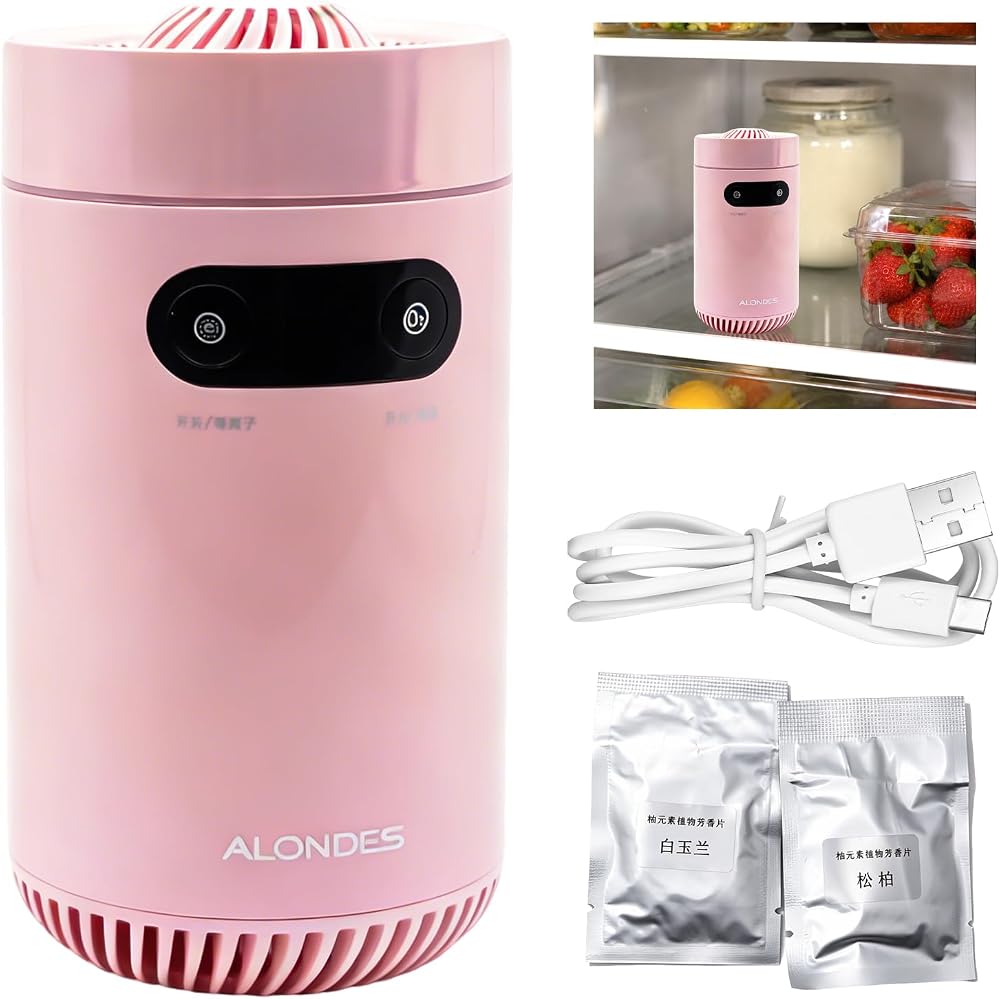
The Fridge Companion: Ozone and Plasma Refrigerator Air Purifier
Here is the part nobody tells you about fridge water and ice: they are excellent at absorbing whatever is in the air around them. Ice made in a freezer that smells like leftover salmon will taste like leftover salmon. That is not a filtration failure, it is chemistry, and no carbon block in the world fixes air quality inside a sealed box.
This little unit runs on a 2600mAh battery with USB-C charging and is rated for roughly 5 to 15 days per charge depending on which mode you run. It has two modes, ozone and plasma, and I have a strong opinion about which one belongs near food. Plasma mode, for a fridge with actual food in it. Ozone mode, only for an empty fridge or freezer you are trying to deodorize, with the door shut and nobody breathing the air, because ozone is a respiratory irritant and you are proposing to put a generator of it inside a sealed cabinet full of dinner.
Used with that much sense, it is a genuinely useful small-space tool. Fridge, freezer, closet, gym bag, the cabinet where the dog food lives. It is not a water filter and it will not make your tap water safer. It will stop your ice cubes from tasting like the inside of your freezer, which is a smaller problem that annoys people every single day.
How I test a filter before it earns a recommendation
Every unit that comes through my basement lab gets the same treatment. One hundred gallons of Madison tap water, run in measured batches, with TDS readings logged before and after and flow rate timed at the start, at 50 gallons, and at the end. A filter that performs at gallon one and crawls at gallon fifty is a faucet decoration, and the flow chart is how you catch it.
Alongside the bench runs, I send samples to a certified lab for pH, hardness, free and total chlorine, lead, copper, and total organic carbon. That is where claims go to die. A pitcher can post a beautiful TDS number and still let lead straight through, because TDS measures dissolved solids in total and lead is a rounding error in that total. Conversely, a system can leave your TDS untouched and still remove every trace of chlorine and its byproducts, which is exactly what a good carbon block does.
Then I do the math that manufacturers would rather you skip: replacement cartridge cost divided by rated gallons, printed right next to the purchase price. The replacement filter is the real price. The machine is the bait.
Analysis: what the numbers actually tell you
Three patterns show up over and over on my bench.
First, flow decline is the spec nobody publishes and everybody notices. A gravity unit is slow on day one and slower on day ninety. An RO membrane is slow by design and stays consistent because the tank buffers it. A portable squeeze filter is fast until the cartridge loads up with sediment, then it is a workout.
Second, TDS tells you what category you need, not which brand to buy. If your reading is low and your complaint is taste, you need carbon and you can spend very little. If your reading is high, or your lab sheet shows lead or copper, you need reverse osmosis or a certified media that specifically targets those metals. A filter that claims to remove "everything" is either lying or stripping the minerals you actually wanted to keep.
Third, certification is the only shortcut that works. NSF/ANSI 42 covers taste and chlorine. NSF/ANSI 53 covers health contaminants like lead. If a box has a number, look it up. If a box has a sentence instead of a number, close the tab.
The water filter reference table
This is how the four units line up. Different jobs, different tradeoffs, and no single winner, because there is no single problem.
| Product | Type | Capacity and flow | Best for | Price |
|---|---|---|---|---|
 Visit on Amazon → iSpring RCC7AK-BN 6-Stage RO System |
Under sink reverse osmosis | 75 GPD membrane, tank-fed faucet, six cartridges | Dissolved solids, lead, hardness at one kitchen tap | $234.99 |
 Visit on Amazon → Big Berkey 2.25 Gal Gravity Filter |
Countertop gravity | 2.25 gallons stored, BB9-2 elements, no power needed | Outages, wells, cabins, boil-water notices | $367.00 |
 Visit on Amazon → SimPure Portable Gravity-Fed Filter |
Portable gravity | 3 liter bag, hang or squeeze, no power needed | Camping, travel, emergency kit backup | Check current Amazon price |
 Visit on Amazon → Refrigerator Air Purifier, Ozone and Plasma |
Fridge and small space accessory | 2600mAh battery, USB-C, roughly 5 to 15 days per charge | Fridge, freezer, closet odor and ice taste | $30.59 |
The pattern in that table is simple. One unit changes your water chemistry, one unit stores water for when the tap fails, one unit travels, and one unit fixes the air instead of the water. Buying all four is not the point. Buying the one that matches your actual problem is.
Should you buy the iSpring RCC7AK-BN?
Yes, if dissolved solids, lead, or stubborn hardness are what you are fighting. It is a real six-stage reverse osmosis system with a certified listing and a 75 GPD membrane, and it is the category's best combination of capability and cartridge cost that I have found. Go in with open eyes about the six-filter schedule and about the alkaline stage being a flavor fix rather than a wellness program. Write the replacement dates on tape inside the cabinet door on day one.
Should you buy the Big Berkey 2.25 Gallon?
Buy it for resilience. No power, no plumbing, 2.25 gallons of stored water, and a stainless body that will outlive most of your kitchen. It is the system I want in the house during a storm outage or a boil-water notice, and it is the one I hand to friends on wells.
Should you buy the SimPure portable filter?
If you camp, road trip, or want a second layer of backup that fits in a bag, yes. It is inexpensive, it needs nothing but gravity, and three liters is real water when you are far from a kitchen. It is not a substitute for a certified under sink system, and it was never meant to be.
Should you buy the refrigerator air purifier?
Only if the problem is smell rather than water. Run it in plasma mode with food in the fridge, save ozone mode for an empty unit with the door closed, and it will do exactly what it claims. Your ice will stop tasting like the freezer. Your water quality will be exactly what it was before, which is why this one is a companion and not a solution.