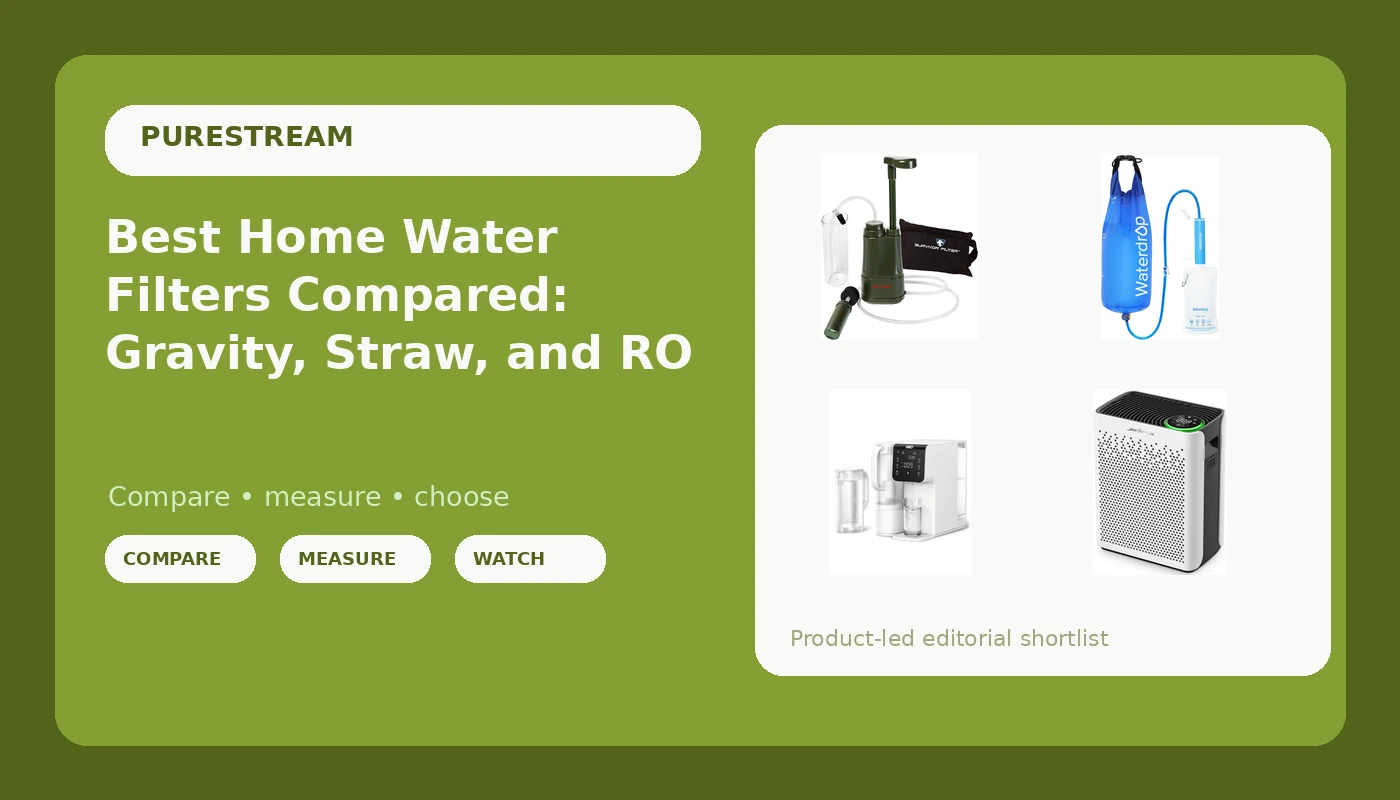
I'm Rachel. I spent six years running contaminant analyses for a municipal water lab in Wisconsin before I went independent, and I got into home water filters the way most people do: my Madison tap water tasted like a swimming pool and my kid stopped drinking it. That sent me into TDS meters, lab sample bottles, and a basement bench where units run through 100 gallons at a time while I chart what happens to the numbers week by week. This comparison of home water filters covers four products that landed in the same shopping conversation, and one of them filters air, which I will get to.
Here is the short version. The right home water filter depends on what you are actually trying to remove. If the problem is dissolved solids, taste, or a municipal supply you do not fully trust, the reverse osmosis unit is the only thing in this group designed for it. If the problem is a lake, a trail, or a storm that took the power out, the portable filters are the answer and the RO pitcher is useless. If the problem is pet dander and pollen, none of these water filters will help you, and the fourth product will.
For most households, the best home water filter here is the DREO WF511, because it is the only unit in this group built to pull dissolved solids out of your drinking water without a plumber. For a go-bag or a pack, the Survivor Filter PRO and the Waterdrop straw cover two different jobs at two different weights. The air purifier is a genuinely good product that wandered into the wrong article, and I will explain why it stays in the table anyway.
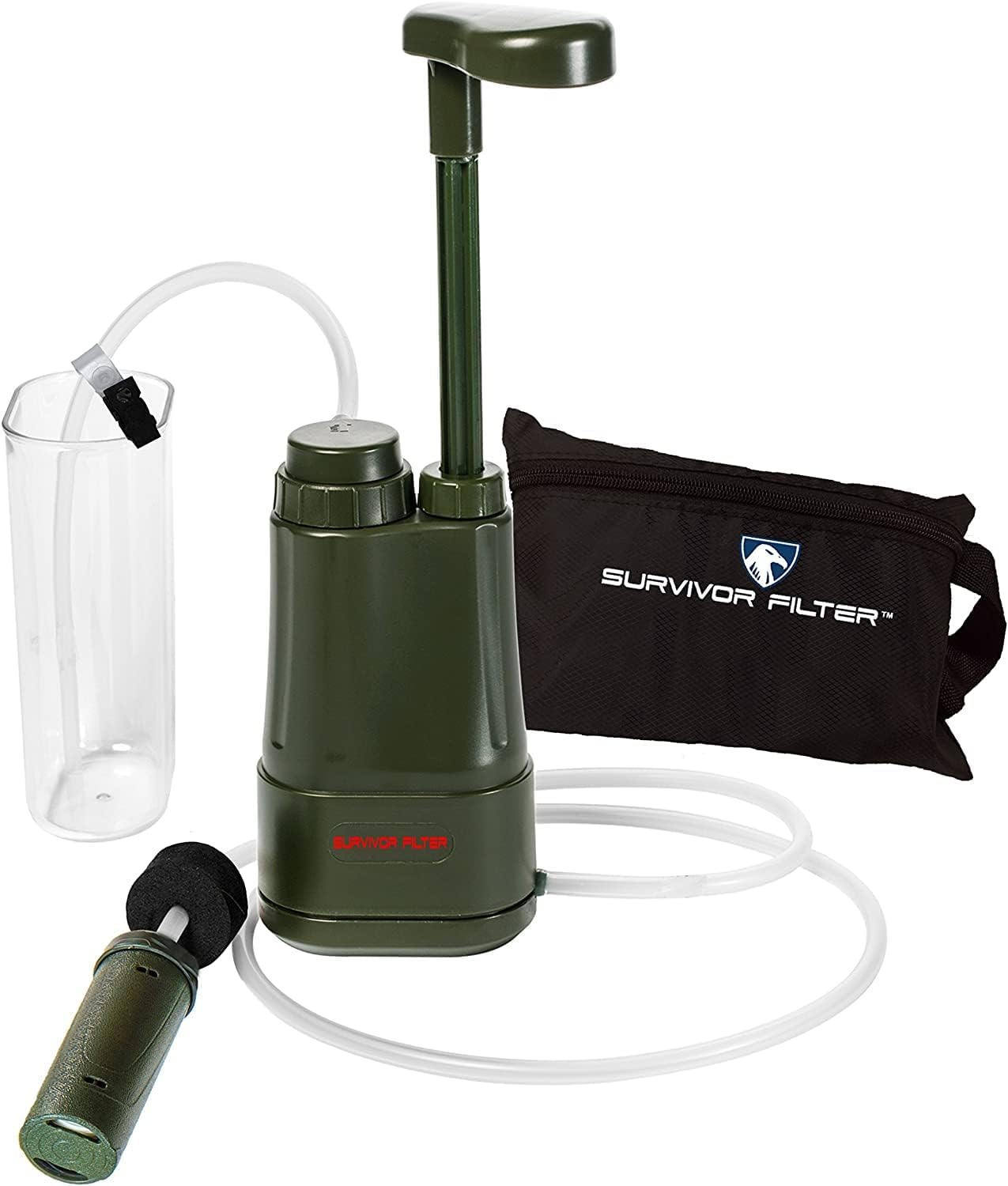
Survivor Filter PRO Portable Water Filter for Camping, Survival & Emergency
Built for genuinely questionable water: a portable setup you can run from a stream, a lake, or a bucket with no plumbing and no power
It is a camping and emergency tool, not a kitchen appliance, and you will not want to pump every glass you drink
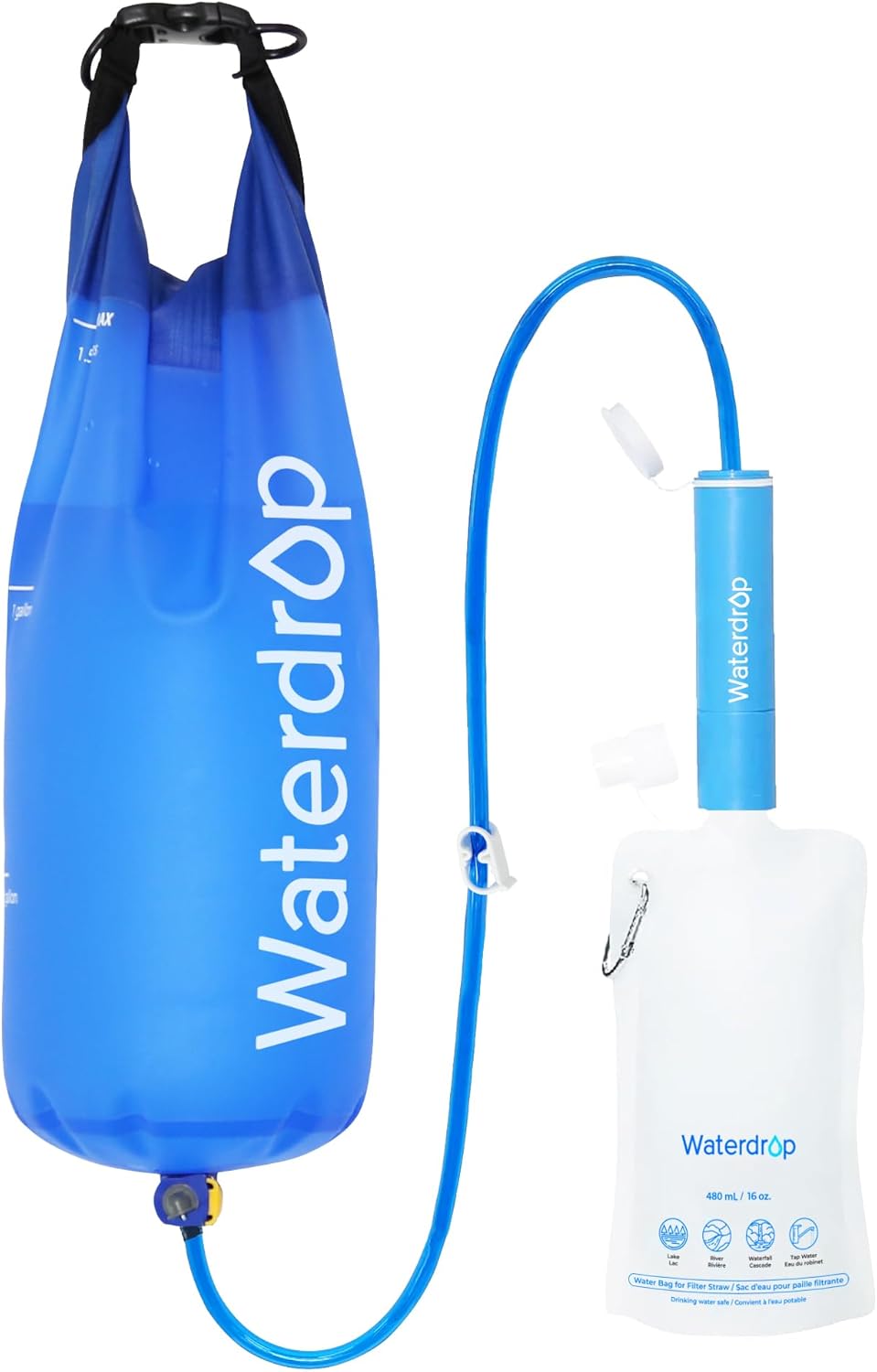
Waterdrop Gravity Water Filter Straw, Camping Water Filter, 0.1 Micron
0.1 micron hollow-fiber media in something that weighs almost nothing, which makes it a real piece of backup gear
Gravity and lung power only, so a liter takes patience, and it does nothing about dissolved solids
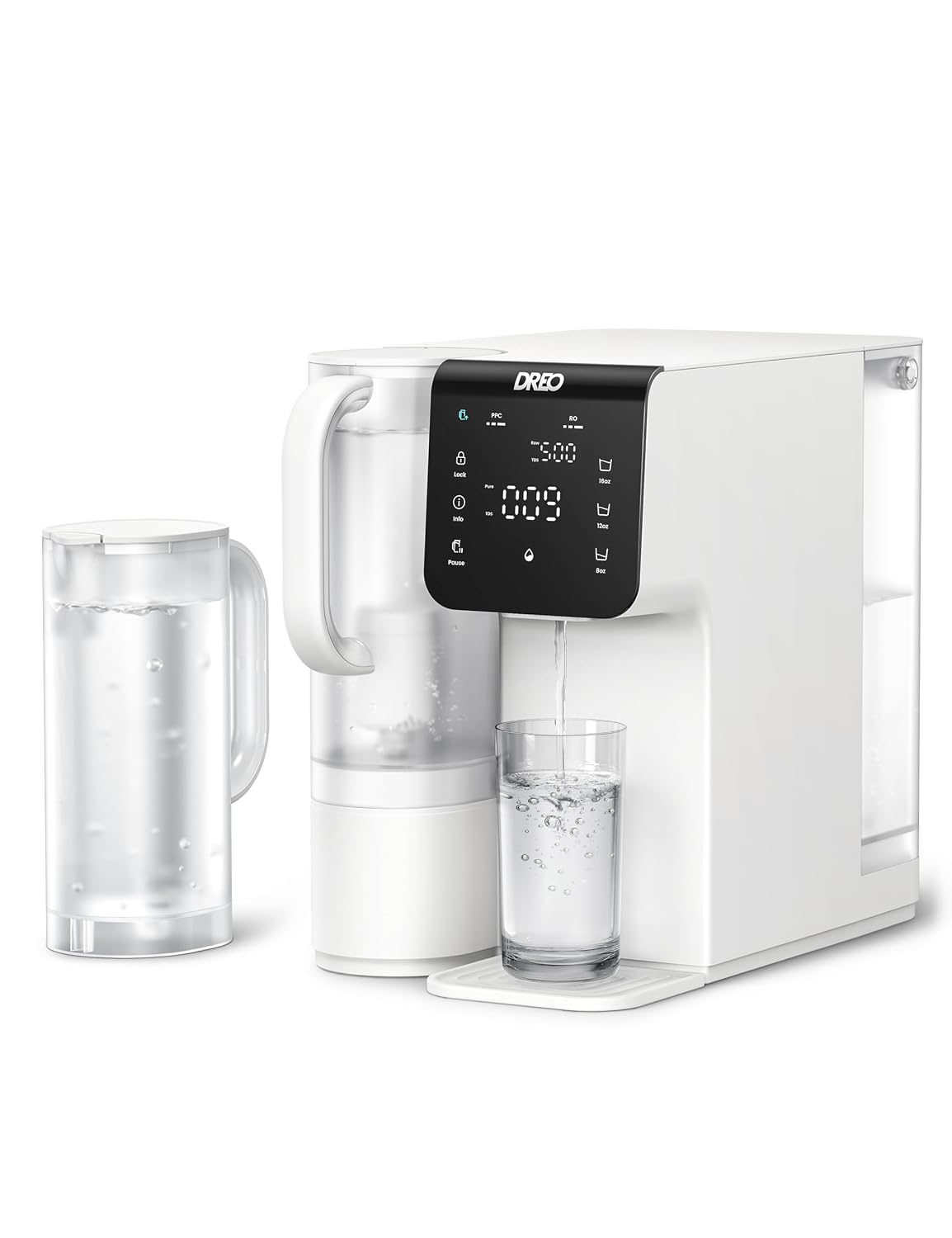
DREO WF511 Reverse Osmosis Water Filter, 7-Stage RO Water Filtration System Removes 99.99% Contaminants, Installation-Free, TDS Reduction, BPA-Free Pitcher, 3:1 Pure to Drain
The only unit here that targets dissolved solids, and it does it from the counter with no installation and a stated 3:1 pure to drain ratio
RO strips the minerals too, you inherit a filter schedule, and it takes up more counter space than anything else in this table
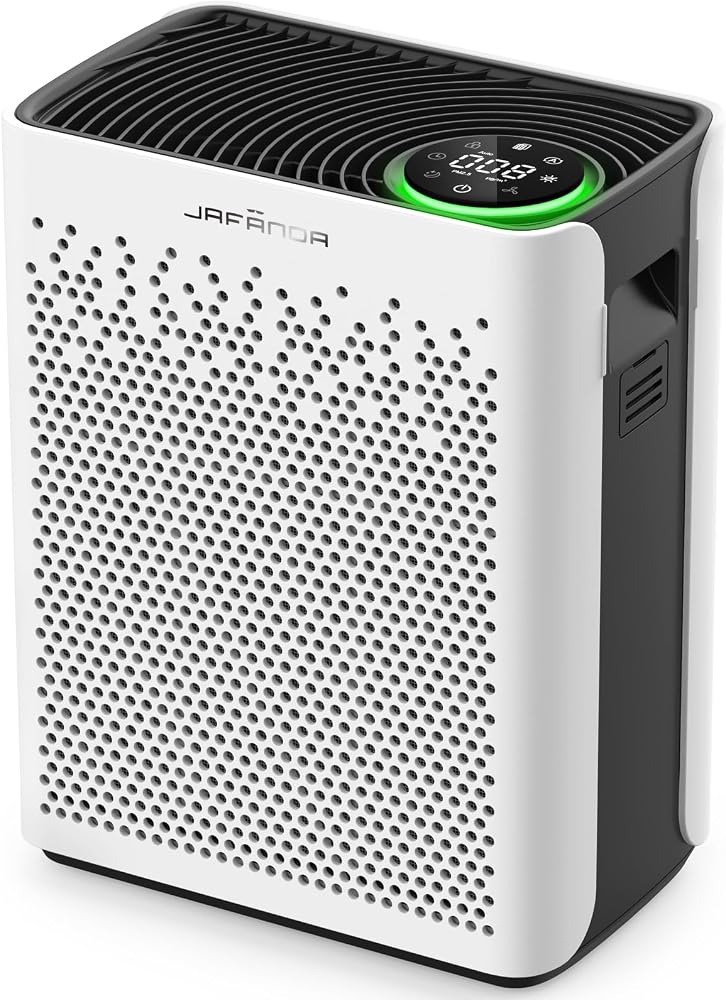
Air Purifiers for Home Large Room with Washable Pre Filters, Up to 1015Ft², AHAM Verified, HEPA Air Purifier for Bedroom with Sleep Mode
AHAM Verified HEPA coverage up to 1015 square feet, washable pre-filters, and a sleep mode, which is a real credential set for particles
It filters air, not water, and it does not belong in your glass no matter how good it is at dander
Prices and availability were captured from Amazon Creators API and may change.
How I judge a water filter
Every unit that reaches my bench gets the same protocol. I run it through 100 gallons, logging TDS at 10, 50, and 100 gallons, and I measure flow at the start, the middle, and the end. Flow decline is the spec that decides whether a filter becomes a faucet decoration, and it is the one nobody advertises. I send samples to a certified lab for pH, hardness, chlorine, lead, copper, and TOC, because a TDS meter is a filter-performance meter, not a health meter. TDS tells me whether the media is still working. It does not tell me whether lead is getting through.
I keep a logbook of every reading and every filter change, and I run the cost-per-gallon math with replacements included. The replacement filter is the real price. The pitcher is the bait. Two things I refuse to do in this article: repeat a contaminant claim with no certification behind it, and quote a price, because prices move and I would rather you check the listing than read a stale number here.
The portable filters: two different jobs
The Survivor Filter PRO is the one that assumes the water source is the problem. It is built for camping, survival, and emergency kits, which means it assumes a stream, a lake, or a rain barrel rather than a kitchen faucet. That is a completely different design brief from anything on a countertop. There is no membrane housing to plumb, no drain line, and no cartridge subscription you have to remember. You put the intake in questionable water and you pump.
The trade-off is effort, and it is not small. Every liter is work. In an emergency that is fine, because the alternative is boiling, and boiling takes fuel and time you may not have. As a daily habit it is absurd. Nobody stands at a counter and pumps their way through two glasses of water before dinner. If you are buying this, buy it for the trunk of the car, the camping bin, or the emergency shelf, and keep something else on the counter.
The Waterdrop Gravity Water Filter Straw is the ultralight end of the same idea. The 0.1 micron rating refers to the pore size of the hollow-fiber media, and pore size is where I want you to slow down and read carefully. A micron number describes what physically cannot pass through the fibers. It does not describe a list of contaminants the manufacturer tested against, and it says nothing about dissolved solids, lead, or chlorine. A straw with a tight pore size is excellent at particles and microorganisms. It is not a purifier for chemistry.
That said, as a piece of backup gear it earns its place. It weighs almost nothing, it needs no power, and gravity plus suction is a mechanism that cannot break in a way you cannot diagnose. The honest limitation is throughput. A liter through a straw takes patience, and patience is the first thing to run out when you are tired, cold, and thirsty.
The DREO WF511: reverse osmosis without a plumber
This is the only product in the comparison that addresses dissolved solids, and that is the whole reason it wins for a household. Reverse osmosis pushes water through a membrane that rejects dissolved material, which is why RO water lands near zero on a TDS meter. If your complaint is scale, spots on glasses, or a mineral-heavy supply, nothing else in this table touches it.
The 7-stage claim is marketing arithmetic, and I want to be fair about it. What actually matters inside a system like this is the membrane and the carbon that protects it. The stages in between are sediment and polishing media that keep the membrane alive longer, which is a real benefit, but counting them is not a performance spec. The number I care about is the 3:1 pure to drain ratio, which means three cups of treated water for every cup sent down the drain. For a countertop RO unit that is a reasonable ratio, and it is worth knowing because water waste is the hidden cost of RO that nobody mentions at checkout.
Two things to understand before you buy. First, RO removes minerals along with everything else, and I do not consider that a health crisis or a health benefit. It is simply what the process does. If you want minerals, get them from food, not from a cartridge full of rocks marketed as a wellness feature. Second, installation-free does not mean maintenance-free. You are signing up for a filter schedule, and the cost per gallon depends entirely on how faithfully you follow it. The BPA-free pitcher and the countertop footprint are the convenience you are paying for, and for a rental kitchen with no under-sink access, that convenience is worth something real.
The outlier: an air purifier in a water comparison
The fourth product is a HEPA air purifier rated for rooms up to 1015 square feet, AHAM Verified, with washable pre-filters and a sleep mode, and it removes pet dander, dust, smoke, and pollen. Judged on its own terms, that is a credible set of credentials. AHAM verification is a real third-party program, and a washable pre-filter is the difference between replacing a filter every few months and every year.
Judged as a water filter, it does nothing, because it is not one. I am keeping it in the table for a specific reason: home improvement budgets get lumped together, and shoppers searching for cleaner water routinely end up comparing air and water devices in the same afternoon. Do not let that blur. Air purifiers address airborne particles in a room. Water filters address what is in your glass. They share a marketing aisle and nothing else. If your kid is coughing at night, buy the purifier. If your kid will not drink the tap water, buy a water filter. Buying one to fix the other is how people waste money.
What the specs are actually telling you
Micron ratings, stage counts, and removal percentages all describe different things, and the confusion between them is where most bad purchases happen.
A micron rating is a pore size. A percentage claim is a test result, and it is only meaningful next to the list of contaminants tested and the certification that verified it. When a system says it removes 99.99% of contaminants without naming them, that is a sentence, not a spec. Look for an NSF certification number. "Tested to NSF standards" without a number means nothing to me, and it should mean nothing to you.
Stage counts are the least useful number in the industry. Seven stages, five stages, three stages: what matters is whether the media in those stages is sized for the job and whether you will actually replace it. A well-built three-stage system beats a sloppy seven-stage system every time, and a system with proprietary cartridges that cost more than the machine after a year is a subscription, not a purchase.
Cost per gallon is the only honest number
Here is the math I run on everything. Take the purchase price, add every replacement cartridge you will buy over three years, then divide by the gallons you actually filter in that time. That is your cost per gallon. A cheap pitcher with expensive filters can cost more per gallon than a system that looks extravagant at checkout, and the reverse is also true. The sticker price tells you what you pay today. The cost per gallon tells you what you are signing up for.
That framing also clarifies which product you should buy. Portable filters are bought per trip or per emergency, so the math is different and the cost per gallon is almost irrelevant. A countertop RO unit is bought for years of daily drinking, so the replacement schedule is the entire decision. And an air purifier's filter cost has nothing to do with your water at all.
What I would actually buy
For a household drinking from a municipal supply with taste, scale, or dissolved solids as the complaint, the DREO WF511 is the pick, because it is the only unit in this comparison built to change what is dissolved in your water, and it does it without touching a pipe. Budget for the cartridges before you budget for the machine.
For camping, travel, and emergency kits, the Survivor Filter PRO handles the scenario where the water source itself is unknown, and the Waterdrop straw handles the scenario where weight is the constraint. They are not competitors. They are two answers to two different questions, and the person who owns both is not being redundant.
The air purifier is a good unit for a large room with pets and pollen. It just is not water. Keep the two categories separate, check the certification numbers before you trust a removal claim, and run the cost per gallon before you run your card. That is the whole method, and it has never once failed me.