Most people shopping for home water and air filtration are solving two different problems with one budget, and the listings do a terrible job of admitting it. One of the four products below changes what you drink. The other three change what you breathe. I spent six years running contaminant analyses for a municipal water lab before I went independent, and I have bench-tested more than 200 filter systems since, so my bias is worth stating up front: I care about what a filter removes at gallon 90, not what the box promises at gallon one. That bias translates cleanly to pitchers and imperfectly to air purifiers, where the honest comparison is stated coverage, filtration media, and replacement cost rather than TDS and flow rate. So here is the split, laid out plainly, with the caveats attached.
The short answer: if you are buying for drinking water, the Culligan ZeroWater 10-Cup Pitcher is the only product here that belongs in that conversation. If you are buying for air, the WINIX AT40 is the coverage play and the DREO DR-HAP009 is the value play, and the GrowthLife unit is a small-room specialist that should not be asked to clean a whole floor.
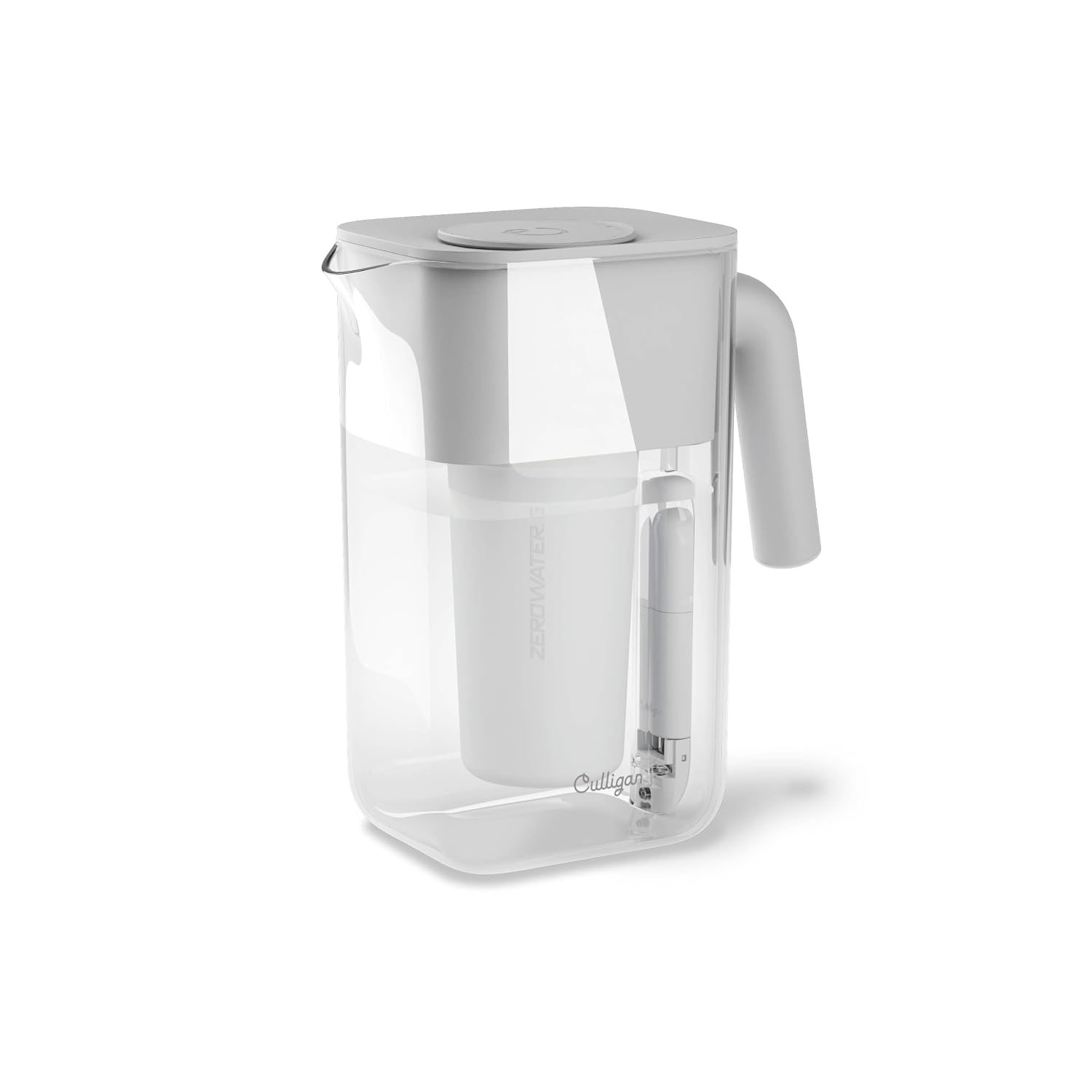
Culligan ZeroWater 10-Cup Pitcher Water Filter Removes PFAS
The only unit here that changes what you drink, and the only one whose headline claim is about what the filter media removes rather than how big a room it can fill
Ten cups means refilling, and dissolved-solids media has the shortest service life in the entire filtration category
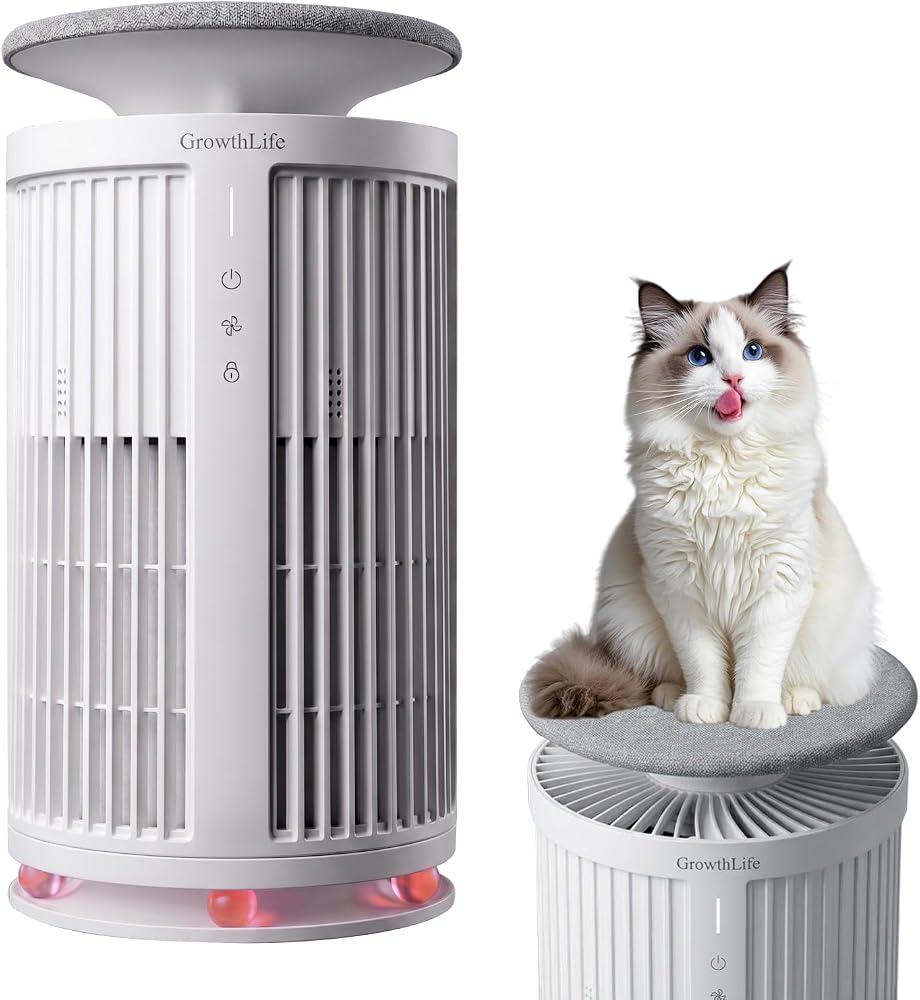
GrowthLife Pet Air Purifier for Dust Smoke Odors Whisper-Quiet, 3-in-1 Filtration
Smallest footprint of the three purifiers, aimed at bedrooms and pet areas, and marketed on quiet operation rather than brute coverage
The listing claims 3-in-1 filtration, not True HEPA, and it does not publish a room-size number the way the other two do
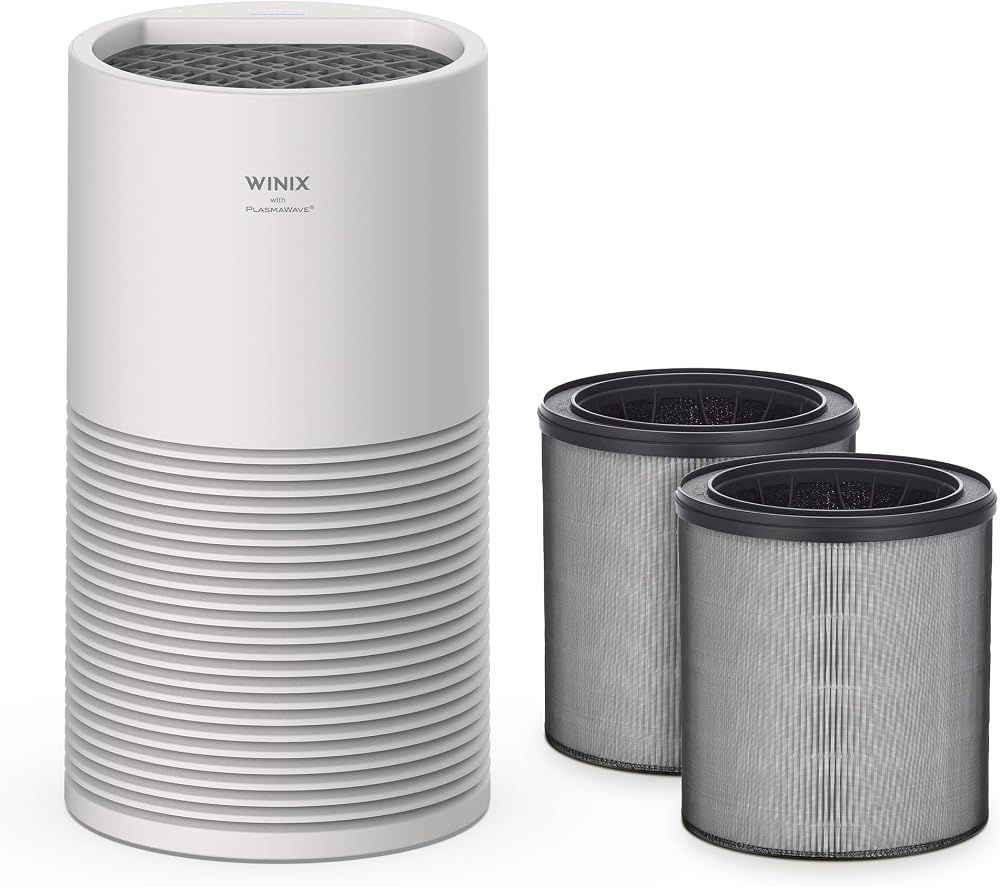
WINIX AT40 Air Purifier with 2 Years of Filters, True HEPA, Carbon Filter and Auto Mode
The biggest coverage claim in the group, a real True HEPA and carbon stack, an air quality monitor, and two years of filters included in the box
It is the largest and most expensive commitment here, and it only makes sense if you actually have the square footage to feed it
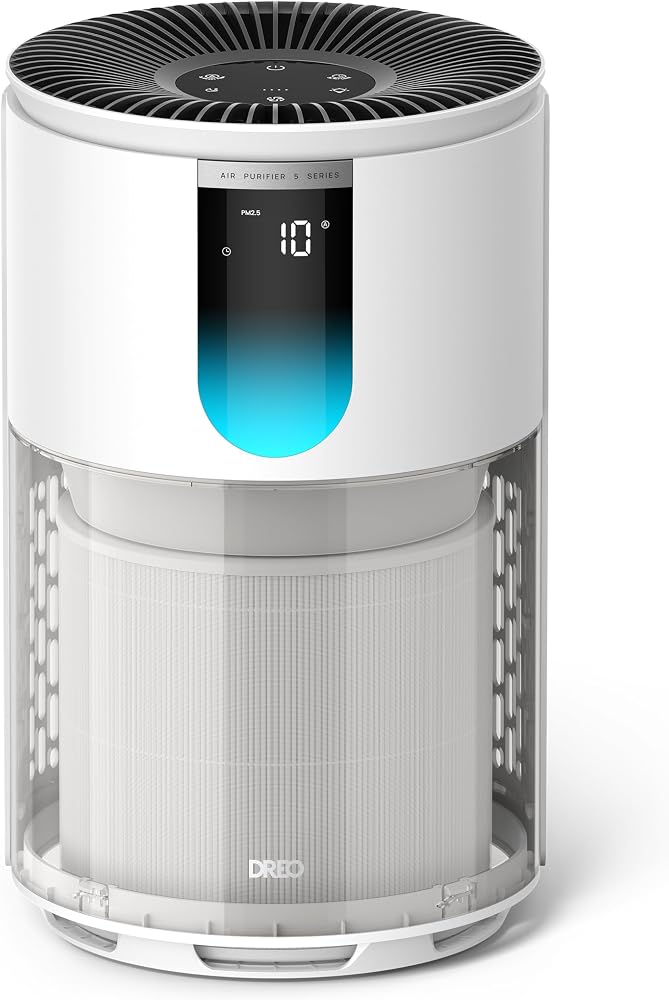
DREO Air Purifier for Home, HEPA Sleep Mode, PM2.5 Monitor, Auto and Turbo Mode, 4 Speeds
Middle-of-the-road coverage with the features people actually use: a PM2.5 readout, sleep mode, and a turbo setting for when something burns in the kitchen
No included filter bundle stated, so the second year is on you, and 1176 ft² is a number that shrinks fast in an open floor plan
Prices and availability were captured from Amazon Creators API and may change.
How I judge a filtration product
Two different scorecards, because water and air are not the same problem.
For anything that touches drinking water, I want four things: what the media actually is, whether there is an NSF/ANSI certification number on the label, what the replacement schedule looks like, and what the flow rate looks like after the filter has some gallons on it. The certification point is not pedantry. "Tested to NSF standards" without a certification number is a sentence, not a claim. A number is a claim.
For air purifiers, I want three things: the stated coverage and the assumption behind it, the filter stack, and the noise floor at the setting you will actually leave it on overnight. A purifier that cleans 1968 square feet on turbo and sounds like a hair dryer on turbo is a purifier you will turn off at 10 p.m. That is the failure mode nobody puts in a review, and it is the reason sleep mode and auto mode matter more than peak airflow.
I have not bench-tested all four of these units in my basement, and I am not going to pretend otherwise. What follows is a comparison of what the listings claim, what those claims mean in practice, and where I would want lab data or a sound meter before I spent money.
Culligan ZeroWater 10-Cup Pitcher: the only one that changes your water
The ZeroWater pitcher is the odd one out here, and it is the one I can speak to with the most confidence, because dissolved-solids pitchers are the category I have logged the most hours on. ZeroWater's whole identity is ion exchange and dissolved-solids reduction rather than the carbon-only approach most pitchers take, and the PFAS claim in the name is a media claim, which is the right kind of claim to make. Compare that to a pitcher that advertises taste and nothing else and quietly does not touch lead. ZeroWater is playing a different game.
The catch is the one I have written about for years: the more a pitcher removes, the faster its media exhausts. Dissolved-solids reduction is expensive work, and the filter schedule reflects it. If you buy this pitcher, budget for replacements the way you budget for printer ink, and check the current price of the replacement cartridges before you buy the pitcher, not after.
Ten cups is also a real constraint. That is roughly two and a half refills of a big glass for a family of four on a hot afternoon. If your household drinks a lot of water, you will be standing at the sink more than you expect. Buy it for quality, not for volume.
GrowthLife Pet Air Purifier: the small-room specialist
The GrowthLife KZ150G-A02 is a compact unit, listed at 8.2 by 8.2 by 15.6 inches, which puts it in the category I think of as a nightstand purifier: bedroom, home office, laundry room, or wherever the litter box lives. The listing targets dust, smoke, and odors, and markets itself on being whisper-quiet, which tells you the design priority is discretion rather than raw airflow.
Here is the honest caveat. The listing describes 3-in-1 filtration. It does not say True HEPA, and it does not publish a coverage number the way the WINIX and DREO listings do. For a pet-area unit in a closed bedroom, that is often fine. Odor and larger particulate are the main complaints in those rooms, and a carbon stage plus a decent pre-filter handles a lot of that. But if you are buying because someone in the house has allergies and you need verified fine-particle capture, the absence of a HEPA claim and a room-size figure is a gap you should notice before you click, not after.
The other thing to check on a unit this size is filter availability. A compact purifier with a proprietary cartridge that disappears from the market in 18 months becomes a paperweight. Look at whether replacement filters are listed and how they are priced relative to the machine.
WINIX AT40: the coverage play
The AT40 makes the biggest promise in this group: up to 1968 square feet in one hour, True HEPA, a carbon filter, an air quality monitor, and auto mode. The "2 years of filters" line is the detail I would underline, because the filter bundle is where air purifier economics actually live. A purifier that costs a little more up front and includes two years of media can easily beat a cheaper machine once you price the replacements.
What does 1968 square feet in one hour mean? It means the unit is rated to move the air volume of a space that size through the filter once per hour, assuming a standard ceiling height. That is a legitimate, commonly used benchmark, and it is also a benchmark that assumes open space with no walls breaking the room into pieces. An open-plan kitchen and living area at that square footage is exactly the use case. A 1968 square foot house with eight closed rooms is not, because the air in the hallway closet does not care how strong your fan is.
Two things to verify before buying. First, confirm the noise level at the setting you will leave it on at night, because a unit this capable does not get to that coverage quietly. Second, confirm the current price of the filters you will need in year three, because that is when the bundle runs out and the real cost of ownership starts.
DREO DR-HAP009: the middle of the road, in a good way
The DREO DR-HAP009 (Dreo 539) is the unit I would hand to most people who are not sure what they need. Coverage up to 1176 square feet, a HEPA filter, a PM2.5 monitor, auto mode, turbo mode, four fan speeds, and a sleep mode. That is a complete feature set with no obvious missing piece, and the PM2.5 readout is genuinely useful: it turns the machine from an appliance into a sensor you can learn from. Watching that number spike when you sear a steak is the fastest way to understand what particulate actually is.
The trade-off versus the WINIX is coverage and the filter bundle. The DREO's stated 1176 square feet is smaller, and no included multi-year filter pack is stated in the listing, which means year two and year three are out-of-pocket. That is not a dealbreaker, but it changes the math, and the math is the part most buyers skip.
On sleep mode, the practical question is the same as with the WINIX: how quiet is quiet, and does the unit stay usefully filtering at that setting or does it throttle down to near nothing? A sleep mode that drops the fan to a whisper and stops moving air is a marketing feature. A sleep mode that keeps a real exchange rate at low noise is an engineering feature. The listing cannot tell you which one this is. A sound meter can.
The replacement filter is the real price
This is the rule I apply to every product on this page, and it applies identically to a pitcher and a purifier.
For the ZeroWater pitcher, the replacement cartridges are the recurring cost, and because dissolved-solids media works harder than carbon-only media, the schedule is shorter. For the WINIX, the box includes two years of filters, which pushes the recurring cost out but does not eliminate it. For the DREO and the GrowthLife, you are buying the machine and then buying media on whatever schedule the manufacturer sets.
So before you check out on any of the four, do this: find the replacement filter listing, note what it costs and how many the package contains, and estimate how many you will burn through in two years. That number, not the sticker on the machine, is what you are actually agreeing to. I have watched people buy a cheap purifier and pay for it three times over in cartridges, and I have watched people buy an expensive one with a generous bundle and come out ahead. The purchase price is the least informative number on the page.
Water and air are not the same problem
The most common mistake I see in this category is treating filtration as one purchase. It is not. Water filtration is a chemistry problem: you are targeting specific dissolved and suspended contaminants with media that exhausts on a predictable schedule, and you can verify performance with a TDS meter and a lab sheet. Air filtration is a volume problem: you are moving a defined amount of air through a filter stack at a rate that has to match your room, and the number that matters most is coverage at the noise level you will tolerate.
That is why the ZeroWater pitcher does not compete with the three purifiers in any meaningful sense, and why I put all four in one table only to make the split obvious. If your tap water tastes like a swimming pool and your kid will not drink it, an air purifier does not help you, no matter how good its PM2.5 monitor is. If your problem is pet dander and cooking smoke, a pitcher does nothing for you.
Who should buy which
Buy the Culligan ZeroWater 10-Cup Pitcher if drinking water quality is the actual problem, you are willing to refill a ten-cup reservoir, and you have checked the replacement cartridge cost. Do not buy it expecting to stop buying bottled water for a family of five without a lot of refilling.
Buy the WINIX AT40 if you have a large open living space, you want a real True HEPA and carbon stack, and the included two years of filters tips the cost math in your favor. Verify the noise level first.
Buy the DREO DR-HAP009 if you want the feature set that covers the most situations, you like having a PM2.5 readout, and you are comfortable buying filters as you go. It is the safest default of the three purifiers.
Buy the GrowthLife Pet Air Purifier if you need something small and quiet for one room with a specific odor or dust problem, and you are not relying on it for verified fine-particle capture across a large space.
What I am checking next
I have a sound meter and a particulate counter queued up for the next round of air purifier testing, because the two numbers that decide whether people actually leave a purifier running overnight, noise at sleep mode and real particulate decline in a closed room, are the two numbers almost nobody publishes. On the water side, I am still charting dissolved-solids and flow decline across a 100-gallon run on the pitchers in my current batch, and I will publish the curves when they are done. Until then, check the certification number, check the replacement filter price, and check current Amazon price before you commit to any of these four.