I keep a small water bench in my basement in Madison, Wisconsin, and the question readers send me most often is not which filter removes the most contaminants. It is which one they will still be refilling two years from now. That is the question this under sink water filter comparison is built to answer, because a spec sheet describes gallon one, and a real kitchen lives somewhere around gallon 500.
The best choice for most kitchens is the Waterdrop 15UA under sink system, because it filters the water at the faucet you already use, and its listed 19,000-gallon, 2-year cartridge rating turns filter math into an annual errand instead of a monthly one. The AquaTru Glass Carafe is the more capable machine if you want dissolved solids gone and you do not mind filling a reservoir. The PUR 30-cup dispenser is the cheap way to fix taste for a crowd. And the GermGuardian is here because it arrived in the same order, and it solves an entirely different problem.
Here is how the four stack up, including the one that is not a water filter at all.
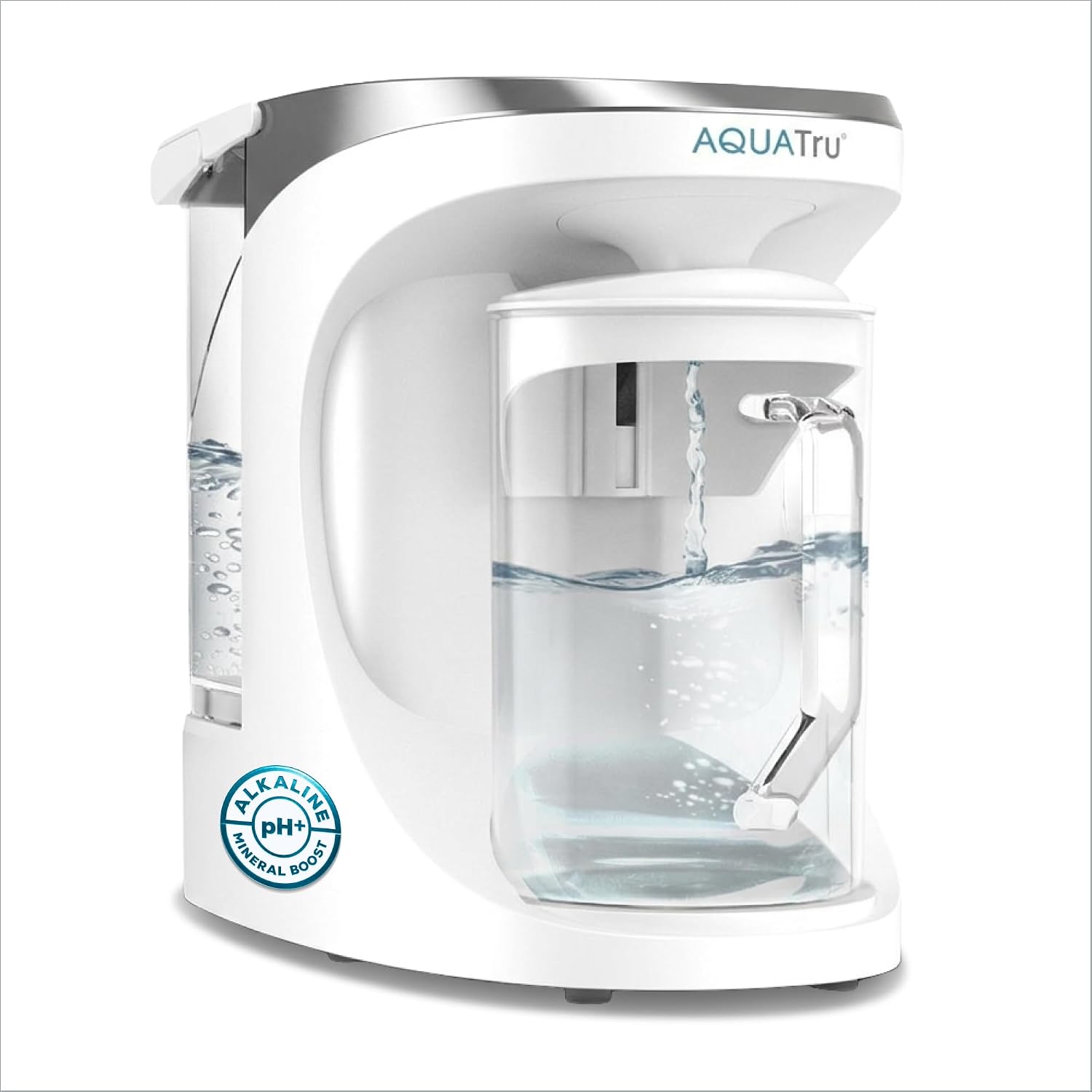
AquaTru Glass Carafe Alkaline Countertop RO Water Purifier
Four-stage reverse osmosis, glass carafe instead of plastic, and a listing that claims removal of 84 contaminants including lead, PFOA, PFOS, and microplastics
Highest upfront cost in this group, reservoir refills are a chore, and the alkaline stage is a taste feature rather than a health one
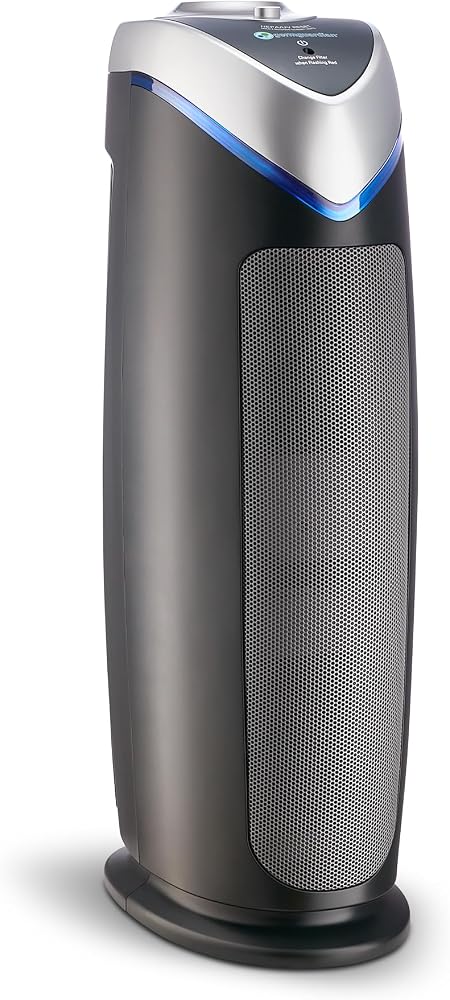
GermGuardian HEPA Air Purifier, 22 Inch Tower
Handles dander, dust, pollen, smoke, and scents in a bedroom or office, and the tower footprint is small
It is not a water filter. It does nothing for what you drink, and it needs its own replacement filters
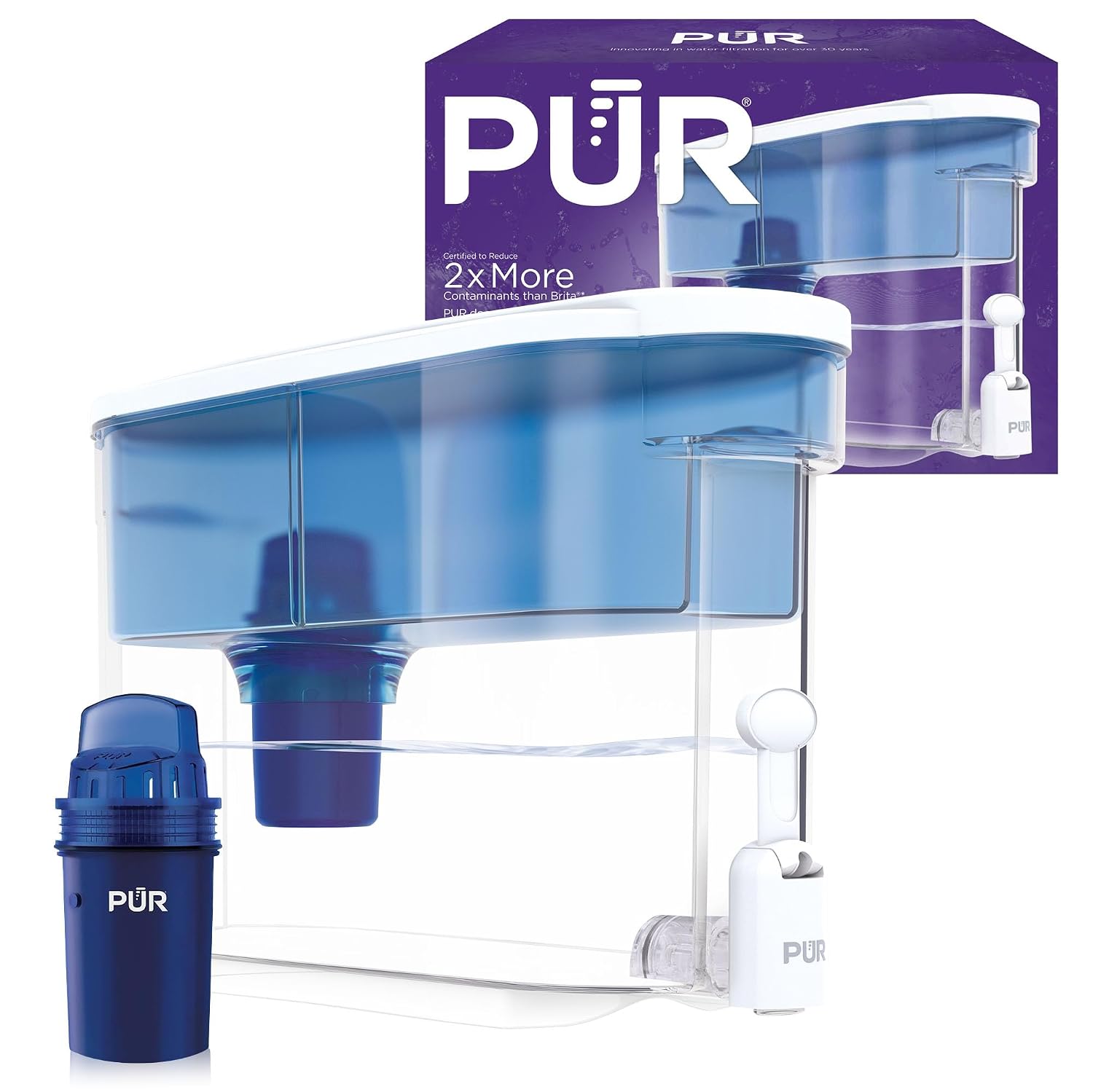
PUR 30-Cup Countertop Water Filter Dispenser
Cheapest way to get better tasting water for a full household, no plumbing, no install, no countertop commitment beyond the footprint
Dispenser-class media is a taste and chlorine tool. It is not the answer for lead or dissolved solids
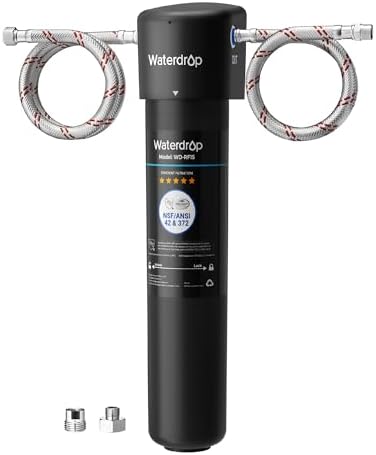
Waterdrop 15UA Under Sink Water Filter System
At-the-tap filtration, listed at 19,000 gallons and 2 years per cartridge, zero counter space used
Under sink installation, cold water only, and the first cartridge is part of the real cost
Prices and availability were captured from Amazon Creators API and may change.
How I test, and what I did not test
Every filter that comes through my bench runs the same protocol. I meter it with a calibrated TDS pen, send samples to a certified lab for chlorine, lead, copper, hardness, and total organic carbon, log flow rate at the start, middle, and end of a 100-gallon run, and then divide the cartridge cost by the gallons it actually delivered. That last number is the one that surprises people.
Two honesty notes before we go further. First, I have not finished the full 100-gallon protocol on all four of these units, so any figure I repeat in this article comes from the manufacturer's listing, and I will tell you when that is the case. Second, the GermGuardian is not a water filter, and I am not going to dress it up as one just because it shares a cart with three of them. It is in this comparison because a lot of households are shopping for both at once, and because leaving it out would make this table a lie by omission.
What I will not do is quote a price. Prices move weekly on this category, so every cell above says the same thing: check current Amazon price. The number you should actually care about is cost per gallon, and that requires the replacement cartridge price, not the sticker.
The countertop reverse osmosis pick: AquaTru Glass Carafe
Reverse osmosis is a different class of machine than everything else on this list. A carbon filter grabs chlorine and taste compounds. An RO membrane pushes water through a material so tight that dissolved solids cannot follow, which is why RO is the technology people reach for when the concern is lead, PFAS, or water that reads high on a TDS meter.
The AquaTru Glass Carafe is a four-stage countertop RO unit, and its listing claims removal of 84 contaminants including PFOA, PFOS, lead, and microplastics. Those are the claims that matter in this category, and PFAS in particular is the reason a lot of Madison households started looking at RO in the first place. If you want the full picture on that, my notes on what home filters can and cannot do with PFAS are worth ten minutes before you spend anything.
The part I would push back on is the alkaline stage. Adding minerals back to RO water is a taste decision, and I treat it as one. The moment a filter starts advertising alkaline water as a health feature, my eyebrows go up, because you are buying rocks in a cartridge. That does not make this a bad machine. It makes the alkaline line a feature you should evaluate with your tongue, not your supplement budget.
The real trade-off is chore load. A countertop RO unit holds a reservoir, and every glass you pour comes out of a tank you have to refill. In a household of four, that is a twice-a-day habit. It is also the slowest option here, because RO membranes work at their own pace and no amount of wishing changes it.
The under sink pick: Waterdrop 15UA
This is the one I would put in my own kitchen, and the reason is boring: it removes the refill habit entirely. The Waterdrop 15UA installs under the sink, feeds a dedicated faucet, and the listing rates the cartridge for 19,000 gallons, which it frames as two years of use. Even if your household drinks more than the average, that math lands in years, not weeks.
That rating is the whole argument. The failure mode of most home filtration is not bad media, it is a filter owner who stopped changing cartridges on schedule. A system that asks for attention once a year is a system that actually gets maintained, and a maintained filter is the only kind that keeps working.
The costs of that convenience are real. You need cabinet space, you need to be comfortable with a wrench or willing to pay someone, and you need to accept that the unit serves cold water at one faucet. It also does not strip dissolved solids the way the AquaTru does, so if your concern is TDS or a specific dissolved contaminant, read the certification data carefully and match it to your water report.
That is the unglamorous advice I give everyone: pull your municipal water quality report first, then buy the filter that matches it. Filtration is not a personality. It is a matching problem.
The cheap entry point: PUR 30-Cup Dispenser
Not everyone can install anything, and renters should not be drilling holes in a landlord's cabinet. The PUR 30-cup dispenser is the answer for that household: fill it from the tap, keep it on the counter, pour from the spigot. Thirty cups is enough that a family stops refilling it constantly, which is more than I can say for most pitchers.
What you are buying here is taste and chlorine reduction, delivered cheaply and without a plumber. What you are not buying is dissolved solids removal, and dispenser-class media is generally not the tool for lead. If your water report shows lead or you are on a private well with unknowns, this is not the unit that fixes it, no matter how good the water tastes afterward.
The other thing to watch is cartridge discipline. Every dispenser filter I have ever met has a rated life that assumes normal use, and heavy use burns through it faster. When the flow slows to a trickle, the media is telling you it is done, and that is a message you should not ignore. This is the category where people quietly run a cartridge three months past its rating because the replacement was out of stock, and I say that as someone who has done exactly that.
The outlier: GermGuardian HEPA air purifier
The GermGuardian is a HEPA tower for a bedroom, office, dorm room, or living room. Its listing says it filters pet dander, dust, pollen, smoke, and scents, and it stands 22 inches tall in gray. If you have a kid with allergies or a house with a shedding dog, that is a genuinely useful appliance.
It is also completely unrelated to your drinking water. I am including it because the same household that starts worrying about water quality usually starts worrying about air quality around the same time, and because I would rather be upfront about the mismatch than bury it. Buy it for the room it sits in. Do not buy it expecting the glass of water to change.
The cost structure mirrors water filtration in one important way: the machine is the cheap part and the replacement filters are the real relationship. Factor the annual filter spend before you commit, because a HEPA tower with a neglected filter is a fan with a nice grille.
Cost per gallon is the only honest metric
Here is the calculation that separates a good purchase from a bad one. Take the replacement cartridge price, divide it by the gallons the manufacturer rates it for, and compare that number across the units you are considering. Do it before you buy, not after.
The pattern holds almost every time. The machine with the lowest sticker price has the highest cost per gallon, because its cartridges are small and its rated life is short. The machine with the highest sticker price often has the lowest cost per gallon, because it is designed around a big cartridge that runs for years. Neither is automatically the right answer, but you should know which one you are choosing.
Proprietary cartridges are where this gets ugly. When a system only accepts one cartridge from one brand, you are not buying a filter, you are buying a subscription with extra steps. Check cartridge availability and price before you fall in love with a machine.
Certification numbers mean something
Look for an NSF/ANSI number on the label, not a slogan. NSF/ANSI 42 covers taste and chlorine reduction. NSF/ANSI 53 covers health contaminants like lead. Those are the two that show up on most home filters, and the certification is tied to a specific product and a specific claim.
"Tested to NSF standards" without a certification number is marketing, and it means nothing to me. Any lab can test anything. What matters is whether an accredited body verified the claim for the unit in your cabinet, at the flow rate and capacity you will actually use.
The other phrase to be suspicious of is "removes 99.9% of contaminants" with no list attached. Which contaminants? At what concentration? Over how many gallons? If the manufacturer will not answer those three questions, the number is decoration.
Which one should you buy?
If you rent, cannot touch the plumbing, and your complaint is taste, buy the PUR dispenser. It is the lowest-risk way to improve what your household drinks, and the refill habit is the price of admission.
If you own your home, drink a lot of tap water, and want the refills to disappear from your mental load, buy the Waterdrop 15UA. The 19,000-gallon rating is the feature, not a footnote.
If your water report shows lead, PFAS, or high dissolved solids and you want the most thorough removal in this group, the AquaTru Glass Carafe is the one built for that job, alkaline stage and reservoir refills included.
And if the actual problem is a bedroom that smells like a dog and a kid who wakes up congested, buy the GermGuardian, then go back and deal with the water separately. Two problems, two appliances.
What I am testing next
Nine units are on the bench right now, all running the same 100-gallon protocol with TDS and flow logged weekly, plus a parallel lab batch checking lead, chlorine, and hardness claims that never make it onto the packaging. The under sink category has a couple of new entrants I want to put head to head against the Waterdrop, and I am still chasing a clean answer on how much PFAS a carbon block really holds before breakthrough.
When those numbers land, they go in the logbook first and the article second. That order is the whole point.