Countertop water filter systems solve a narrow problem: you want better water than what comes out of the tap, and you are not ready to cut a hole in a cabinet or pay a plumber. That constraint narrows the field quickly. You are choosing between gravity-fed stainless steel units that sit on the counter and drip at their own pace, countertop reverse osmosis machines that need power and a drain but pull dissolved solids down hard, and pitchers that are cheap, small, and honest about what they do. The six products below cover all three approaches, and the differences that decide the purchase are the ones the packaging tends to bury: what the unit is certified to remove, what the replacement filters cost you over a year, and how fast the thing still fills a glass at the end of a filter's life rather than on day one. If you have ever stood at a sink waiting on a filter that slowed to a trickle, you already know which of those three numbers matters most.
Related: How to Read a Water Filter Spec Sheet Without Getting Sold
Quick answer
The Bluevua RO100ROPOT Countertop Reverse Osmosis Water Filter System is the strongest fit for renters and small kitchens that want the largest drop in dissolved solids without an under-sink installation, because reverse osmosis is the only process in this group aimed at dissolved solids rather than taste and chlorine alone. Choose the Purewell 3-Stage 0.01μm Ultra-Filtration Gravity Water Filter System, NSF/ANSI 42&372 Certification, 304 Stainless Steel Countertop System with 2 Filters and Stand, Reduce 99% Chlorine, 2.25G, PW-OB instead when you want no electricity, no plumbing, and a gravity unit whose listing carries NSF/ANSI 42 and 372 certification.
Countertop water filter systems worth comparing
The six units here fall into four groups. Two are gravity-fed stainless steel countertop systems from Purewell, one with a water level window and one with NSF certification listed. One is a countertop reverse osmosis machine from Bluevua. One is an under-sink ultrafiltration system from Waterdrop, included because it competes for the same counter space you are trying to protect. The last two are the same Brita six-cup pitcher in two colors, so treat them as a single option and choose on color rather than performance.
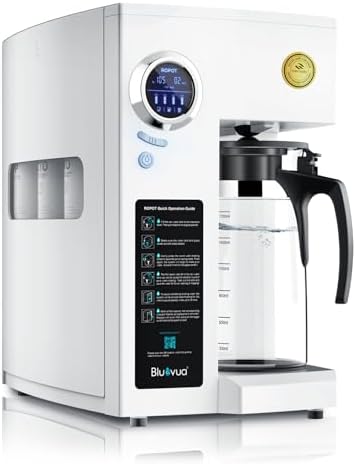
Bluevua RO100ROPOT Countertop Reverse Osmosis Water Filter System
A countertop reverse osmosis system, so it does not require an under-sink install. RO targets dissolved solids rather than taste and chlorine alone, which is the main reason to step up from a gravity unit or a pitcher.
Visit on Amazon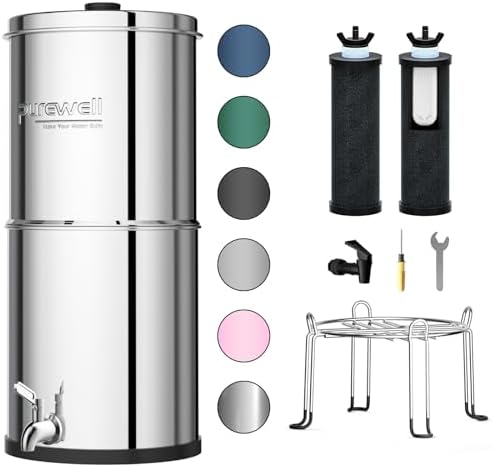
Purewell 3-Stage 0.01μm Ultra-Filtration Gravity Water Filter System, NSF/ANSI 42&372 Certification, 304 Stainless Steel Countertop System with 2 Filters and Stand, Reduce 99% Chlorine, 2.25G, PW-OB
Three-stage 0.01 micron ultrafiltration in a 304 stainless steel countertop body with a 2.25 gallon capacity, two filters, and a stand. The listing carries NSF/ANSI 42 and 372 certification and states 99 percent chlorine reduction.
Visit on Amazon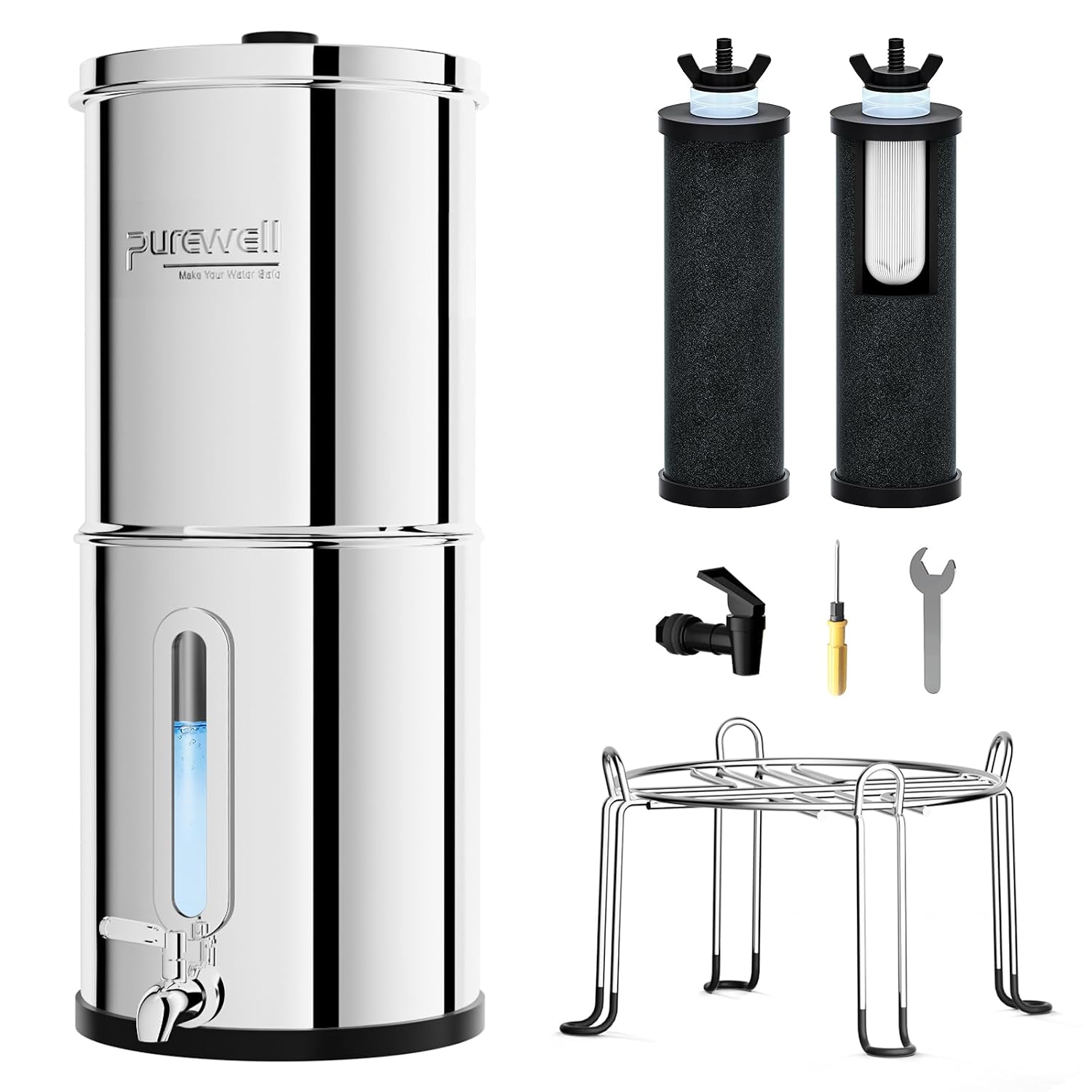
Purewell 2.25G Gravity Water Filter System with Water Level Window, 3-Stage 0.01μm Ultra-Filtration Stainless Steel Countertop System with 2 Filters and Stand, Reduce 99% Chlorine, PW-KS
The same 2.25 gallon three-stage gravity format with a water level window in the upper chamber, plus two filters and a stand. The listing states 99 percent chlorine reduction. The product record for this model does not list an NSF certification number.
Visit on Amazon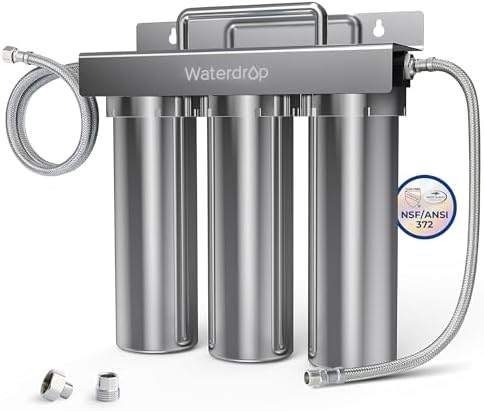
Waterdrop TST-UF 0.01μm Ultra-Filtration Under Sink Water Filter System
An under-sink system built around 0.01 micron ultrafiltration. It installs below the counter and connects to your cold water line, so it frees up counter space in exchange for a plumbing connection you have to make or pay for.
Visit on Amazon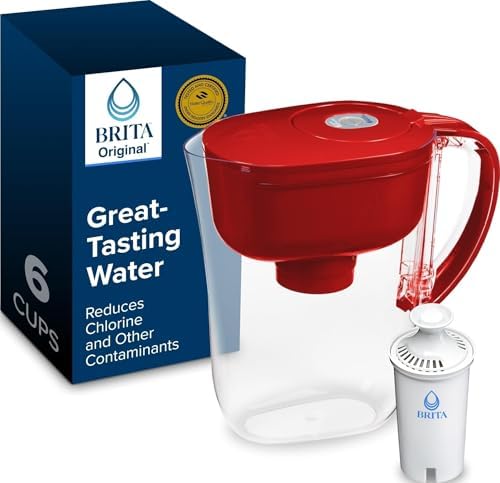
Brita Small 6-Cup Water Filter Pitcher, Includes 1 Filter, White
A six-cup pitcher with one filter included, in white. No installation, no power, and the smallest footprint of anything here. The product record lists capacity, color, and the included filter, which is what this class of pitcher is sold on.
Visit on Amazon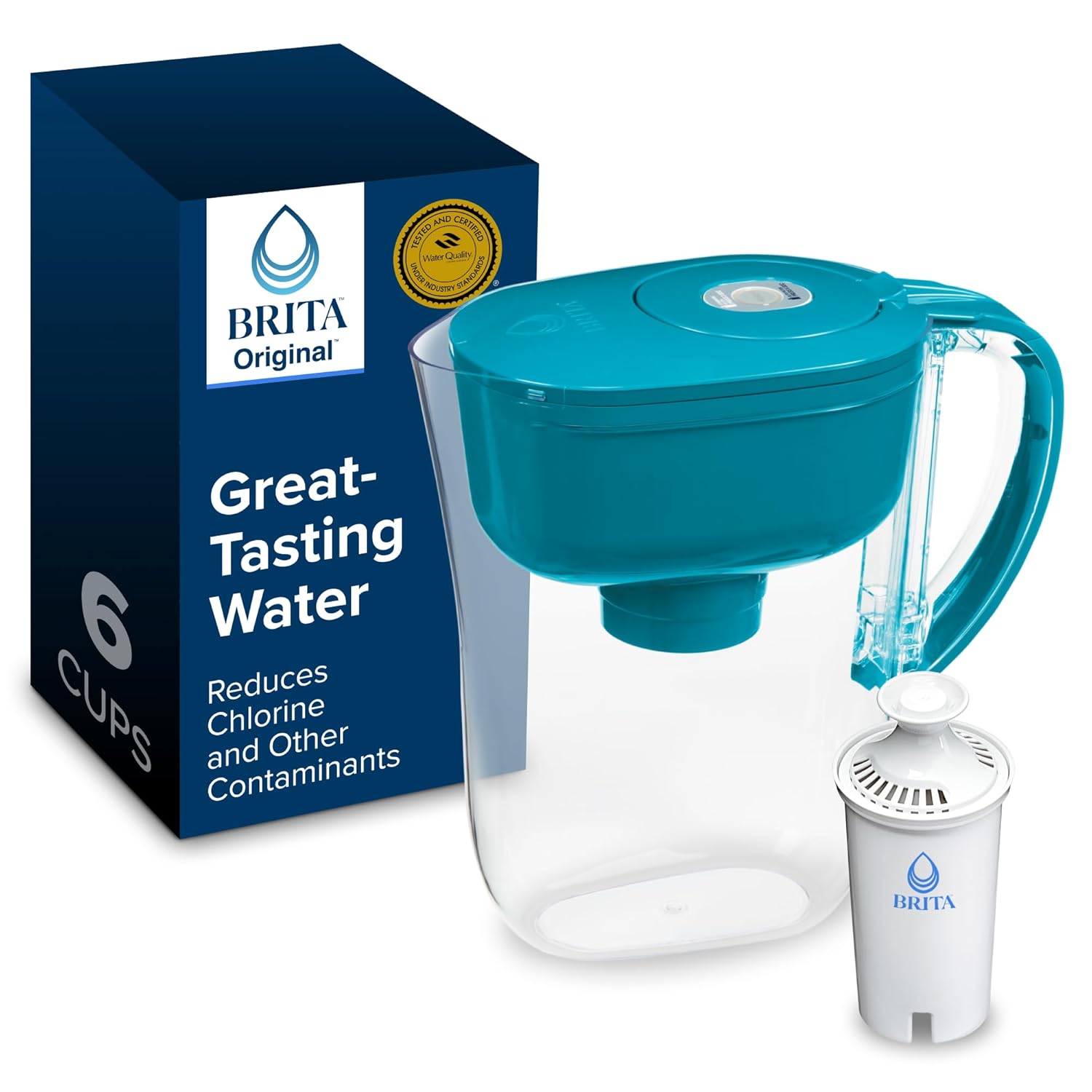
Brita Small 6-Cup Water Filter Pitcher, Includes 1 Filter, Turquoise
The same six-cup pitcher with one filter included, in turquoise. Capacity, filter count, and form factor match the white version, so the choice between the two comes down to color and nothing else.
Visit on AmazonPrices and availability may change. Check the retailer for current details.
How these products were compared
This guide compares installation and counter footprint, filtration method and micron rating, certification documentation, stated capacity, and the practical cost of keeping each unit fed with replacement filters. Product names, images, and retailer links are matched by product identifier so that every card points to the product shown.
Everything below comes from the product records and published manufacturer documentation for these specific models. Nothing here is presented as a bench test or a lab result, and no price is quoted, because prices move week to week while certification numbers do not. Use the retailer link on each card to confirm current price and availability.
How to choose the right countertop water filter system
Start with what you are actually solving, because that decision eliminates most of this list. A TDS meter is not a safety test and it will not tell you whether your water is safe to drink, but it will tell you what kind of filter you need. If your reading comes back low and the complaint is purely taste, you are solving for chlorine and odor, and a gravity ultrafiltration unit or a pitcher handles that job at a fraction of the cost. If your reading is high, or you are on well water with a lot of dissolved mineral content, no pitcher and no ultrafiltration unit in this group will move that number much, because ultrafiltration separates particles and microorganisms rather than dissolved solids. That is the job reverse osmosis exists to do, and it is the single biggest functional split in this guide.
The second split is how much friction you will tolerate. Gravity systems need no electricity and no plumbing, but they work at the speed gravity allows, and a 2.25 gallon reservoir means you fill the top chamber and wait rather than holding a glass under a tap. Countertop RO gives you faster dispensing and the lowest dissolved solids, but it takes counter space, needs power, and produces the concentrate stream that has to go somewhere. An under-sink system like the Waterdrop TST-UF removes the counter footprint entirely, which is the right answer if your kitchen has more cabinet space than worktop, but it is also the only option here that requires a real connection to your plumbing. If you want the fuller version of that trade-off, the same logic applies to how to read a water filter spec sheet before you buy anything.
Then look at two numbers almost nobody checks before ordering. The first is the micron rating: 0.01 micron ultrafiltration is a tight pore size, and tight pores clog faster, which is why replacement schedules matter more on a fine filter than on a coarse one. The second is the replacement filter itself. Divide the annual filter cost by the gallons you actually drink and you get a cost per gallon figure that tells you more about a system than its sticker price ever will. A cheap unit with proprietary cartridges can cost more over two years than a more expensive unit with standard filters, and that math does not care how good the product page looked.
Bluevua RO100ROPOT Countertop Reverse Osmosis Water Filter System
The Bluevua RO100ROPOT is a countertop reverse osmosis water filter system, which puts it in a different category from everything else on this list. Reverse osmosis pushes water through a membrane that rejects dissolved solids, so it addresses the TDS number that gravity filters and pitchers leave alone. It also sits on the counter and connects without an under-sink installation, which is what makes it the practical pick for renters and for kitchens where the cabinet under the sink is already full.
The trade-offs are real and worth naming before you buy. RO systems need power, they take up counter space, and they strip minerals along with everything else they remove, which is a fact about the process rather than a defect in this particular machine. RO also generates wastewater as a byproduct of the separation, so it is not the right choice if you are optimizing purely for water efficiency. And because the membrane and the pre-filters are consumables, the cost per gallon over a year is the number to check, not the purchase price.
Alternatives to consider
The Purewell 3-Stage 0.01μm Ultra-Filtration Gravity Water Filter System, NSF/ANSI 42&372 Certification, 304 Stainless Steel Countertop System with 2 Filters and Stand, Reduce 99% Chlorine, 2.25G, PW-OB is better suited to anyone who wants no electricity, no plumbing, and documentation on the label, since the listing carries NSF/ANSI 42 and 372 certification and states 99 percent chlorine reduction in a 304 stainless steel body with a 2.25 gallon capacity. The Waterdrop TST-UF 0.01μm Ultra-Filtration Under Sink Water Filter System is a stronger fit when counter space is the binding constraint and you are willing to make a plumbing connection to get the unit out of sight.
The Purewell 2.25G Gravity Water Filter System with Water Level Window, 3-Stage 0.01μm Ultra-Filtration Stainless Steel Countertop System with 2 Filters and Stand, Reduce 99% Chlorine, PW-KS covers the same gravity format with a water level window in the upper chamber so you can see how much is left without lifting the lid. The two Brita Small 6-Cup Water Filter Pitcher listings cover the entry point: six cups, one included filter, no installation, available in white or turquoise. A pitcher at this level is a taste and cold-water tool, and it is worth being honest about that. If dissolved solids or lead are your concern, a pitcher is not the category you should be shopping in.
Day-to-day use and maintenance
Replacement filters are the real price of any system here, and the schedule is not negotiable in the way the marketing suggests. Filter media has a finite capacity, and once it is exhausted, contaminants start passing through rather than being held back. That is the definition of breakthrough, and it is why the manufacturer's gallon rating or month rating is a ceiling rather than a target. If your water is heavy on sediment or chlorine, expect to change filters closer to the shorter end of the stated interval.
Gravity units need a specific kind of patience and a specific kind of care. Fill the upper chamber, let it work, and clean the housings on a regular schedule rather than only when the flow slows, because standing water in a stainless reservoir is still standing water. Countertop RO units need their pre-filters and membrane changed on schedule too, and the membrane is the expensive one, so track it. Pitchers are the simplest of all, but they are also the ones people run long past the sticker, which is exactly when performance drops off. Whatever you buy, write the install date on the filter or set a phone reminder, because the calendar is the only maintenance tool that never wears out.
Buying checklist
- Measure your available counter depth and height, including the clearance needed to lift a reservoir lid or remove a pitcher from the fridge door.
- Choose the filtration method based on what you are removing: ultrafiltration and pitchers for taste and chlorine, reverse osmosis when dissolved solids are the target.
- Confirm that the exact model you are ordering includes the filters and stand or accessories you expect, since listings within the same family differ.
- Read the cleaning and replacement instructions before the first use so you know the filter interval and the housing care routine.
- Verify the current retailer price, availability, and return terms through the link on the card, since none of that is fixed.
Final recommendation
Choose the Bluevua RO100ROPOT Countertop Reverse Osmosis Water Filter System when dissolved solids are the problem you are trying to solve and you cannot or will not install anything under the sink. It is the only unit here built around a membrane process, and it keeps the whole system on the countertop where a renter can take it along.
Choose the Purewell 3-Stage 0.01μm Ultra-Filtration Gravity Water Filter System, NSF/ANSI 42&372 Certification, 304 Stainless Steel Countertop System with 2 Filters and Stand, Reduce 99% Chlorine, 2.25G, PW-OB when taste and chlorine are the target, the certification on the listing matters to you, and you would rather not depend on electricity or a plumbing connection for drinking water. If your only complaint is warm tap water that tastes flat, the pitcher is enough, and there is no reason to spend more than that. Where the verified product data does not support a meaningful difference between two options, as with the two Brita colorways, there is no recommendation to make beyond picking the color you want.