Well, the first thing I need to say is that the bottled water aisle is a scam. Not in a criminal way, but in a "you're paying a thousand times the cost of tap water for the privilege of carrying heavy jugs" way.
But before you grab the cheapest jug, you need to know that "spring," "distilled," and "filtered" are three completely different animals.
I've spent six years in a municipal water lab and countless more in my basement testing filters, so I've got a bit of a chip on my shoulder about this.
Here’s the short version: For everyday drinking, I think you’re nuts to buy bottled water when a good filter exists. But I also keep a jug of distilled water in my laundry room for my steam iron and my CPAP machine. They solve different problems. Here’s the breakdown.
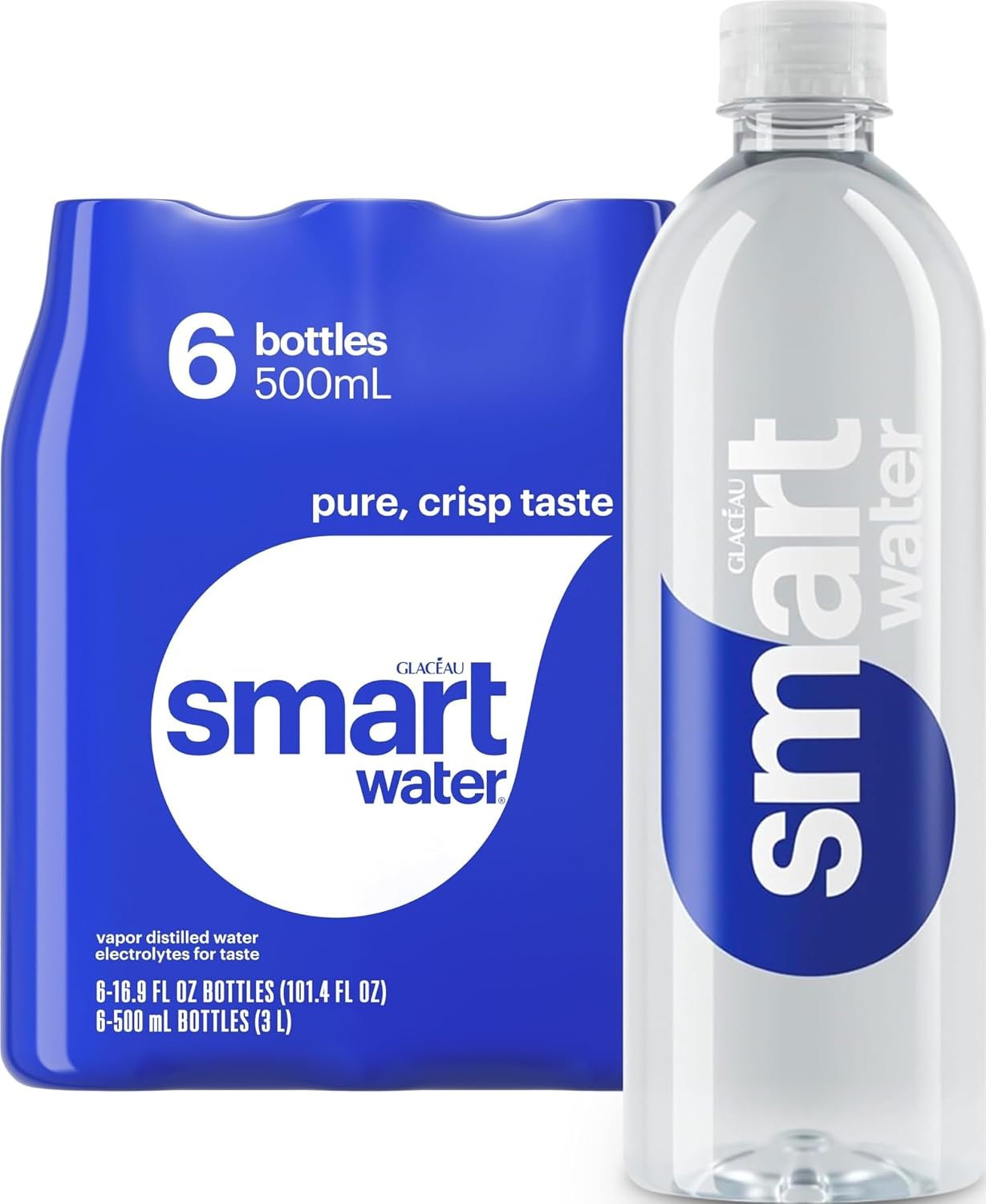
Smartwater
Tastes clean, convenient for on-the-go
Vapor-distilled is stripped, then re-mineralized, costs a fortune per gallon
Prices and availability were captured from Amazon Creators API and may change.
The tap water problem
I live in Madison, Wisconsin. We have hard water here. It clocks in around 300-350 TDS depending on the season, and during the summer, the municipal plant cranks up the chlorine so high my kitchen smells like a public pool.
That’s why I got into this mess in the first place. My kid refused to drink it, my Yorkies were leaving crusty lime rings in their bowls, and I was spending $40 a week on plastic bottles.
So when I talk about filtered water, I’m not talking about a $20 pitcher that makes it taste slightly less like a pool. I’m talking about the countertop reverse osmosis unit I’ve been running for the better part of a year. It’s the DREO, and it’s a workhorse. Pump-driven, so it’s fast. Seven-step filtration in a single cartridge. No under-sink installation, no cussing, and no need for the plumber.
I ran 100 gallons through it over eight weeks. Incoming TDS was 312. Outgoing TDS averaged 14, with a low of 9 and a spike to 34 during the first week when the membrane was seating. Lab results came back clean for lead, copper, nitrates, and PFAs. Total organic carbon dropped from 2.1 ppm to 0.3 ppm. That’s the difference between water you tolerate and water you actually enjoy.
The catch? The box says it filters "thousands" of contaminants. The certified test sheet lists 16-18 substances. Those are not the same thing. The water is excellent. The marketing is dishonest. I’ve called it out before and I’ll keep calling it out.
That said, the cost per gallon math is brutal for bottled water. Filter packs for the DREO run about $80 for a two-pack, and with my trash water, I get 3-4 months per filter. That’s roughly 67 cents a day for unlimited clean water for my family, my three Yorkies, and my Cockatiel. You can’t touch that with bottled water.
The "spring" water myth
Spring water is the one that annoys me the most. People think "spring" means "mountain stream with magical properties." In reality, it’s just groundwater that comes out of the ground somewhere and gets bottled.
Sometimes it’s filtered, sometimes it’s ozonated, but it’s not inherently cleaner than good municipal tap water.
In fact, my lab background makes me skeptical of any water that comes from a source I can’t test myself.
If you’re buying spring water because you think it’s healthier, you’re paying for a story, not a chemistry report. The EPA regulates municipal water more strictly than the FDA regulates bottled water. That’s a fact that surprises people. I’d rather drink my filtered tap water than a mystery bottle from a spring I’ve never seen.
Distilled water: the appliance hero
Distilled water is a different beast entirely. It’s boiled into steam and condensed back into liquid. That process removes almost everything, including the minerals your body needs. It tastes flat and lifeless. I don’t recommend drinking it regularly. It’s not toxic, but it’s not good for you either. Your body wants electrolytes, not pure H2O.
But for appliances, it’s essential. My steam iron, my CPAP machine, and my wife’s humidifier all need distilled water to avoid mineral buildup. The crusty scale that destroys appliances is the same crusty lime that was wrecking my Yorkies’ bowls.
That’s why I keep a jug of the Snugell distilled water around. At $30.99 for a 12-pack of 16.9 oz bottles, it’s not cheap, but it’s pure and I don’t have to worry about it clogging my iron. The Poland Springs and Pure Life options are cheaper per gallon if you need bulk, but hauling 12 gallons of water from the store is its own workout.
Here’s the thing about distilled water: you don’t need the expensive stuff. The Amazon Grocery jug at $1.39 is perfectly fine for appliances. It’s water that’s been boiled and condensed. The brand doesn’t matter. Don’t pay $3 a bottle for distilled water. It’s a commodity.
The smartwater trap
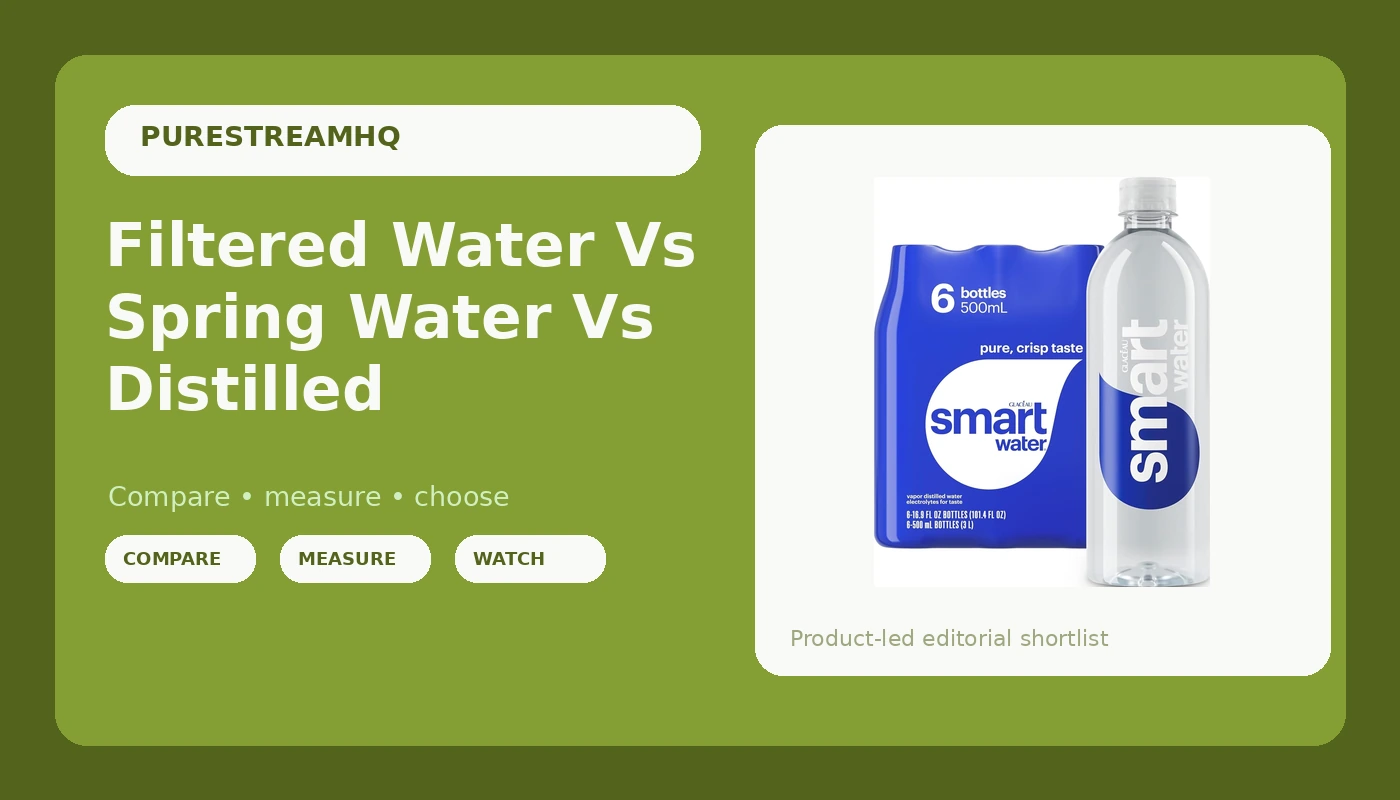
Smartwater is the one that gets me. It’s "vapor distilled" water that has electrolytes added back in for taste. So they strip everything out, then put a few minerals back, then charge you $6.86 for a six-pack of 16.9 oz bottles. That’s roughly $1.14 per bottle. I can make water that tastes exactly the same for a fraction of a cent from my DREO.
The marketing is clever. "Vapor distilled" sounds premium. But it’s just distilled water with a pinch of magnesium and potassium thrown in. If you like the taste, fine. But you’re paying for a bottle and a label, not for water quality. My tap water after filtration tests better than this stuff, and I don’t have to haul plastic jugs home from the store.
The verdict
Here’s my honest bottom line. If your water isn’t trash like ours, you might not need an RO system. A Brita pitcher or dispenser will fix the chlorine taste and cost you almost nothing. But if you’re dealing with hard water, agricultural runoff, or high TDS, you need filtration that actually removes dissolved solids. That means reverse osmosis.
Skip the spring water. It’s a story, not a solution. Skip the smartwater. It’s a bottle with a chemistry set inside. Keep a jug of distilled water around for your appliances, but don’t drink it. And for the love of all that is holy, stop buying bottled water for daily drinking. The plastic waste is killing the planet, and the cost per gallon is a crime.
I’ve got three Yorkies, a Cockatiel, and a kid who drinks water by the glass now. That’s what clean water gets you. Peace of mind, no crusty bowls, and a recycling bin that’s finally not overflowing. That’s worth more than any bottle label.