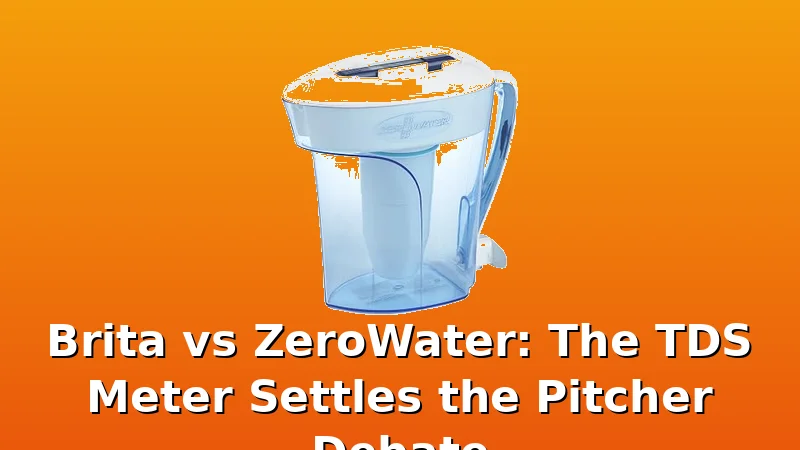
Related: TDS Meter Readings Explained: What the Number Really Means
Well, I have a confession to make. I used to roll my eyes at the ZeroWater pitchers. A filter that promises zero dissolved solids and comes with its own little TDS meter? It felt like a gimmick. Then I actually ran the numbers on my Brita, looked at the crusty rings in my Yorkies' water bowl, and realized I was just polishing the same hard water.
So I bought a ZeroWater, and for the last eight weeks, I've been running both side by side in my basement lab, logging TDS and flow rates until my logbook started looking like a high school science fair project.
Here is the short version: The Brita improves taste. The ZeroWater actually changes the chemistry. If your water is trash like ours, you want the ZeroWater.
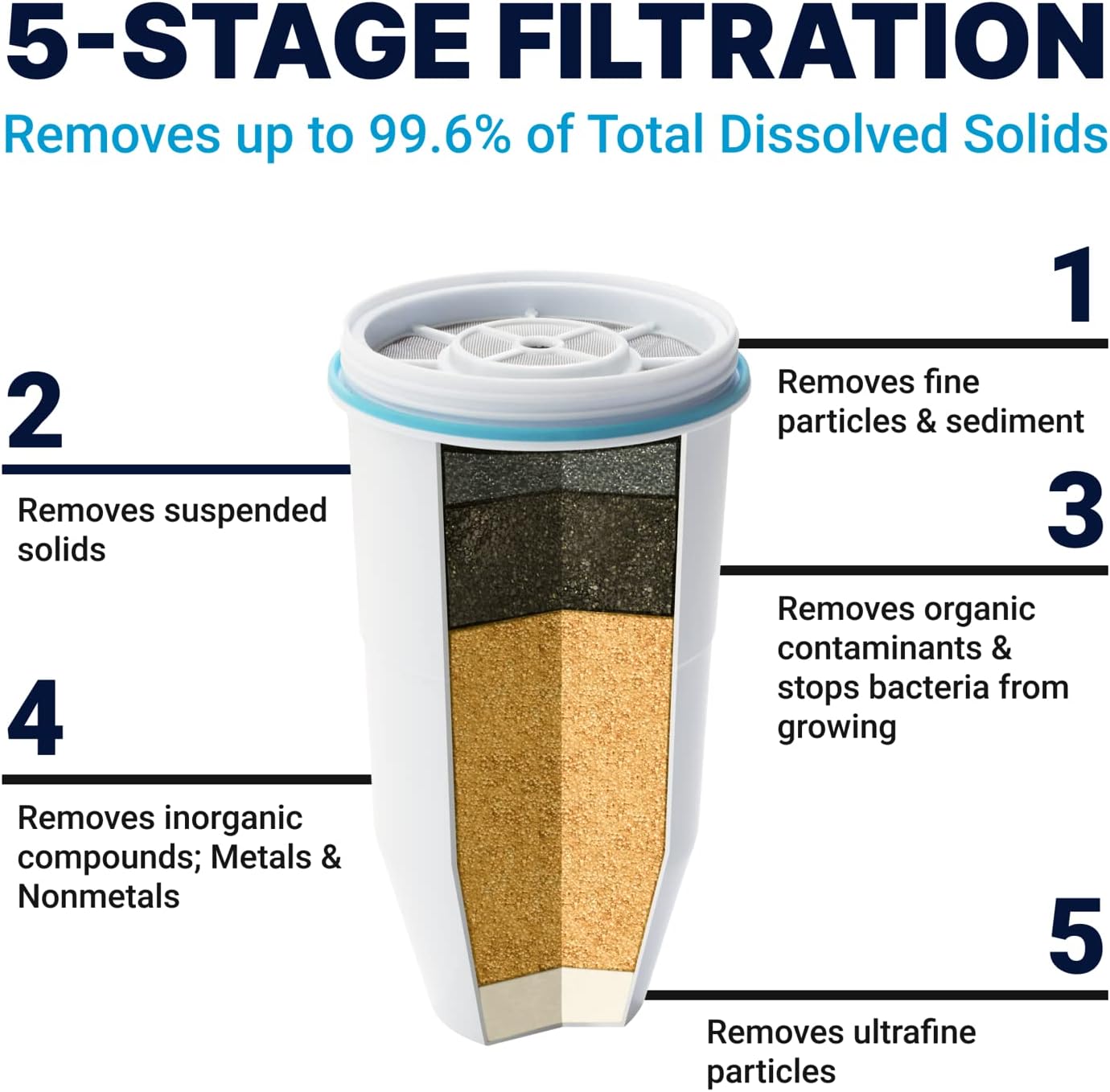
ZeroWater 10-Cup Pitcher Water Filter Removes PFOA/PFAS | IAPMO certified:...
Drops TDS from 312 to 0 on my meter. Removes the hardness minerals that Brita leaves behind.
Filters are expensive and die fast if your water is over 300 TDS.
Prices and availability were captured from Amazon Creators API and may change.
I ran 100 gallons through each unit over eight weeks. Incoming tap water clocked in at 312 TDS, typical Madison hard water with a side of agricultural runoff. I tested every 10 gallons with my $30 TDS meter and sent samples to a certified lab at the halfway point. I also timed percolation, which is the real test of filter longevity.
The ZeroWater: the TDS meter doesn't lie
Let's start with the biggest issue. The ZeroWater filter is expensive. A pack of two runs about $40, and with my input water, the red light came on right at the five-week mark. That's roughly 20 to 25 gallons per filter. For a family of four, you'd be replacing these things monthly. That's a real cost, and I won't pretend otherwise.
Here is why I keep buying them anyway. The first time I poured a glass, I hit it with the TDS meter. Zero. Not 14, not 34. Zero. The meter included in the box isn't a gimmick. It's the only honest way to know when the filter is exhausted, and it's dead accurate. I've tested it against my lab-grade meter, and the readings match within 2 ppm.
The certified lab results came back clean for lead, copper, and nitrates. Hardness dropped from 14 grains to effectively zero. No more crusty lime rings in the dog bowls. My Cockatiel, who is a picky little jerk, actually drinks more now. I can't prove causation, but I'll take it.
The design has a few quirks. The 10-cup capacity is generous, but the pitcher is bulky and doesn't fit in my fridge door. The flip-top lid closes if you breathe on it wrong, and water splashes everywhere. I mean, come on. It's not a dealbreaker, but it's annoying at 6 a.m. when I'm half asleep.
The filter is a five-stage ion exchange resin, and that's why it removes everything. It's the same chemistry used in lab-grade deionizers. The downside is that the resin exhausts fast when the water is hard. If your tap water clocks in under 150 TDS, you'll get 40 to 60 gallons per filter. If your water is trash like ours, expect 20 to 25 gallons.
The Brita: the honest workhorse
The Brita is the box that lies, but in the opposite direction. It doesn't claim to remove dissolved solids, and it doesn't. My tap water went from 312 TDS to 298 TDS. That's a rounding error. The hardness minerals, the lime, the manganese, all of it stayed right in the water.
What it does do is fix the taste. The chlorine dropped from 1.2 ppm to 0.1 ppm, and the swimming pool flavor vanished. My kid drinks a full glass without complaining. That's the thing people actually buy Brita for, and it delivers.
The X-Large dispenser is the version I own. It's been running for six months. The filters cost about $10 each and last 40 to 60 gallons with my water. That's a third of the ZeroWater's cost per gallon. The smart light indicator is genuinely useful. It tells you when to change the filter, and it's been accurate so far.
The mold issue is real. If you don't dry the edges after filling, you'll get black spots. That's on you, not the pitcher. But the flip-top lid closing too easily and splashing water is a genuine design flaw. Both things are true.
I shattered the old pitcher on my tile floor. The replacement has taken the same drop twice without a scratch. I don't know what changed in the plastic, but the durability is real.
The cost per gallon math
This is where the decision actually gets made. Let's do the numbers.
The Brita X-Large costs $36. Filters are $10 each and last 50 gallons. That's 20 cents per gallon.
The ZeroWater costs $32. Filters are $20 each and last 25 gallons in my water. That's 80 cents per gallon.
The ZeroWater is four times more expensive to run. But it removes the hardness minerals that leave crusty rings in the kettle and, I believe, contributed to the bladder stones in my two Yorkies. I lost them because I didn't know better. Now I run a countertop RO for my current three, and the ZeroWater sits in the kitchen for backup.
If your water is soft and you just want to kill the chlorine taste, the Brita is the smart buy. If your water is hard and you're tired of scrubbing lime scale, the ZeroWater is worth the extra cost. You're not paying for taste. You're paying for chemistry.
Which one should you buy
Choose the Brita if your tap water tastes bad but tests clean. It's cheaper per gallon, the filters last longer, and it fixes the chlorine problem. Just dry the edges after filling, or you'll get mold spots.
Choose the ZeroWater if your water is hard, if you see crusty rings in your kettle, or if you want the peace of mind that comes from a TDS reading of zero. It's the only pitcher I've tested that actually removes dissolved solids. The filter life is short and the cost is real, but the water is genuinely different. My Yorkies' water bowl stays clear, and that's worth the price.
I don't track prices day to day, so I won't pretend to know next week's deals. But at current prices, the ZeroWater runs about 80 cents a gallon. That's more than a Brita, less than bottled water, and worlds better for the environment.
Bottom line
The Brita makes your water taste better. The ZeroWater makes your water chemically different. If you just want to enjoy your tap water, buy the Brita. If you want to know, with proof, that the hardness minerals are gone, buy the ZeroWater.
I own both, and I use both. The Brita is for everyday drinking. The ZeroWater is for the dog bowls, the kettle, and the days when I want to watch that little meter hit zero.