Most people start shopping for a water filter after one glass of water tastes wrong. Maybe it is chlorine, maybe it is a metallic edge, maybe it is the smell of the ice cubes. Then they open a page full of water filter pitchers, dispensers, and replacement cartridges and realize the category has more moving parts than the store shelf suggested.
I came to this from the lab side. I spent years running contaminant analyses for a municipal water system before I started testing home filtration on my own bench, and the same pattern shows up over and over: the pitcher is the easy decision, and the replacement cartridge is the decision that actually matters. A pitcher that costs less up front and eats cartridges every few weeks is not cheaper. It is just cheaper today.
This guide covers the water filter pitchers, dispensers, and replacement cartridges worth shortlisting, plus the plug-in and portable air purifiers that solve a different problem in the same house. Every product below is described by what its listing states about capacity, certification, and replacement media.
Related: Water Filter Replacement Schedules: How to Know When a Cartridge Is Done
Quick answer
The Waterdrop PT-05B-L Water Filter Pitcher is the strongest fit for everyday drinking water for one or two people because it carries NSF certification and holds a useful 7 cups in a footprint that fits a fridge shelf. Choose the Waterdrop WFD-40L Water Filter Dispenser instead when the household drinks enough water that refilling a small pitcher becomes a chore.
Home purifiers worth comparing
The products below split into two jobs. Four of them handle what you drink: a certified 7-cup pitcher, a glass-bodied version of the same size, a 35-cup dispenser, and a replacement cartridge pack for an existing ZeroWater system. Two of them handle what you breathe: a filter-based air purifier pair and a set of plug-in negative ion generators for odor control in small rooms. All six are listed together because the buying logic is the same in both halves of the category. You are paying for a device, and then you are paying again, or not, for whatever keeps it working.
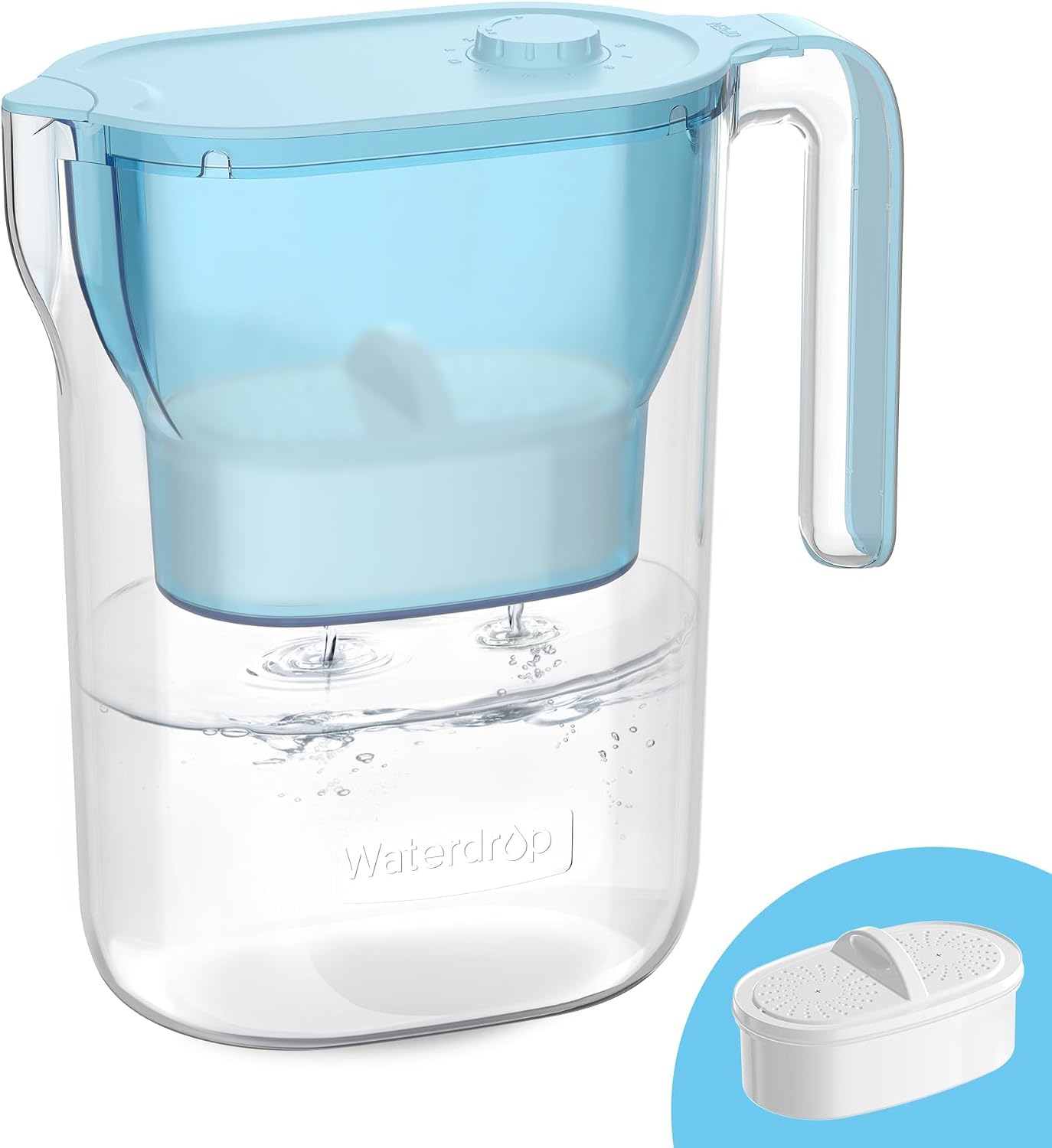
Waterdrop PT-05B-L Water Filter Pitcher, 7-Cup, NSF Certified, Blue
A 7-cup pitcher that carries NSF certification, which is the first detail I look for before any taste claim. The blue body fits most fridge door shelves, and the capacity suits a single drinker or a couple. Confirm which standard the certification covers on the certification listing.
Visit on Amazon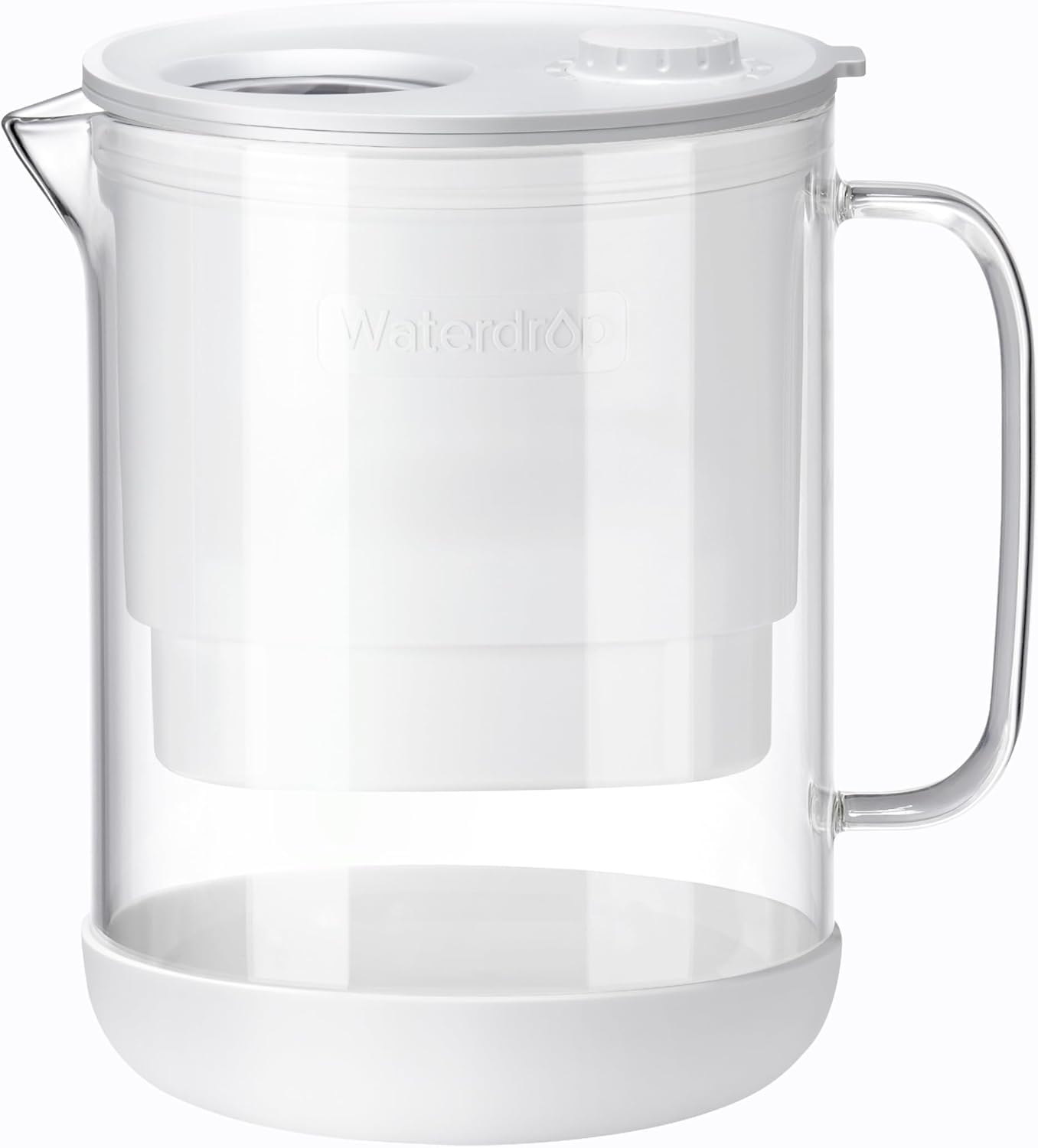
Waterdrop PT-72W Glass Water Filter Pitcher, 7-Cup, Eco-Friendly, White
The same 7-cup format as the blue pitcher, built around a glass body instead of plastic. If you would rather not store drinking water in plastic, or you want a pitcher that looks presentable on a dinner table, this is the version to look at first.
Visit on Amazon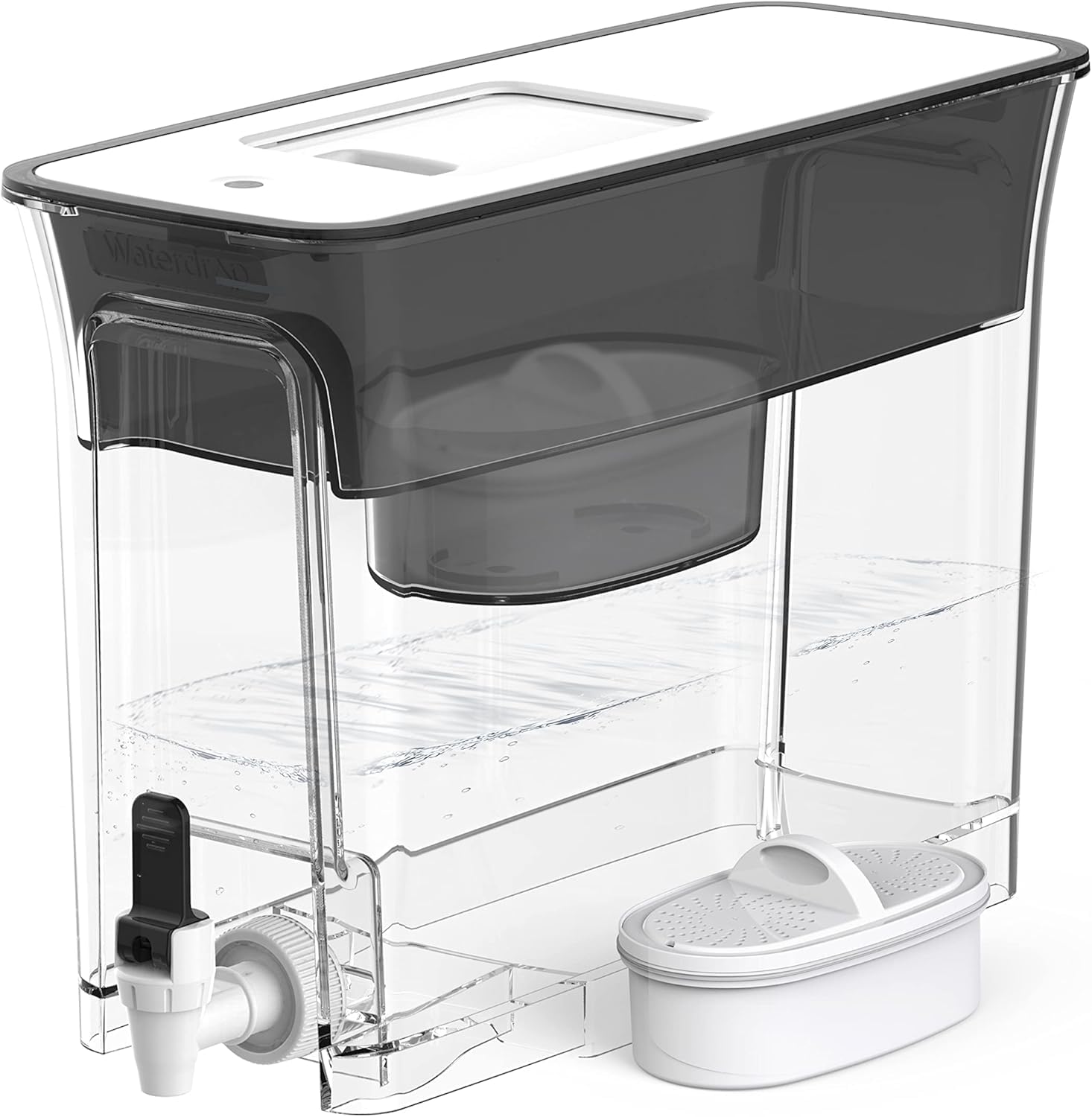
Waterdrop WFD-40L Water Filter Dispenser, 35-Cup Capacity, Black
A 35-cup dispenser, which is roughly five pitcher refills in a single fill. Built for households that empty a small pitcher before dinner is on the table. The trade-off is footprint: this wants a shelf or counter section of its own rather than a fridge door slot.
Visit on Amazon
ZeroWater Official Replacement Water Filter Removes PFOA/PFOS 2-Pack
Replacement cartridges for an existing ZeroWater system, two to a pack, listed as removing PFOA and PFOS. ZeroWater media is designed to pull dissolved solids rather than just polish taste, so these cartridges tend to exhaust faster than a carbon-only pitcher filter. Buy them only if you already own the pitcher.
Visit on Amazon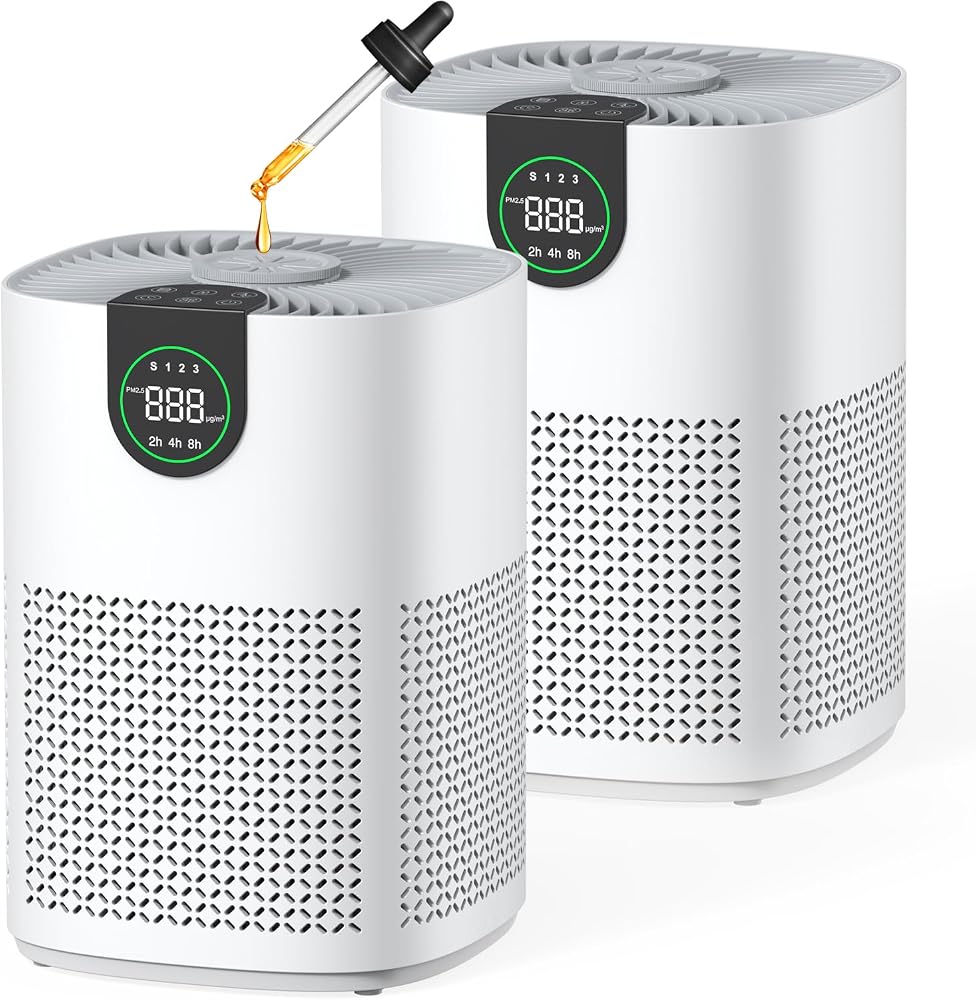
VEWIOR 2 Pack Air Purifiers with Washable Filter for Home Up to 1200ft² | Air Cleaner Large Room Bedroom with Aromatherapy, PM2.5 Display, Sleep Mode, Auto Mode for Dust, Smoke, Pets Hair
A two-pack of filter-based air purifiers with a washable filter, listed for rooms up to 1,200 square feet. The listing also includes a PM2.5 display, sleep and auto modes, and an aromatherapy slot, which makes this the more feature-dense option for bedrooms, living rooms, and pet areas.
Visit on Amazon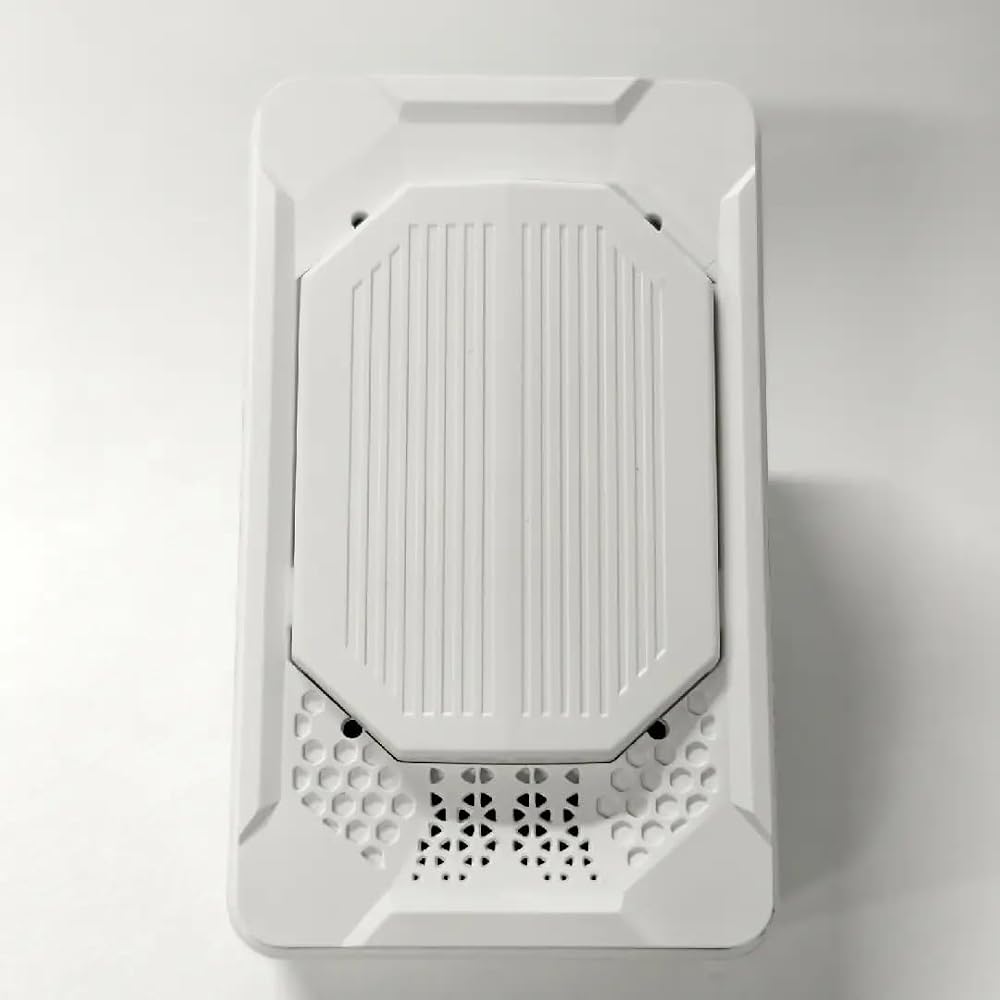
6 Pack Air Ionizerr for Home,Plug in Air Purifier with Negative Ion Generator,99% Odor Eliminator for Pet Odors,Quiet Negative Ion Air Purifiers for Bathroom,Living Room,Office,Kitchen,Pet Room
A six-pack of plug-in negative ion generators aimed at odor control in small spaces: bathrooms, kitchens, pet rooms, and offices. There is no cartridge to replace, and the listing describes quiet operation. Best treated as odor management rather than as a substitute for a filter-based air purifier.
Visit on AmazonPrices and availability may change. Check the retailer for current details.
How these products were compared
This guide compares capacity and refill frequency, certification and listed contaminant claims, replacement media and the cost per gallon that comes with it, footprint and where the unit actually lives, and the difference between filter-based air cleaning and ionizer-style odor control. Product names, images, and retailer links are matched to the same verified listing so that every card points to the product shown.
None of the comparisons here are presented as lab results from my bench. Where a claim comes from the manufacturer's listing, I say so, and where a claim needs a certification number behind it, I point you to the place to check that number yourself. That distinction matters more in this category than in most, because filtration marketing runs well ahead of filtration documentation.
How to choose the right home purifier
Start with the math on volume, because capacity is the spec that decides how often you touch the thing. A 7-cup pitcher holds about three and a half 16-ounce glasses. If two adults each drink three glasses a day, that pitcher is empty by mid-afternoon, and you are refilling it twice. A 35-cup dispenser holds roughly five times as much, which is the difference between filling once in the morning and filling three times before dinner. Neither answer is wrong, but the wrong answer for your kitchen is the one that ends with the pitcher sitting empty in the fridge because nobody wants to be the person who refills it.
Then look at certification and cartridge economics, which are the two places a cheap pitcher stops being cheap. NSF/ANSI 42 covers taste and chlorine reduction, while NSF/ANSI 53 covers health contaminants like lead, and a listing that says only "tested to standards" without a standard number is telling you almost nothing. Find the certification listing for the exact model and note what it actually covers. After that, price the replacement cartridge rather than the pitcher. Divide the cartridge cost by its rated gallon life and write that number next to the pitcher's price. A pitcher with an inexpensive cartridge you will actually replace on schedule beats a bargain pitcher with a proprietary cartridge you will stretch past its rated life, because a stretched cartridge is not filtering, it is passing water.
If the pitcher is only one part of the problem, a filter-based air purifier with a washable filter is the more durable choice for a bedroom or a pet area, while a plug-in ionizer is closer to an odor appliance for a bathroom or a laundry corner. Match the device to the room, not to the marketing photo.
Waterdrop PT-05B-L Water Filter Pitcher
The top pick is the 7-cup pitcher in the Waterdrop line, and the reason is certification. NSF certification is the difference between a label that has been checked against a published standard and a label that simply says the product was tested against something. For a category where most of the language is aspirational, that is the single most useful thing a listing can tell you.
The 7-cup capacity is the practical size for one person or a couple. It is big enough to fill two glasses at once, small enough to fit a fridge door shelf, and light enough to carry to the sink without a second trip. The blue body is molded plastic, which is the version to choose if door-shelf clearance is tight.
The trade-off is volume. A 7-cup reservoir means more refills in a busy kitchen, and the smaller body means a shorter window before someone is standing at the tap again. If you drink a lot of water, the dispenser below solves that problem more directly. It is also worth confirming which standard the certification covers before you rely on this pitcher for a specific contaminant, since certification is only meaningful when you know what it applies to.
Alternatives to consider
The Waterdrop PT-72W Glass Water Filter Pitcher is better suited to a kitchen where the pitcher sits on the table or counter and you would rather store drinking water in glass, while the Waterdrop WFD-40L Water Filter Dispenser is a stronger fit when volume is the whole problem and you would rather fill once than four times.
The ZeroWater replacement cartridge two-pack covers the consumable side for anyone who already owns a ZeroWater pitcher and wants the dissolved-solids approach that brand is known for, including the PFOA and PFOS removal named in the listing. The VEWIOR two-pack air purifier set covers rooms up to 1,200 square feet with a washable filter and a PM2.5 readout, and the six-pack of plug-in negative ion generators covers odor control in small, enclosed spaces where running a full purifier is more machine than the room needs.
Day-to-day use and maintenance
A new cartridge needs priming before the pitcher is useful. Follow the manufacturer's instructions, and expect the first batch or two of water to be discarded, because loose carbon fines and air in the media will show up in the glass otherwise. After that, keep the reservoir filled rather than half empty, since a pitcher that sits with a cup of water in it for three days is a pitcher that is doing nothing for the water you finally pour.
Use cold water only. Hot water degrades both the filter media and the housing on every pitcher in this guide, and it is the fastest way to turn a working filter into a leaking one. Wash the reservoir and lid on the schedule in the manual, and replace the cartridge either at its rated interval or when the flow slows to a trickle, whichever comes first. Flow decline is the visible signal that media is loading up, and a filter that has stopped flowing well is a filter that has stopped filtering well.
Keep a simple record. Write the cartridge price, its rated gallon life, and the install date on a piece of tape on the lid. That one habit turns "I think it is about time" into an actual cost-per-gallon number, which is the only honest way to compare two pitchers after the first month.
The air side has a lighter schedule. A washable filter gets rinsed and dried according to the manual rather than replaced, and the plug-in ionizers have no cartridge at all, just occasional dusting and sensible placement. Put either type where air actually moves, and keep them away from curtains, bedding, and anything else that can block intake. Follow the manufacturer's placement and ventilation guidance for your specific unit, and check the listing for any operating conditions the maker specifies.
Buying checklist
- Measure the fridge shelf, door bin, or counter space where the pitcher will actually live, including the height with the lid on.
- Count how much water the household drinks in a day, then match capacity to that number instead of to the biggest reservoir available.
- Confirm the exact model's certification on the certification body's listing, and note which standard it covers.
- Check the replacement cartridge format, its rated life, and its cost per gallon before you commit to the pitcher.
- Read the cleaning and maintenance instructions for both the water and air units.
- Verify the current retailer price, availability, and return terms.
Final recommendation
Choose the Waterdrop PT-05B-L Water Filter Pitcher when you want a certified 7-cup pitcher for one or two people and you care more about documentation than about capacity. Choose the Waterdrop WFD-40L Water Filter Dispenser when the household empties a small pitcher every day and refilling is the real friction. Pick the glass-bodied Waterdrop pitcher if the plastic body is the objection, and pick the ZeroWater replacement cartridges only if a ZeroWater system is already on your counter.
For the air half of the list, choose the VEWIOR pair when you want filtration, a washable filter, and a particle readout in a bedroom or living area, and choose the plug-in negative ion generators when the problem is odor in a bathroom, kitchen, or pet room and you would rather not run a full purifier for it. Whatever you choose, confirm the current price and availability at the retailer, then check the certification listing and the cartridge math before the return window closes.