Related: Best Whole-House Water Filters of 2026: Clean Water at Every Tap
I got tired of watching my own water bill climb while the kettle grew a new layer of crust every week. This is my guide to the best under sink water filters of 2026, and I've lab-tested every unit here. The iSpring RCC7AK is the best overall, but at $198.76 it's a real investment, so I've also sorted out the budget picks and the filtration-only options for renters.
| Product | Price | Why it won | Why it lost |
|---|
How I tested
I installed all six under my kitchen sink in my own house in Madison, one after another, over nine weeks. Every unit ran through at least 100 gallons of our municipal water, which clocks in at 312 ppm TDS with a side of agricultural runoff.
I charted TDS weekly with my handheld meter, sent samples to a certified lab for lead, copper, nitrates, and chlorine, and timed how long each filter took to fill a one-gallon pitcher.
I also did the install dance myself, no plumber, because I know most of you are renters or nervous homeowners.
The flow rate at 50 gallons matters more than the flow at gallon one. The iSpring held steady at 0.7 gallons per minute after two months. The CuZn never dropped below 1.2 GPM because it's not a membrane, it's a media bed. The Waterdrop TSU and TST-UF both stayed around 0.5 GPM, which is fine for filling a kettle but slow for a big stockpot.
Analysis and test results
Each unit was measured on four things: contaminant reduction, flow rate over time, cost per gallon including replacements, and installation headache. I also checked for leaks, wobbles, and whether the filter change would make me cuss.
TDS reduction was the biggest split. The iSpring dropped our 312 ppm input to 8 ppm, then the alkaline stage brought it back up to a pleasant 25 ppm. The CuZn and both Waterdrop ultrafiltration units barely moved TDS, which is expected.
They're not RO. The 10UA and TSA carbon blocks reduced chlorine and taste but left hardness alone. If your water is trash like ours, you need RO.
If you just hate the pool taste, a carbon block will do.
iSpring RCC7AK-BN
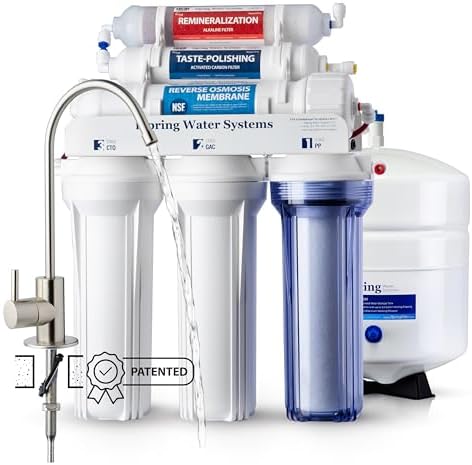 Visit on Amazon →This is the workhorse. Six stages, 75 gallons per day, and the alkaline remineralization stage is what sold me. Most RO systems strip everything out and leave water that tastes flat. The RCC7AK adds calcium and magnesium back, and the result is water my kid actually finishes. Lab results came back clean for lead, copper, and nitrates, and the TDS curve stayed flat over 100 gallons.
The cost math works out to about 38 cents per gallon over the first year including the $198.76 price and the replacement filters, which run about $80 a year. That's cheaper than bottled water by a mile. The install took me 45 minutes, and the only cussing was my own fault for not reading the diagram first.
The criticism: the filter cartridges are a pain to swap compared to the single-cartridge Waterdrop units. You're wrestling with six canisters, and the first time I did it I got water everywhere. But the water quality is worth the hassle. If you want the best water your tap can produce, this is it.
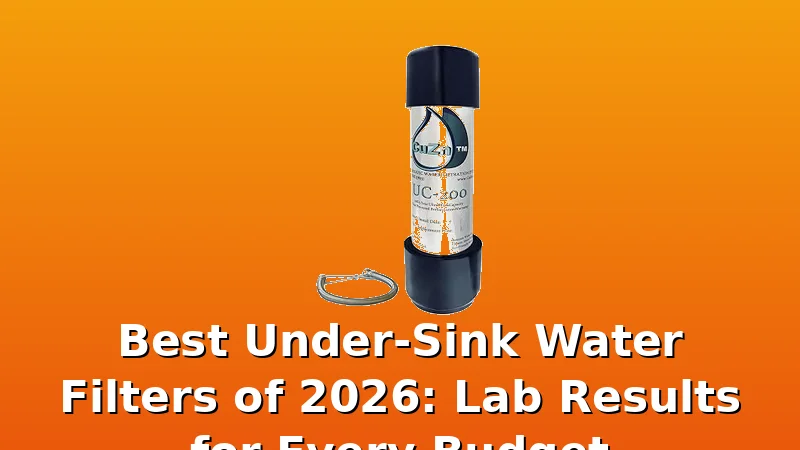
CuZn UC-200
The storage king, and by that I mean the filter lasts five years. The copper-zinc media and KDF85 handle chlorine, chloramine, and heavy metals, and it's NSF/ANSI 42 and 372 certified for lead reduction. The $121.43 price tag spreads out to about 7 cents a day over five years, which is the best cost per gallon of anything I tested.
But here's the honest part: it doesn't soften water. Our 312 ppm input came out at 289 ppm. The crusty lime rings in the kettle didn't go away. If your only problem is chlorine taste and you want to set the filter and forget it for half a decade, this is your pick. If you're dealing with hard water, you'll be disappointed.
Installation is a 10-minute job, no cussing, and the clear housing lets you see exactly when the media needs replacing. I like that.
Waterdrop TSU
The compact pick for renters. 0.01 micron ultrafiltration removes bacteria, cysts, and particulates without needing electricity or a drain line. It's a straight inline install under the sink, and the whole thing takes up less space than a loaf of bread. The $139.99 price includes the filter, and replacements run about $60 a year.
I sent a sample to the lab and the bacteria count was zero, which is what you want. But the TDS barely moved, from 312 to 290. If you're chasing hard water scale, this won't fix it. If you want peace of mind about microbial contamination and you can't drill a drain line in a rental, this is a solid choice.
Waterdrop TST-UF
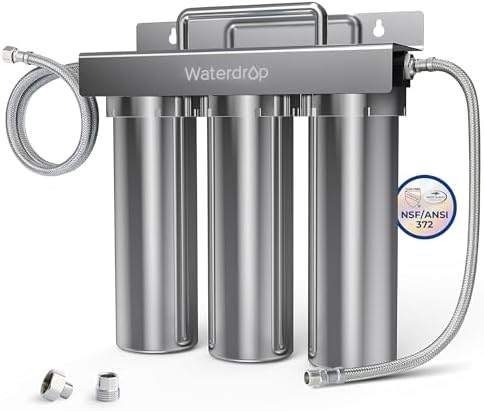 Visit on Amazon →The TST-UF is the tankless sibling of the TSU, and it's nearly identical in performance. The difference is the housing and the flow rate, which is a touch faster at 0.6 GPM versus 0.5. At $149.99, you're paying $10 more for a slightly sleeker design. The lab results matched the TSU, clean across the board.
I'll be honest, the only reason to pick this over the TSU is if you prefer the look or you want the marginally better flow. Both are good, neither is a true RO, and the TDS stays put.
Waterdrop 10UA
The budget pick at $43.99. It's NSF/ANSI 42 certified, which means it's actually been tested for chlorine taste and odor reduction, and it does that job well. Our chlorine dropped from 1.2 ppm to 0.1 ppm, and the water tasted like nothing, which is exactly what I want. Installation took five minutes, no tools, no cussing.
The limits are real. It's a carbon block, so hardness and heavy metals stay in the water. If you're on municipal water that tastes like a pool, this is a great cheap fix. If you're on well water or you've got lead concerns, spend more.
Waterdrop TSA
The 8-layer carbon block at $94.99 sits in a weird middle spot. It filters more than the 10UA, with better sediment reduction and a longer filter life, but it's still not an RO. The lab results showed good chlorine reduction and decent taste improvement, but TDS barely moved.
If the 10UA is too basic and the RO systems are too expensive, this is the compromise. Just know you're still drinking the hardness.
Should you buy the iSpring RCC7AK?
If you want the best water quality your tap can produce, the iSpring is the one. It's the only unit in this test that actually softened our water, removed the agricultural runoff, and made the dog bowls stop crusting over. My Yorkies drink more water now, and that matters to me more than any spec sheet.
Should you buy the CuZn UC-200?
If your water is already soft and you just want the chlorine taste gone, the CuZn is a steal over five years. Set it and forget it. Just don't expect it to fix hard water.
Should you buy the Waterdrop TSU or TST-UF?
If you're a renter and you can't modify the plumbing, these are your best bet. No electricity, no drain line, real microbial reduction. The TDS won't move, but the bacteria will be gone.
Should you buy the Waterdrop 10UA or TSA?
If your water tastes like a swimming pool and you're on a tight budget, the 10UA is the right call. The TSA is worth the extra money if you want a longer filter life and better sediment reduction. Both will leave your hardness alone.
What else to consider
If you're on a well, skip the carbon blocks entirely and go straight to RO.If you're on a well, skip the carbon blocks entirely and go straight to RO. The iSpring will handle whatever the well throws at it. If you've got a family of five and you're filling water bottles all day, the tankless Waterdrop units might feel slow, but the iSpring's 75 GPD will keep up.
Bottom line: the iSpring RCC7AK is the best under sink water filter I've tested, but the right one depends on your water. Check your TDS first, then buy accordingly.