Related: Best Under-Sink Water Filter: What Actually Removes Lead
Most of the questions in my inbox boil down to the same shopping list: a countertop water filter and air purifier that between them handle what comes out of the tap and what floats through the living room. Those are two different problems with two different fixes. Water filtration is chemistry, and it lives or dies on the replacement cartridge. Air cleaning is particle physics, and it lives or dies on how much air the machine actually moves and how much carbon it holds for odors.
I spent six years running contaminant analyses for a municipal water lab before I went independent, and I still keep a bench with a TDS meter, a stopwatch, and a logbook. The habit that stuck is simple: read the spec sheet before the marketing copy. Most of what you need to know is printed in six-point type on the side of the box, and most of what you will regret not checking is the price of the replacement filter.
This guide covers four units I would shortlist for a house that needs both water and air handled: one gravity-fed countertop water system and three air cleaners doing very different jobs at very different price points.
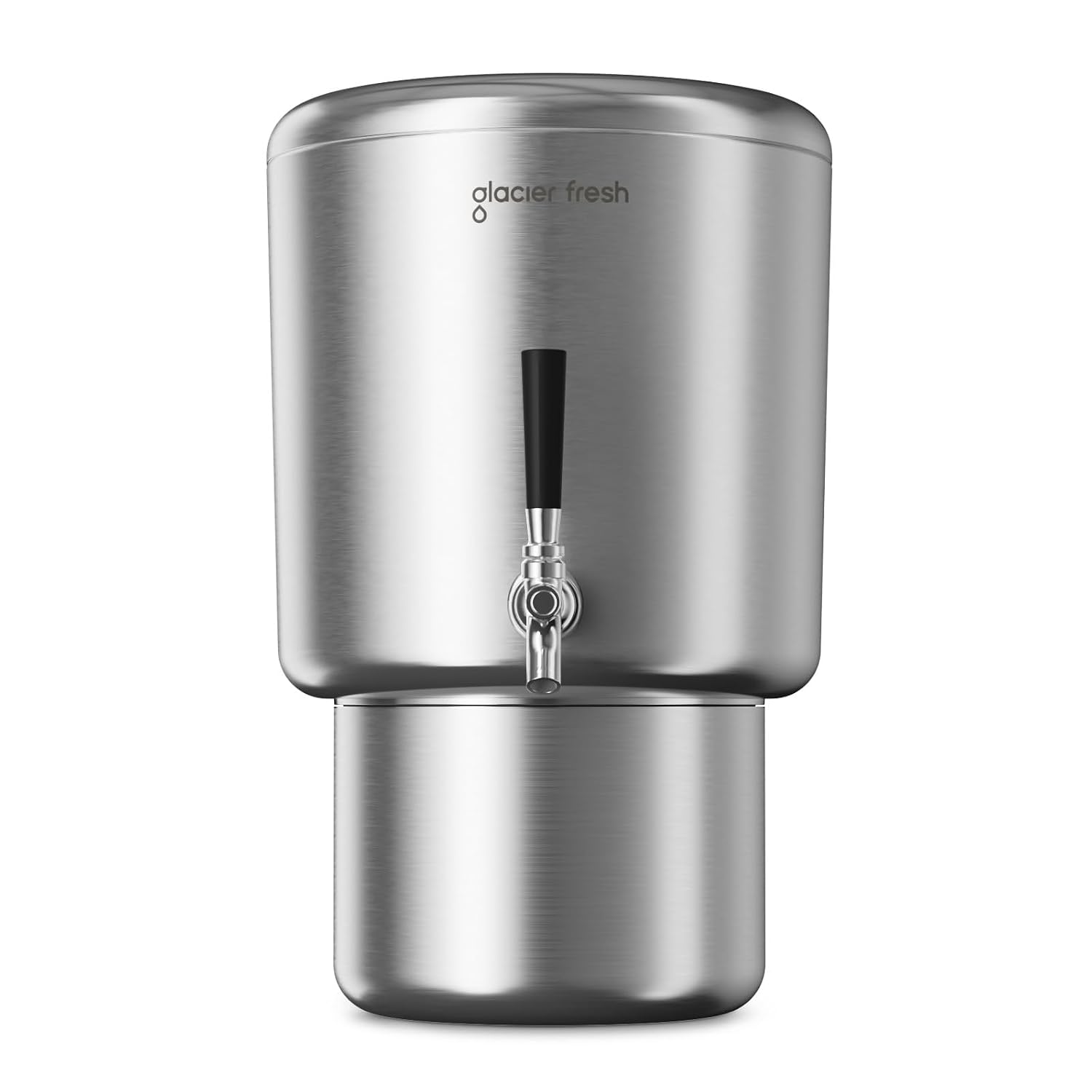
GLACIER FRESH PC04 Gravity-Fed Countertop Water Filtration System
Gravity-fed is the oldest technology in home water treatment and still the most forgiving. There is no plumbing, no drain line, no electricity, and nothing to install, which makes it the one category of water filter that keeps working during a power outage or in a cabin with no pressure tank. You fill the top chamber, water percolates through the media, and it collects below.
The PC04 is a countertop unit with a replaceable cartridge, so the two numbers that decide whether it is a good deal are the cartridge price and the rated gallon life. Divide one by the other and you get cost per gallon, which is the only honest way to compare a countertop unit against a pitcher or an under-sink system. Pitchers win on sticker price and lose badly on cost per gallon, because the cartridges are small and they die fast.
What to look for on the label: a certification number for NSF/ANSI 42 (taste and chlorine) and NSF/ANSI 53 (health contaminants such as lead), not the phrase "tested to NSF standards." A number means an accredited body audited the product and the claim. No number means the claim came from the marketing department. If the listing does not publish both the certification and the contaminant list, ask the seller for them before you spend the money.
One more thing about gravity units: they are slow by design. If you are used to filling a glass at the sink, plan on a pitcher in the fridge as the buffer, or accept that you will stand there waiting. This is a system for someone who wants genuinely filtered water without hiring a plumber, not for someone who wants a firehose.
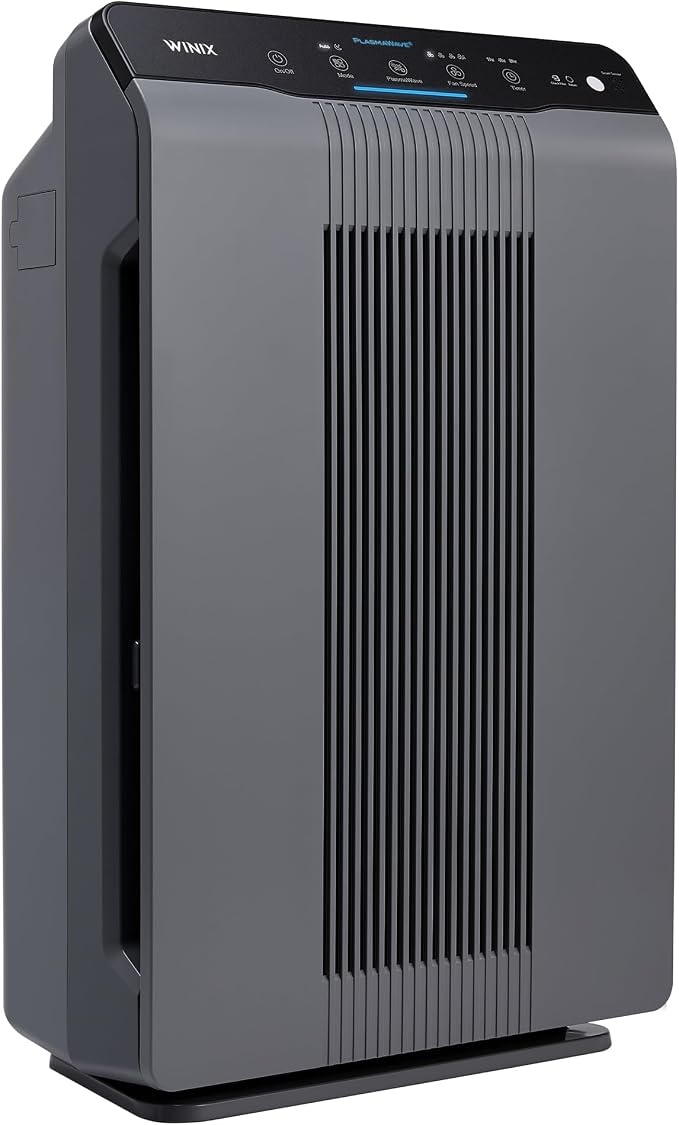
Winix 5300-2 Air Purifier with True HEPA, PlasmaWave, and Odor Reducing Carbon Filter
The 5300-2 is the whole-room unit of this group: True HEPA for particles, a carbon filter for odors, and PlasmaWave, which is Winix's plasma technology aimed at odors and volatile organic compounds. The spec I care about most is True HEPA, because that label means the media is rated to capture 99.97 percent of particles at 0.3 microns, the size class that covers smoke, dander, and most of what you actually care about. Anything calling itself "HEPA-type" or "HEPA-like" is not the same thing, and the difference shows up in a smoke test.
The carbon stage matters more than people expect. Odor removal is a function of how much carbon is in the filter and how much air gets pushed through it, which is why cheap units that add a "carbon" pad the size of a business card stop helping after a few weeks. When you compare purifiers, compare the replacement filter price and the recommended interval, then compute the yearly cost. That number, not the purchase price, is what you are really buying.
PlasmaWave deserves an honest note. It is a technology that produces small amounts of hydroxyl radicals, and it can be switched off if you would rather run the unit as a plain HEPA machine. I like that it can be turned off. I do not like marketing that treats any plasma or ion technology as a substitute for a HEPA filter, because it is not one.
Room size claims are the other trap. "Covers up to X square feet" is a marketing number that assumes ideal conditions: open floor plan, no furniture blocking intake, one air change per hour. Ask for CADR, the clean air delivery rate, in cubic feet per minute. A unit with a high CADR for smoke is doing real work. A unit with a big room number and no CADR is decoration with a fan inside it.
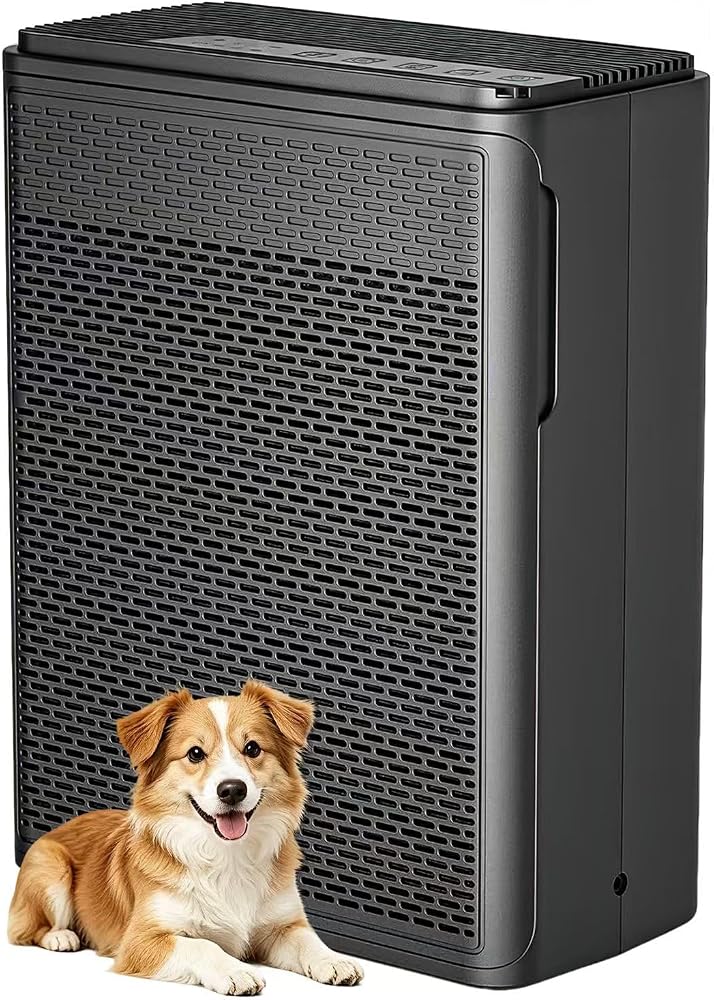
YARIKI P280 Air Purifier for Pets, H13 HEPA with Washable Pre-Filter
Pet households are a specific problem: hair, dander, and the smell that settles into upholstery. The P280 answers it with two stages that make sense together. The H13 HEPA filter is the fine-particle stage, and the washable pre-filter catches hair and larger debris before it reaches the expensive media. That pre-filter is the feature I would pay for, because a HEPA filter clogged with dog hair stops moving air long before its rated life is up.
The listing quotes coverage up to 1500 square feet and a 22 dB sleep mode. Treat the coverage number the way you would treat a car's highway mileage: achievable, but only in the conditions the test used. In a normal bedroom with a bed, a dresser, and a closed door, expect to run it in the room where the animals sleep and let the quiet mode handle the overnight hours. Twenty-two decibels is roughly the sound of a quiet room, which is the right spec for a bedroom unit.
For a pet home, placement beats marketing every time. Put the unit where the air actually moves: near the litter box, next to the dog bed, or in the room where you spend the evening. A purifier in a closed spare bedroom is a very expensive white noise machine.
2026 Upgraded Negative Ion Air Ionizers, 6 Pack Portable Mini Air Cleaner
I am going to be direct about this category, because it is the one most likely to disappoint. These are plug-in negative ion generators. They have no HEPA filter, no carbon bed, and no fan. They emit negative ions that make particles in the air clump together so they settle out of the breathing zone or land on surfaces. That is a real effect, and for a closet, a bathroom, a car, or a hallway, six small units is a reasonable trade.
What they are not is a substitute for a HEPA purifier in a house with pets or a smoker. Ionizers do almost nothing for gases and odors that are not attached to particles, and some ion-generating designs produce trace ozone, which is why regulators in some states have taken an interest in the category. If someone in the house has asthma, I would rather see the money go to a HEPA unit with a real carbon stage.
The honest use case is spot coverage. Six units means one in the mudroom, one in the guest bathroom, one in the car, and spares in a drawer. Just do not expect the air in your living room to read differently on a particle counter because there is an ionizer plugged into a wall outlet.
How I evaluate a filter or a purifier
Water side: I want the contaminant list and the certification numbers, a TDS reading before and after to see whether dissolved solids are actually being removed, a chlorine test because it is the easiest thing to verify at home, and a flow-rate check at the start of a cartridge's life and again near the end. A filter that slows to a trickle is a filter you stop using, and a filter you stop using removes nothing. Then cost per gallon, with the cartridge price printed next to the purchase price.
Air side: CADR if the manufacturer publishes it, the replacement filter price and interval, the noise level on the lowest setting, and whether the unit has an off switch for any plasma or ion feature. Filter cost over three years usually exceeds the purchase price of the machine, and that is the number most buyers never see before they order.
Reference table: water and air products side by side
| Product | Type | Best for | Price |
|---|---|---|---|
 Visit on Amazon → GLACIER FRESH PC04 Gravity-Fed Countertop Water Filtration System |
Gravity-fed water filtration | Drinking water without plumbing work | $284.99 |
 Visit on Amazon → Winix 5300-2 Air Purifier with True HEPA, PlasmaWave and Odor Reducing Carbon Filter |
True HEPA air purifier with carbon and PlasmaWave | Main living space, smoke and odors | Visit on Amazon → |
 Visit on Amazon → YARIKI P280 Air Purifier for Pets, H13 HEPA with Washable Pre-Filter |
H13 HEPA air purifier with washable pre-filter | Pet hair, dander, and bedrooms | $49.99 |
 Visit on Amazon → 2026 Upgraded Plug In Negative Ion Air Ionizers, 6 Pack Portable Mini Air Cleaner |
Negative ion generator, no filter media | Closets, bathrooms, cars, spot odor | Visit on Amazon → |
The pattern in that table is the pattern in the whole category. The water system is a chemistry purchase and the cost lives in the cartridge. The two HEPA purifiers are particle purchases and the cost lives in the filter set and the electricity. The ionizer pack is a convenience purchase with no consumables and the smallest claims to defend.
Should you buy the GLACIER FRESH PC04?
Yes, if your priority is drinking water without hiring anyone. No installation, no drain line, and it works when the power is out. The two things to confirm before you order are the replacement cartridge price and the rated gallon life, because those two numbers decide your real cost per gallon. If the listing does not publish an NSF certification number and a contaminant list, ask for both. A gravity system that removes what you need at a sane cost per gallon is a good deal. One that removes "impurities" is a decorative pitcher with a nicer body.
Should you buy the Winix 5300-2?
Yes, if you want one machine to handle a living room or an open kitchen and you care about both particles and odors. True HEPA plus a real carbon stage plus a plasma feature you can switch off is the combination I would want in a main space. Before you buy, price the replacement filter set and check how often the manufacturer says to change it. If the yearly filter cost is acceptable to you, this is the unit that does the most work in the house.
Should you buy the YARIKI P280?
Yes, for a bedroom in a pet household, and especially if you are on a budget. H13 HEPA is the right media for dander and smoke particles, and the washable pre-filter is the feature that keeps the expensive filter from choking on hair. The coverage claim is the part to discount; run it in the room where the animals sleep rather than expecting one unit to condition a whole floor.
Should you buy the 6-pack mini ionizers?
Only if you understand what you are buying. These are spot units for closets, bathrooms, cars, and hallways, and six of them give you coverage in places a HEPA purifier will never reach. They are not a substitute for a filtered purifier in a home with pets or smoke, and I would not put one in a bedroom where someone has asthma. Buy them as accessories, not as the plan.
The short version: fix the water with a system whose cartridge you can afford to keep buying, and fix the air with the largest HEPA unit your budget and your room can justify. Everything else on the shelf is either a supplement or a story.