Your water tastes like a swimming pool, your ice cubes smell like the lobby of a hotel, and the pitcher in the fridge door is still running the cartridge you put in last spring. Home water filtration is a category where the packaging makes enormous promises and the fine print does most of the real talking. The useful question is not which filter wins in the abstract. It is which filter fits the place where you actually drink water: a pitcher on the counter, a cartridge inside the refrigerator, a canister in the sink cabinet, or a tank at the main line feeding the whole building.
This guide compares six products across those four jobs. It starts with a countertop pitcher that is described as targeting dissolved solids and works up to a three-stage whole-house system with pressure gauges. The under sink water filter category earns the top pick here, because a dedicated kitchen tap is usually where a household gets the most filtered water for the fewest daily compromises. That said, the honest answer depends on your plumbing, your fixtures, and how many gallons a day your household actually goes through.
Related: How to Read an NSF Certification Number on a Water Filter
Quick answer
The Waterdrop 10UA Under Sink Water Filter System is the strongest fit for a dedicated drinking-water tap at the kitchen sink because it is described as an NSF/ANSI 42 certified system with a stated 1-year service interval. Choose the ZeroWater 10-Cup Pitcher Water Filter Removes PFOA/PFAS instead when you want countertop filtration and no plumbing work at all.
Water filters worth comparing
Four different products hide inside the phrase "water filter," and comparing them to one another without separating those jobs is how people end up disappointed. Pitchers and dispensers sit on a counter or in a fridge and treat water a few cups at a time. Refrigerator and ice maker filters live inside an appliance and are matched to a specific model line. Under-sink systems mount in the cabinet and feed a dedicated faucet. Whole-house systems install at the main line and treat every fixture in the building, which is a very different promise from treating one glass.
What is worth comparing, then, is not a single ranking but the fit between a product and a job: which standard it is described as being certified to, what fixture it is built for, how often it needs a new cartridge, and how much cabinet or floor space it wants.
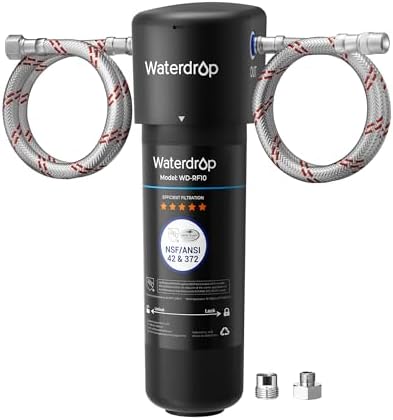
Waterdrop 10UA Under Sink Water Filter System, NSF/ANSI 42 Certified 1 Year
An under-sink system described as NSF/ANSI 42 certified, with a stated 1-year service interval, mounted in the cabinet and feeding a dedicated faucet rather than a pitcher or a refrigerator cartridge.
Visit on Amazon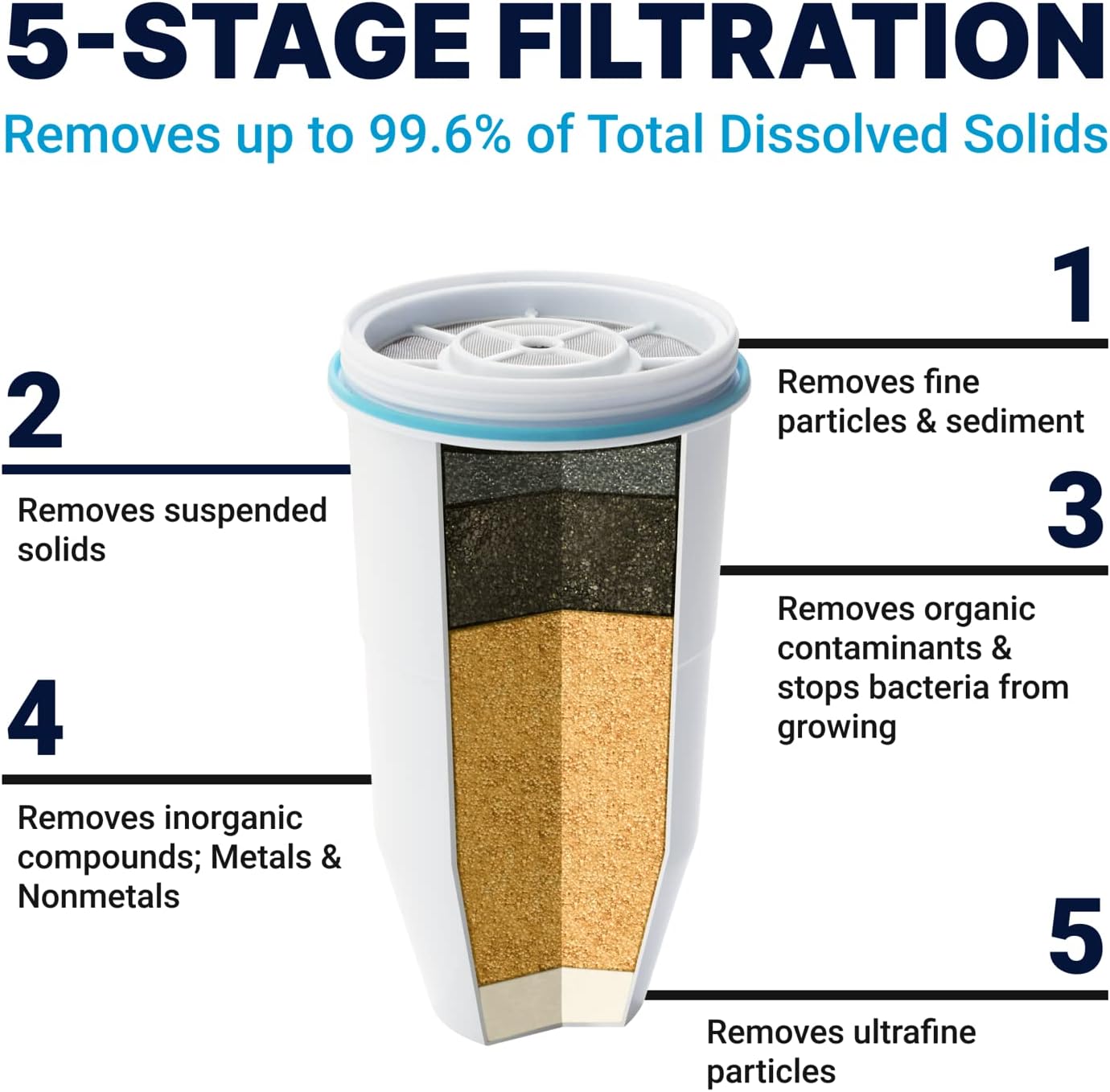
ZeroWater 10-Cup Pitcher Water Filter Removes PFOA/PFAS
A 10-cup countertop pitcher described as removing PFOA and PFAS, aimed at households that want filtration without plumbing or installation work.
Visit on Amazon
everydrop by Whirlpool Ice & Water Refrigerator Filter 1, Purple, EDR1RXD1
A refrigerator ice and water filter cartridge built to match Whirlpool Filter 1 applications, so it only fits the appliance lines that take that cartridge.
Visit on Amazon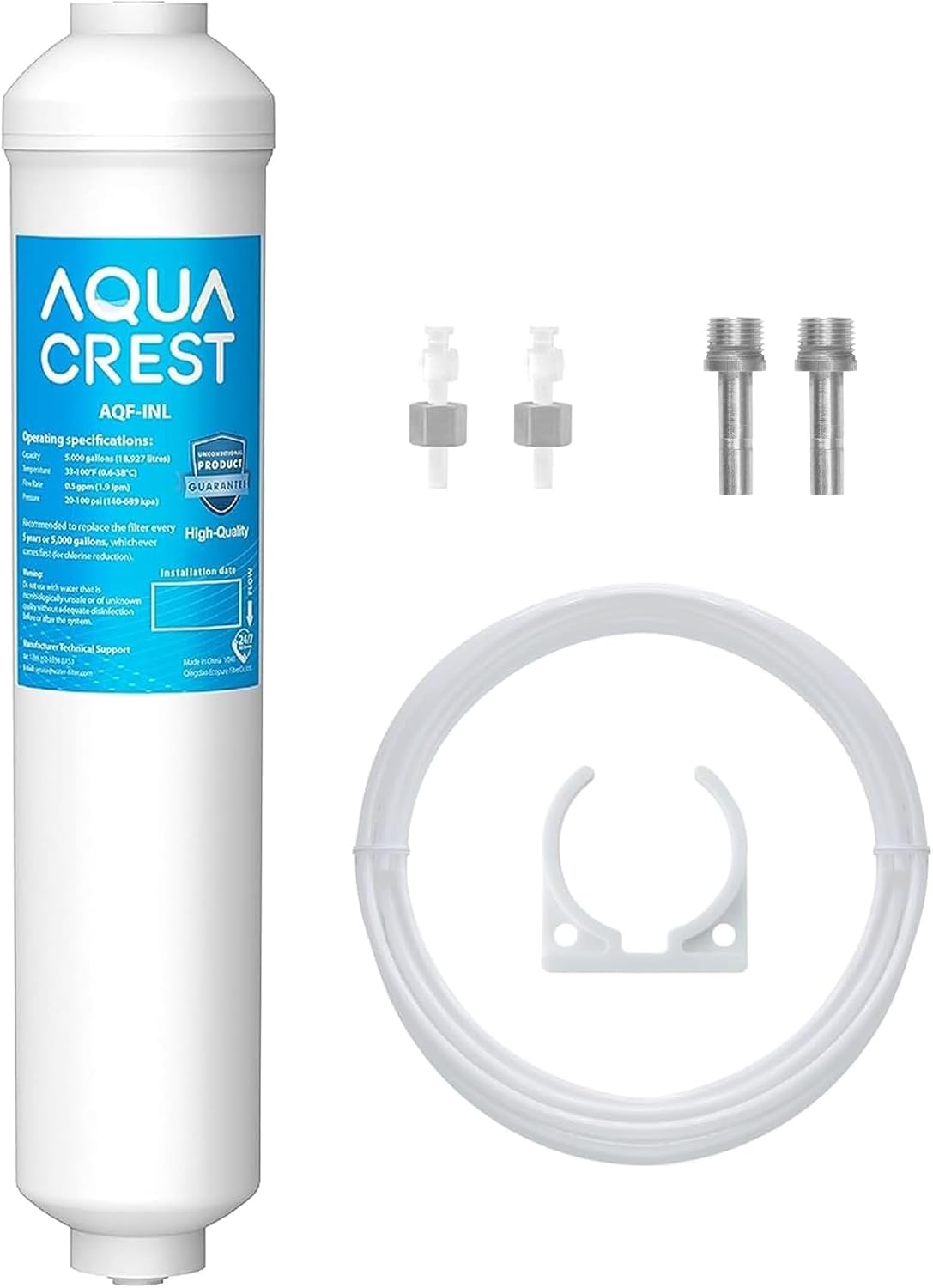
AQUA CREST INL 5 Years Inline Water Filter for Ice Maker and Refrigerator
An inline cartridge described as a 5-year unit for ice makers and refrigerators, intended for appliance water lines that use an inline filter rather than a drop-in one.
Visit on Amazon
PRO+AQUA Elite Series GEN2 PRO-100-E 3-Stage Whole House Water Filtration System for City & Well Water with Pressure Gauges | Reduces Contaminants, Sediment, Chemicals, Heavy Metals, with 1" Ports
Check current Amazon price
A three-stage whole-house system with pressure gauges and 1 inch ports, described by the manufacturer as reducing contaminants, sediment, chemicals, and heavy metals for city and well water.
Visit on Amazon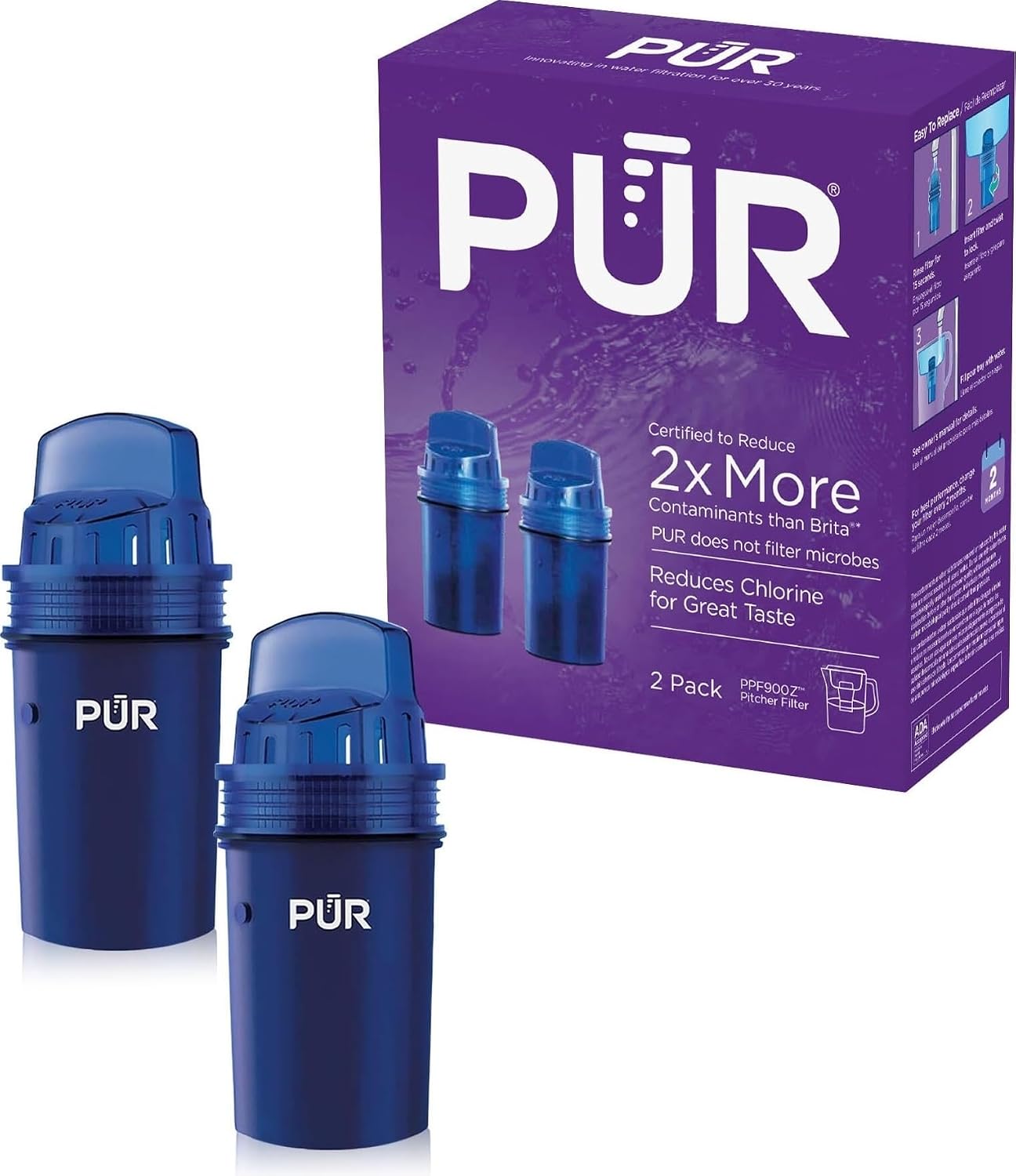
PUR Water Pitcher & Dispenser Filter Replacement 2-Pack, 4-Month Value
A two-pack of replacement filters for existing PUR pitchers and dispensers, described as a 4-month value, so it is refill stock rather than a standalone system.
Visit on AmazonPrices and availability may change. Check the retailer for current details.
How these products were compared
This guide compares five things: the certification or standard each product is described as meeting, the fixture or appliance each one is designed to serve, the installation work each one requires, the stated replacement interval and how easy it is to source cartridges, and the physical footprint each unit takes up in a kitchen.
Nothing here is presented as a laboratory result. The descriptions rest on the specifications and certifications the manufacturers publish, together with the product names and model numbers as they are listed. Product names, images, and retailer links are matched by ASIN so that every card points to the product shown. This article does not list prices, because they move; use the link on each card to confirm current price and availability.
How to choose the right water filter
Start with the fixture, not the filter. If the water you actually drink comes out of the refrigerator door, then a refrigerator or inline ice maker filter is the only category that solves your problem, and a well-built under-sink system will not help you. If you want a glass of water at the kitchen sink without thinking about it, an under-sink system is the category that delivers, provided you have cabinet space and a way to mount a dedicated faucet. If you rent, or you want filtration you can pack and move, a pitcher or dispenser is the realistic answer.
The second question is what you want the filter to do. A pitcher that is described as targeting dissolved solids is solving a different problem from a whole-house system described as reducing sediment, chemicals, and heavy metals at the main line. Those are not competing claims; they are different jobs with different installation costs and different maintenance loads.
A related consideration is certification. When a product carries a specific standard, such as NSF/ANSI 42, that is a claim you can look up and verify against the certification body's own listing. Phrases like "tested to NSF standards" without a number are worth much less, because they do not tell you what was tested or against what. If you want to get comfortable reading those labels before you buy, our guide to NSF certification numbers walks through what each standard covers.
Waterdrop 10UA Under Sink Water Filter System
The top pick is the under-sink option, and the reason is fit rather than magic. The Waterdrop 10UA is described as an NSF/ANSI 42 certified under sink water filter system with a stated 1-year service interval. That combination is what makes it the default recommendation for a household that wants filtered water at the kitchen tap: a named, checkable certification, a service interval long enough that you are not swapping cartridges every few weeks, and an installation that lives out of sight in the cabinet instead of taking up counter space.
The trade-off is real. An under-sink system requires actual installation, a mounting location in the cabinet, and a dedicated faucet at the sink. It is not a product you unbox and use in five minutes, and it does not travel with you if you move. If you are not comfortable with basic plumbing, or you rent a place where drilling a faucet hole is off the table, this is the wrong category, and the pitcher above is the better call.
It is also worth being precise about what NSF/ANSI 42 covers. That standard addresses aesthetic effects such as taste and chlorine reduction. It is not the same as NSF/ANSI 53, which covers health-related contaminants. If one particular contaminant is your concern, match the certification to that contaminant rather than assuming any certification covers everything.
Alternatives to consider
The ZeroWater 10-Cup Pitcher Water Filter Removes PFOA/PFAS is better suited to countertop use with no installation at all, and it is the pick for someone who wants a pitcher explicitly described as targeting PFOA and PFAS as well as dissolved solids. The everydrop by Whirlpool Ice & Water Refrigerator Filter 1, Purple, EDR1RXD1 is a stronger fit when your drinking water comes out of a Whirlpool refrigerator door and you need the cartridge that matches that appliance.
The AQUA CREST INL 5 Years Inline Water Filter for Ice Maker and Refrigerator, the PRO+AQUA Elite Series GEN2 PRO-100-E 3-Stage Whole House Water Filtration System, and the PUR Water Pitcher & Dispenser Filter Replacement 2-Pack cover the remaining jobs. The AQUA CREST is an inline filter described as a 5-year unit for ice makers and refrigerators, which makes it the fit for an appliance line that takes an inline cartridge instead of a drop-in one. The PRO+AQUA is the whole-house option: a three-stage system with pressure gauges and 1 inch ports, described as reducing sediment, chemicals, and heavy metals for both city and well water. The PUR two-pack is a replacement filter set for an existing PUR pitcher or dispenser, described as a 4-month value, so it only makes sense if you already own the pitcher or dispenser it fits.
Two of these are not standalone purchases, and that distinction matters. The PUR pack is refills, not a system. The everydrop cartridge is a replacement for a specific refrigerator. Buying either one without checking what you already own is the most common mistake in this category.
Day-to-day use and maintenance
Every product here is a consumable in the long run, which is the part of the purchase that does not show up on the box. Pitcher and dispenser cartridges, refrigerator cartridges, inline cartridges, under-sink cartridges, and whole-house stages all carry service intervals, and a filter that has run past its interval can start letting contaminants through rather than continuing to remove them. Whatever you buy, put the replacement date somewhere you will actually see it.
Installation and upkeep differ by category. Pitchers need rinsing and periodic cleaning of the reservoir. Refrigerator and inline filters need the appliance water line shut off and the housing opened according to the manufacturer's instructions, and most need a few gallons run through after a change to clear the system. Under-sink systems need a cartridge change on the stated interval plus a check for leaks after each change. A whole-house system with pressure gauges gives you a visible read on the pressure drop across the stages, which is the practical signal that the sediment stage is loading up.
Follow the instructions for your specific model rather than a generic routine, and check the appliance or system manual before assuming a cartridge is interchangeable with a similarly shaped one from another brand.
Buying checklist
- Measure the space: cabinet clearance for an under-sink system, the filter compartment for a refrigerator cartridge, and counter or shelf space for a pitcher or dispenser.
- Choose the category based on where you actually drink water, not on which product looks most impressive on a listing page.
- Confirm that the exact model matches your appliance, faucet, or plumbing setup, especially for refrigerator and inline cartridges.
- Check the certification number against the certification body's listing when a standard is named on the label.
- Read the cleaning, replacement, and maintenance instructions before you install anything.
- Verify the current retailer price, availability, and return terms, since those change and this article does not track them.
Final recommendation
Choose the Waterdrop 10UA Under Sink Water Filter System when you want filtered water at a dedicated kitchen tap and you are able to install a system in the cabinet, since it pairs a named NSF/ANSI 42 certification with a stated 1-year interval. Choose the ZeroWater 10-Cup Pitcher Water Filter Removes PFOA/PFAS when you want countertop filtration with no plumbing, and choose the everydrop by Whirlpool Ice & Water Refrigerator Filter 1 when your drinking water comes out of a matching refrigerator. If your concern is the whole building rather than one tap, the PRO+AQUA Elite Series GEN2 PRO-100-E is the system in this group built for that job.
If none of the six matches the fixture you drink from, the right move is to identify that fixture first and then come back to the category that serves it. A filter that does not fit your kitchen, your appliance, or your routine is a filter you will stop using.